Building for Paradise: The Best Materials for Bali’s Tropical Climate
By Jaya Construction BaliAugust 26, 20268 min read
In this article
Bali is an island of breathtaking beauty, where lush rice terraces meet volcanic peaks and pristine beaches. This idyllic setting, however, presents a unique set of architectural challenges. The tropical climate is characterized by intense humidity, torrential monsoon rains, powerful UV radiation, and the constant, salty sea breeze. Traditional Balinese builders evolved construction techniques over centuries that harmonize with these elements, creating structures that are not only beautiful but also resilient. For contemporary architects, homeowners, and builders, understanding the best building materials for this environment is crucial. The ideal choices balance durability, comfort, sustainability, and aesthetic harmony with the island’s spiritual and natural landscape. This guide explores the materials that define construction in Bali, from time-honored traditions to modern innovations designed to withstand paradise’s powerful forces.
Understanding the Challenges of a Tropical Climate
Before selecting materials, one must grasp the specific pressures exerted by Bali’s environment. First and foremost is moisture. Humidity regularly exceeds 80%, and annual rainfall can surpass 2,500 millimeters in highland areas. This constant dampness is a primary agent of decay, fostering mold, rot, and corrosion in susceptible materials. Rain is often driven horizontally by winds, testing the waterproofing of walls, roofs, and joinery.
Second is heat. The sun beats down with significant intensity, raising surface and internal temperatures. Effective buildings must manage solar gain to maintain comfortable indoor temperatures without excessive reliance on air conditioning, which increases energy costs and environmental impact. The challenge is to allow for natural ventilation while providing shade and using materials that do not store and radiate heat.
Third, Bali is seismically active, located on the Pacific Ring of Fire. Materials and construction methods must be resilient to earthquakes. Flexibility and lightweight construction are often more desirable than massive, rigid structures. Finally, the corrosive effect of salt air in coastal areas accelerates the degradation of metals and some concrete mixes.
The Time-Tested Trio: Traditional Balinese Materials
Balinese architecture is not merely a style; it is a cultural philosophy. Traditional materials are chosen for their spiritual significance, local availability, and innate suitability to the climate.
1. Timber: The Soul of the Structure
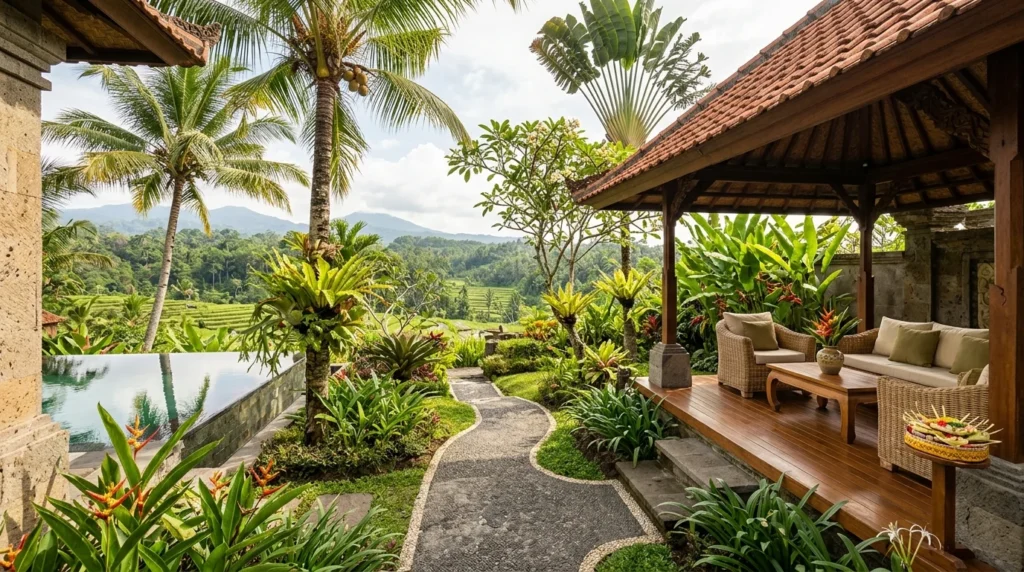
Wood is the foundational material of traditional Balinese architecture. Teak (jati) is highly prized for its natural oils, which make it exceptionally resistant to rot, termites, and moisture. Its strength and workability allow for intricate carvings that adorn temples and pavilions. Other local hardwoods like ulin (ironwood) are used for their incredible density and durability, especially in contact with water or soil.
Beyond structural posts and beams, timber is essential for creating the layered roofs and intricate wall panels. The use of kayu (wood) allows for structures to be elevated on platforms, improving air circulation underneath and protecting from ground-level moisture and pests. Properly maintained, timber buildings breathe with the climate, expanding and contracting with humidity changes.
2. Bamboo: The Sustainable and Flexible Wonder
Bamboo is arguably the most sustainable and climate-responsive material available. It grows incredibly fast, sequesters carbon, and is abundantly available in Bali. Its physical properties are remarkable: it is lightweight yet has a tensile strength comparable to steel. This flexibility is a significant advantage in earthquakes, allowing bamboo structures to sway and dissipate seismic energy rather than crack and collapse.
For tropical construction, bamboo excels. Its hollow culms naturally provide ventilation channels. When treated properly—which traditionally involved soaking in a mud bath and smoking, and now often involves modern borax-based treatments—it becomes highly resistant to insects and decay. Modern engineering has expanded its use from simple huts to multi-story villas, schools, and commercial spaces, showcasing its potential as a primary structural material.
3. Volcanic Stone and Alang-Alang: The Protective Shell
The island’s volcanic geology provides excellent building stone, particularly paras, a soft, easily carved sandstone-like rock used for wall cladding, carvings, and temple foundations. Its earthy grey or beige color blends seamlessly with the natural environment. It also possesses good thermal mass, meaning it can absorb heat during the day and release it slowly at night, helping to regulate indoor temperatures.
For roofing, the thatched grass alang-alang is the traditional material. A thick layer (up to 30cm) provides superb insulation, keeping interiors cool by day and warm by night. It is also highly effective at shedding the heavy rains. While it requires periodic replacement every 5-7 years and is highly flammable, its aesthetic is iconic to the Balinese bale (pavilion). Modern alternatives now mimic its look with greater durability.
Modern Materials: Durability and Practicality
While traditional materials are beautiful and sustainable, modern demands for speed, scale, and specific performance have introduced other materials into the Balinese building landscape. These must be chosen and applied with the local climate in mind.
1. Reinforced Concrete: The Ubiquitous Framework
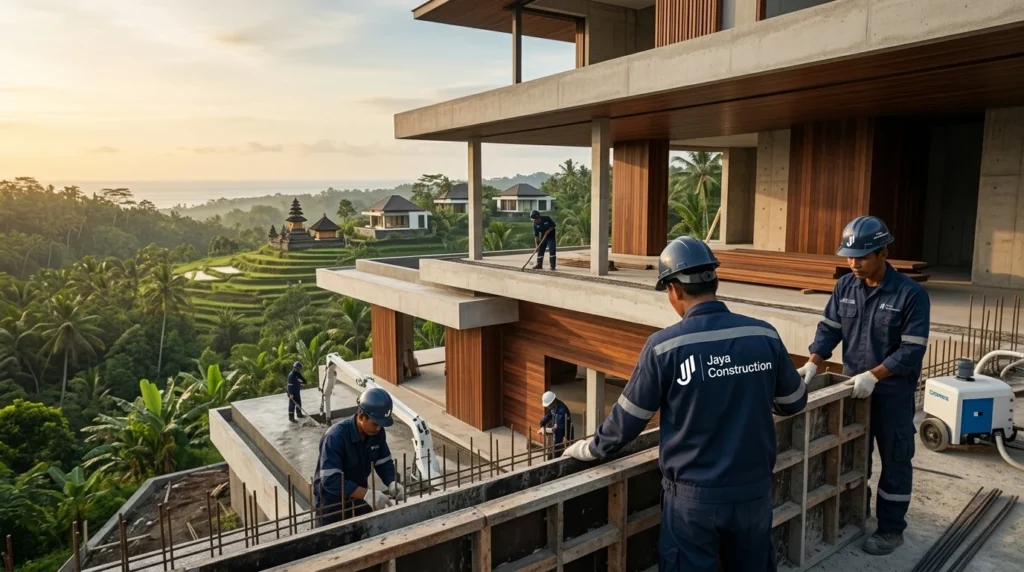
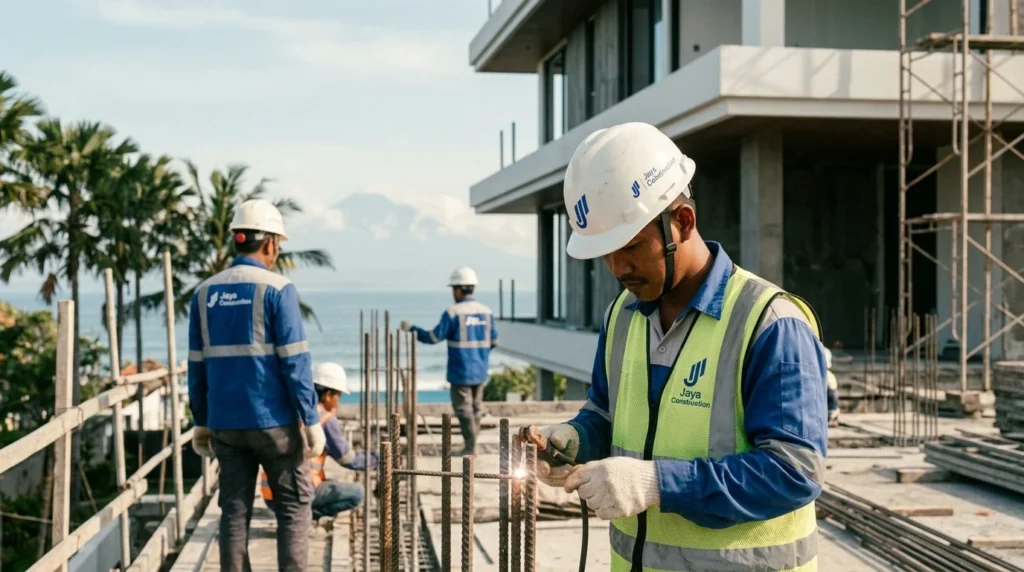
Reinforced concrete is used for foundations, columns, beams, and floors in most contemporary buildings due to its strength and permanence. However, in Bali’s humidity, protecting the steel rebar inside from corrosion is paramount. Poor-quality concrete that allows moisture to penetrate will quickly lead to spalling and structural compromise.
The solution lies in meticulous construction: using a high-strength mix, ensuring proper waterproofing admixtures, providing adequate concrete cover over rebar, and applying quality waterproof membranes. When done correctly, concrete provides a strong, stable skeleton that can be clad with more weather-resistant and aesthetically appropriate materials. It also offers the thermal mass needed for temperature regulation, especially in thick walls and slabs.
2. Cement Render and Plaster: The Protective Skin
Over concrete blocks or brick, cement render is applied to create a smooth, waterproof surface. The choice of plaster and its application are critical. Acrylic-based renders and paints have largely replaced traditional lime washes, as they form a more flexible and water-resistant film that can bridge hairline cracks.
In Bali, a popular and effective finish is duco paint, a synthetic enamel that creates a hard, glossy, and easily cleanable surface resistant to mold and moisture. For a more natural look, techniques like terrazzo (exposed aggregate in concrete) or polished concrete floors are employed, which are durable and cool underfoot.
3. Metals: Corrosion-Resistant Choices
Steel is essential for reinforcement, roofing frames, and window/door supports. The key is corrosion protection. Galvanized steel (coated in zinc) is the standard for structural members in exposed locations. For coastal properties, marine-grade stainless steel (316 grade) is recommended for all exposed fixtures, fasteners, and fittings to combat salt spray.
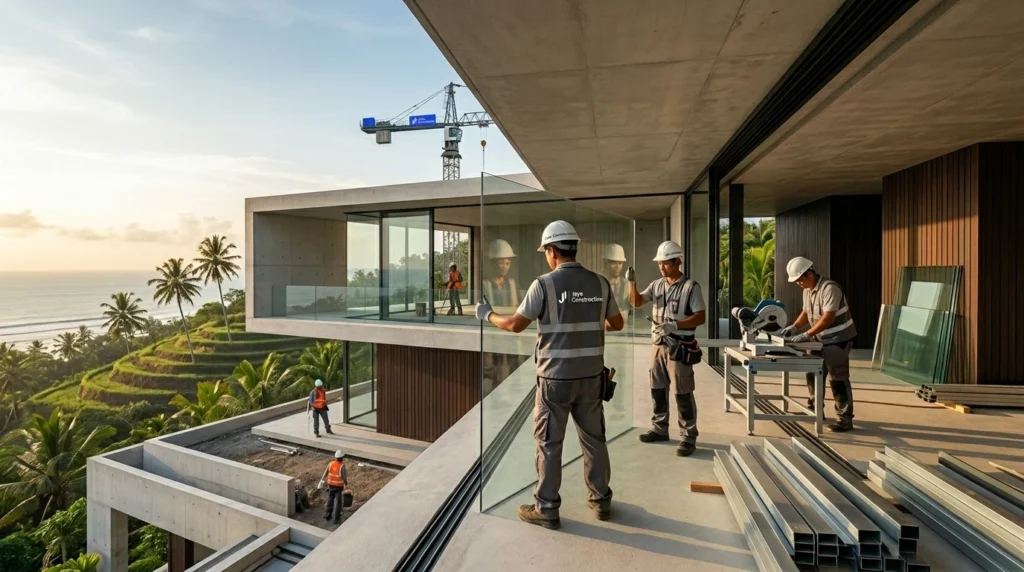
Aluminum is a popular alternative for window and door frames. It is naturally corrosion-resistant, lightweight, and requires minimal maintenance. Modern powder-coated finishes offer durability and a wide color range.
4. Modern Roofing Solutions
While alang-alang thatch is beautiful, many opt for more durable and fire-resistant roofing. Clay or terracotta tiles are an excellent choice, as they are heavy (good for wind resistance), have high thermal mass, and allow air to circulate underneath their curved shape. They are also aesthetically compatible with Balinese architecture.
Metal roofing (zinc, colorbond) is widely used for its affordability, lightweight nature, and quick installation. However, it can be noisy in heavy rain and prone to corrosion unless properly coated. It also transfers heat rapidly, requiring good insulation underneath. A popular compromise is a layered roof system: a lower ceiling with insulation, a ventilated air gap, and then the outer metal or tile roof.
The Sustainable Synthesis: Combining the Best of Both Worlds
The most successful contemporary buildings in Bali are those that synthesize traditional wisdom with modern performance. The goal is to create a synergy between materials, each performing the role it is best suited for.
A common and effective strategy is the “post and beam” concrete and timber hybrid. Reinforced concrete forms the structural core and columns, providing seismic resistance and a durable frame. This frame is then filled with lightweight, non-structural walls of bamboo, timber lattice, or even recycled materials. The roof structure might be steel or engineered timber, but is then covered with traditional alang-alang thatch or clay tiles.
For walls, using a combination of materials is wise. A low base wall (plinth) of paras stone or waterproof rendered block protects against rising damp and splashback. Above this, lightweight timber or bamboo screens allow for maximum airflow while providing privacy and shade. Large overhanging eaves (a hallmark of Balinese design) are critical, as they shield walls and openings from the relentless sun and driving rain.
Sustainability also drives material choices. The use of locally sourced materials is not only ecologically sound—reducing transport emissions—but also economically supportive and culturally respectful. Reclaimed timber, recycled brick, and sustainably harvested bamboo are increasingly specified. Furthermore, materials that contribute to passive cooling, such as those with high thermal mass or that enable natural ventilation, reduce the long-term energy footprint of the building.
Conclusion: Building with Respect for Nature and Culture
Constructing in Bali is a dialogue with the environment. The best building materials are those that listen to this dialogue and respond intelligently. They must withstand the assault of humidity, rain, sun, and potential earthquakes, all while creating comfortable, serene, and beautiful living spaces. The enduring success of traditional materials like teak, bamboo, and volcanic stone lies in their innate compatibility with the island’s rhythm.
Modern materials like reinforced concrete and corrosion-resistant metals are indispensable for contemporary life, but they must be deployed with expertise, protecting them from the very climate they must endure. The most resilient and harmonious buildings are those that intelligently integrate the robustness of modern engineering with the breathable, flexible, and sustainable ethos of traditional Balinese construction. Ultimately, the best material palette is one that honors the island’s cultural legacy, respects its delicate ecosystem, and creates a sanctuary that is not just in Bali, but of Bali. By choosing wisely, we build not only for our own enjoyment but for a sustainable future on this magical island.
 By Jaya Construction Bali August 26, 2026
8 min read
By Jaya Construction Bali August 26, 2026
8 min read