Back to the journal
Construction insights
The Realities of Building Your First Villa in Bali
 By Jaya Construction Bali June 16, 2026
13 min read
By Jaya Construction Bali June 16, 2026
13 min read
By Jaya Construction Bali June 16, 2026
13 min read
By Jaya Construction Bali June 16, 2026
13 min read
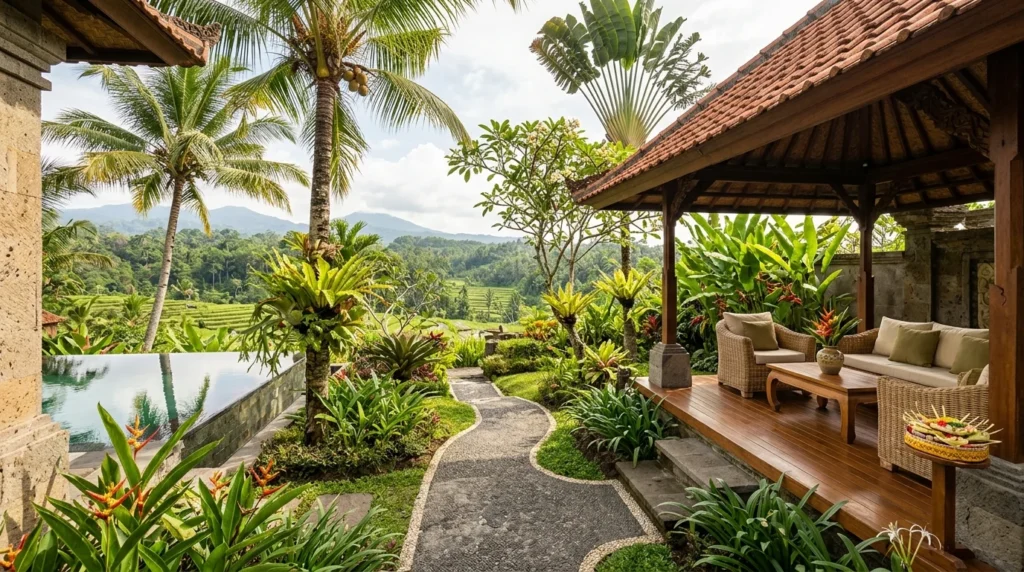
There is a particular fantasy that takes hold of people when they first visit Bali — one involving swaying coconut palms, open-air living rooms, infinity pools overlooking rice terraces, and the gentle sound of gamelan music drifting through the evening air. For many, this fantasy eventually solidifies into a concrete plan: “I want to build a villa here.” It sounds simple enough. Land is relatively affordable, construction labor costs are lower than in Western countries, and the island seems to practically invite you to stay forever.
But the reality of building a villa in Bali, especially your first one, is far more complex, nuanced, and occasionally frustrating than most aspiring villa owners anticipate. Between navigating foreign ownership laws, managing construction in a tropical climate, dealing with bureaucratic hurdles, and finding trustworthy professionals to guide the process, the journey from dream to doorstep is filled with lessons that no glossy Instagram post will ever prepare you for.
This article is not meant to discourage you. Quite the opposite — it is meant to arm you with the honest, practical knowledge you need to make your Bali villa dream a reality without losing your mind, your savings, or your faith in the process. Let us walk through every major phase, from understanding the legal landscape to handing over the final keys.
Before you even begin browsing land listings or sketching floor plans, you need to grapple with one fundamental truth: foreigners cannot own freehold land in Indonesia. This is not a suggestion or a guideline — it is enshrined in Indonesian national law. The concept of hak milik (freehold ownership) is reserved exclusively for Indonesian citizens.
This means that the common approach of simply buying a plot of land and building on it is not legally available to you as a foreign national. However, there are several legal pathways that allow foreigners to control and use property in Bali, each with its own set of advantages, limitations, and risks.
The most common route is leasehold, known as hak sewa. Under a leasehold agreement, you lease the land from an Indonesian landowner for a fixed period — typically 25 to 30 years, often with renewal options extending the total to 50 or even 80 years. This is the simplest and most widely used structure, and it is perfectly legal. The lease is registered and can be notarized, giving you a recognized legal interest in the property for the duration of the agreement.
Another option is hak pakai, or the Right to Use, which can be granted to foreigners who hold a valid visa (such as a KITAS or KITAP). This right can be registered on the land certificate and offers a stronger form of tenure than a standard lease. It is initially granted for 30 years and can be extended. However, there are minimum land size and building value requirements that apply.
The third pathway involves setting up a foreign-owned limited liability company, known as a PT PMA (Penanaman Modal Asing). Through this entity, a foreigner can hold hak guna bangunan (the Right to Build) on land. This is a more robust legal structure and is often used by those building villas intended for commercial rental operations. However, it comes with more regulatory requirements, ongoing compliance obligations, and higher costs for setup and maintenance.
A word of caution: you may encounter the so-called “nominee arrangement,” where an Indonesian citizen holds the freehold title on your behalf while a private agreement states that you are the beneficial owner. This practice is illegal under Indonesian law and offers you zero legal protection. If the relationship breaks down, or if the government cracks down, you could lose everything. Avoid it entirely.
Bali is a small island, but its geography, culture, and infrastructure vary enormously from one area to the next. The location you choose for your villa will affect not only your daily life but also the cost of construction, the permitting process, and the long-term value of your investment.
Canggu and its surrounding areas (Berawa, Pererenan, Seseh) have become enormously popular with expatriates and digital nomads. The area offers a vibrant social scene, excellent restaurants, and surf beaches. However, rapid development has led to significant traffic congestion, and some areas are prone to seasonal flooding. Land prices here have risen sharply over the past decade and continue to climb.
Seminyak and Petitenget represent the more upscale, established end of the market. Properties here tend to be smaller and more expensive, but the area offers excellent rental potential and proximity to Bali’s most fashionable dining and shopping districts.
Ubud, in the central highlands, offers a completely different vibe — lush rice paddies, cooler temperatures, and a strong cultural and artistic community. It is ideal for those seeking tranquility and a connection to traditional Balinese life. However, the infrastructure is more limited, access roads can be narrow and winding, and it is farther from the beach.
Uluwatu and the Bukit Peninsula, perched on dramatic limestone cliffs in the south, have become a hotspot for luxury villa development. The ocean views can be spectacular, and the area is less congested than Canggu. However, water can be scarce, the terrain presents construction challenges, and the infrastructure is still developing.
When evaluating a location, consider not just the lifestyle appeal but also practical factors: road access (can a concrete truck reach your site?), water supply (is there a reliable source, or will you need a deep well?), drainage and flood risk, proximity to utilities, and the potential for future development that could obstruct your views or change the character of the neighborhood.
Once you have a general area in mind, the search for land begins — and this is where many first-time builders stumble. Bali’s land market is largely informal, with many transactions facilitated through personal networks, local agents, and village connections rather than through regulated real estate platforms.
Thorough due diligence is absolutely essential. Before committing any money, you need to verify the land certificate (whether it is hak milik, hak pakai, or another form), confirm the exact boundaries and dimensions of the plot through a certified surveyor, check for any encumbrances, liens, or disputes on the title, and confirm that the land is properly zoned for residential construction.
It is also critical to understand the difference between the various land certificates. An IMB (Izin Mendirikan Bangunan) was the standard building permit until it was replaced by the PBG (Persetujuan Bangunan Gedung) under newer regulations. Make sure any existing structures have proper permits, and ensure the land is eligible for the type of building you plan to construct.
Environmental considerations matter too. Some land in Bali falls within protected zones (such as the sacred Tri Hita Karana spatial planning areas that restrict building within a certain distance of temples, rivers, or coastlines). Building in these restricted zones can result in demolition orders, fines, or the inability to obtain permits. Always check the spatial planning regulations (Rencana Tata Ruang) for the specific district where you are buying.
Hiring a reputable notary or notaris to handle the transaction is non-negotiable. A good notary will verify the title, ensure the lease or sale agreement is properly drafted and registered, and protect your interests throughout the process.
Building a villa in Bali is not a solo endeavor. The quality of your experience — and your finished villa — will depend heavily on the professionals you assemble around you.
An architect is your first critical hire. Bali has a vibrant architectural community, with firms ranging from boutique studios specializing in Balinese-tropical design to international practices offering contemporary luxury aesthetics. Look for an architect with local experience, because designing in Bali involves understanding the tropical climate (monsoon rains, humidity, heat), local materials and construction techniques, and the permitting process. Review their previous projects, visit completed villas if possible, and ensure your design vision aligns with their capabilities.
A project manager can be worth their weight in gold, particularly if you do not plan to be on-site full-time during construction. The project manager serves as your eyes and ears on the ground, coordinating between the architect, contractor, and various subcontractors, ensuring quality standards are maintained, and keeping the project on schedule and within budget. Some architectural firms offer project management as part of their services; others work with independent project managers.
Choosing a contractor is perhaps the most consequential decision you will make. The construction industry in Bali is vast and ranges from highly professional operations to very informal teams. Get recommendations from trusted sources, visit projects they have completed, check references, and — critically — insist on a clear, detailed contract that specifies materials, timelines, payment schedules, and quality standards. Do not simply accept the lowest bid. Cheap construction in Bali often means cheap materials, cutting corners, and problems that emerge months or years later.
A lawyer or legal advisor familiar with Indonesian property law should also be part of your team, particularly for reviewing lease agreements, setting up any corporate structures, and ensuring compliance with local regulations.
With your team in place, the design phase begins. This is often the most creatively exciting part of the process, but it also requires careful decision-making that will affect the cost, functionality, and longevity of your villa.
Bali’s architectural landscape offers enormous stylistic range — from traditional Balinese compounds with carved stone walls and thatched alang-alang roofs to sleek, minimalist concrete structures with floor-to-ceiling glass. Many villas blend these aesthetics, incorporating traditional elements like open-air pavilions (bale), garden bathrooms, and water features within a contemporary framework.
Consider how you will use the villa. Is it a personal retreat, a family home, or an investment property intended for short-term rental? A rental villa may require multiple en-suite bedrooms, a commercial-grade kitchen, a pool with a pool deck, and amenities that appeal to guests. A personal home can be tailored more precisely to your own lifestyle and preferences.
Climate-responsive design is not optional in Bali — it is essential. Proper ventilation, shade, drainage, and material selection will determine whether your villa is comfortable and durable or becomes a maintenance nightmare. The monsoon season brings heavy rainfall, and poorly designed drainage can lead to flooding, mold, and structural damage. Overhangs, elevated floors, and breathable building materials are not just aesthetic choices — they are practical necessities.
The permitting process in Bali has been reformed in recent years. The old IMB system has been replaced by the PBG (Persetujuan Bangunan Gedung) and the SLF (Sertifikat Laik Fungsi), which is essentially a certificate of occupancy. Your architect or notary will guide you through the application process, which involves submitting building plans, paying fees, and obtaining approvals from the local district (camatan) and village (desa) authorities. This process can take several months, so factor it into your timeline.
One of the most common mistakes first-time villa builders make is underestimating the total cost. Construction costs in Bali vary widely depending on the quality of materials, the complexity of the design, and the location, but a general range for quality villa construction is approximately $800 to $1,500 per square meter (as of recent estimates). Luxury finishes, imported materials, complex engineering (such as cliff-edge construction), and high-end furnishings can push costs significantly higher.
But the construction cost per square meter is only part of the picture. You also need to budget for:
The contingency fund deserves special emphasis. In Bali, cost overruns are not the exception — they are the norm. Prices for materials like concrete, steel, and wood can fluctuate. Designs may evolve during construction. Hidden site conditions (rocky soil, high water tables, unexpected drainage issues) can add costs. Having a financial buffer is not pessimism; it is prudent planning.
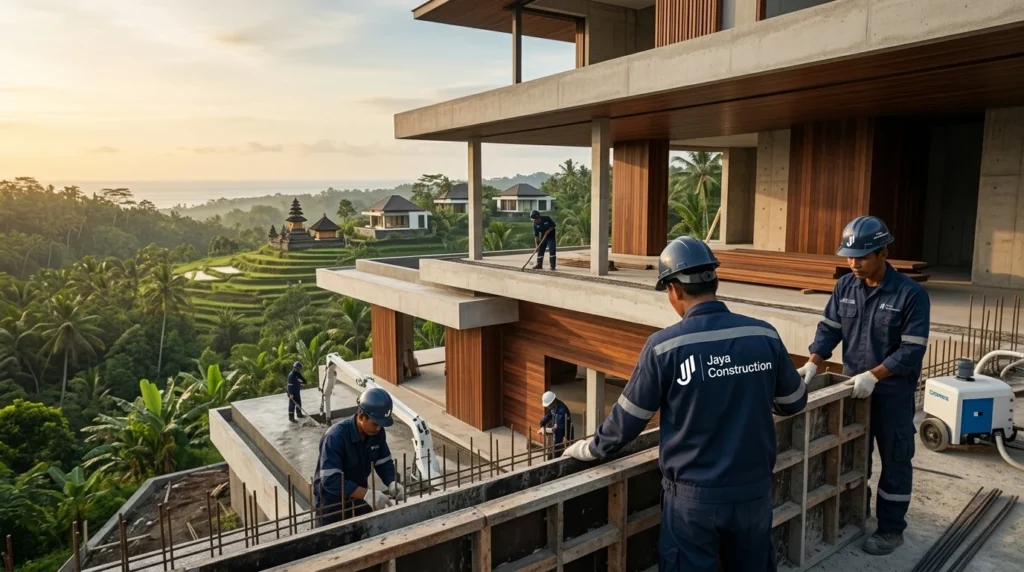
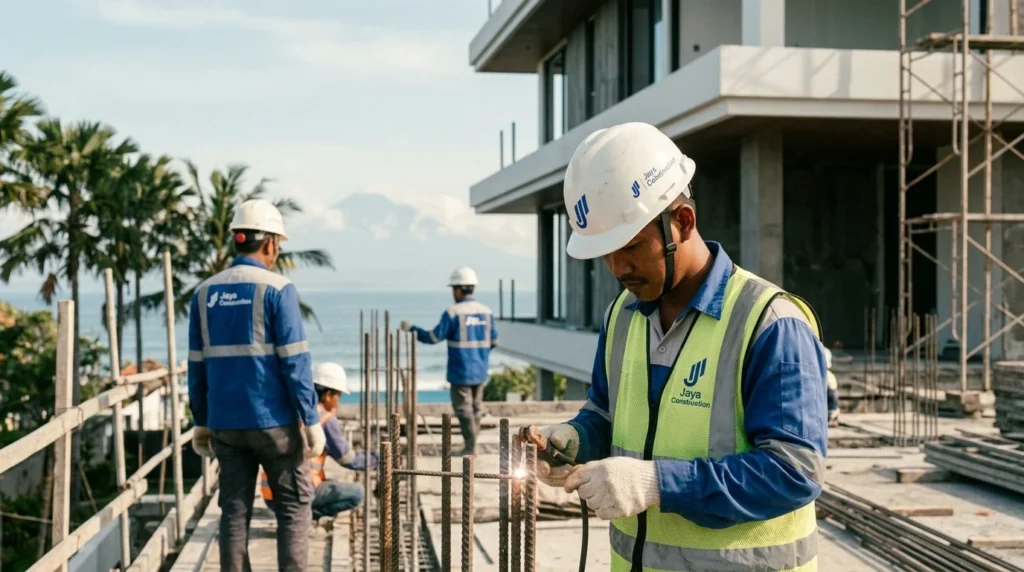
With permits approved and designs finalized, construction begins. A typical villa build in Bali takes between 10 and 18 months, depending on size, complexity, and weather conditions. The rainy season (roughly November through March) can cause delays, particularly during the foundation and structural phases.
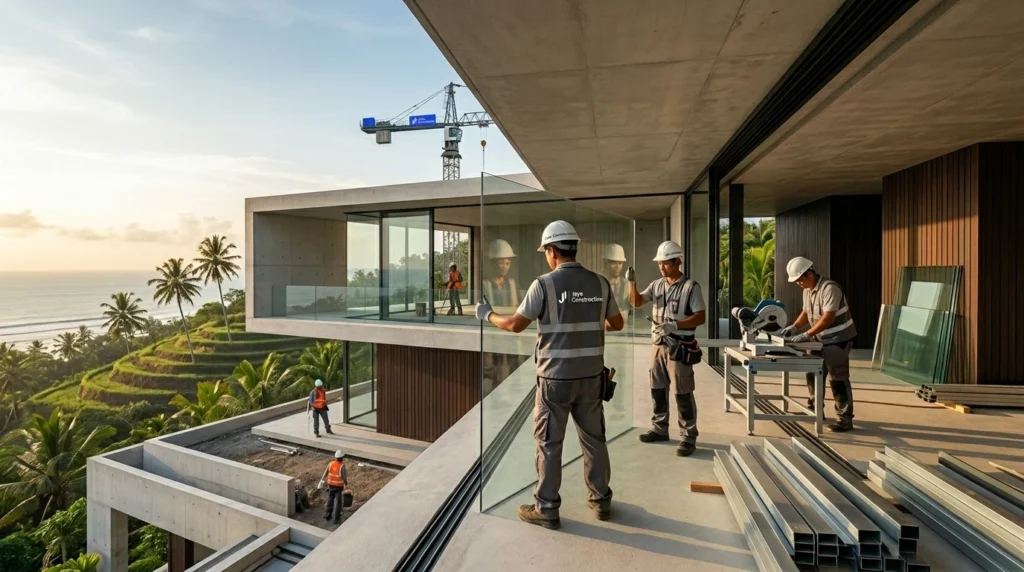
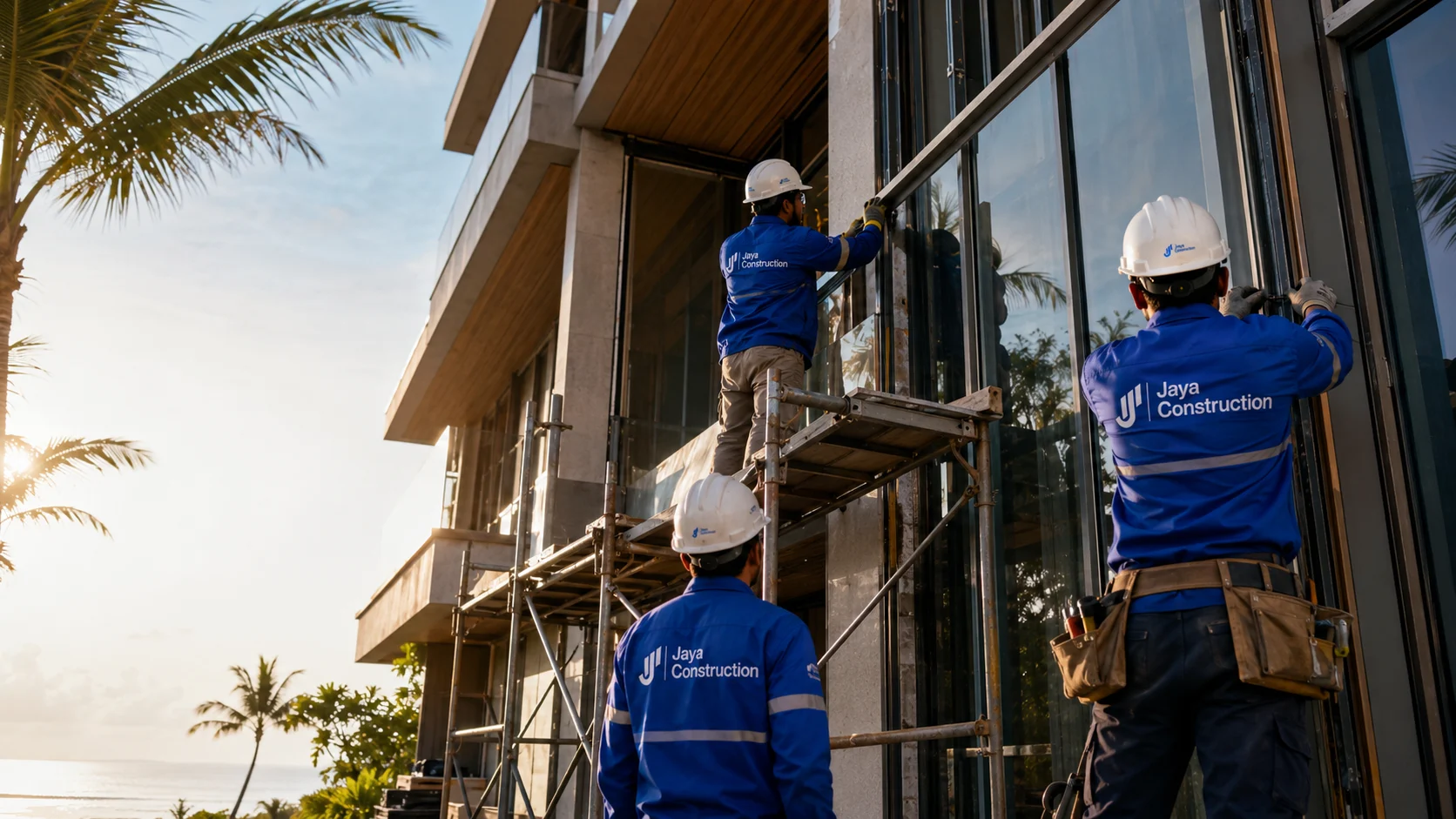
The construction process generally follows these stages: site preparation and earthwork, foundation and structural work (columns, beams, slabs), walls and roofing, plumbing and electrical rough-in, plastering and finishing, tiling, painting, installation of fixtures and fittings, landscaping and pool construction, and final clean-up and handover.
Communication during construction is paramount. Regular site visits (or, if you are abroad, frequent video updates and photo documentation) help ensure that the work is proceeding according to plan. Discrepancies between the architectural drawings and the actual construction are common and need to be caught early. Material substitutions happen frequently — sometimes for legitimate reasons (a particular tile being unavailable), sometimes to cut costs. Your project manager should be monitoring material quality and specifications closely.
One aspect that catches many foreign builders off guard is the cultural dimension of construction in Bali. Balinese ceremonies and holidays (such as Galungan, Kuningan, and Nyepi) can pause construction for days or even weeks. This is not laziness or unreliability — it is a deeply held cultural practice that should be respected and factored into your timeline.
When the final coat of paint has dried and the pool is filled, the project is not truly finished. Several important steps remain.
First, obtain the SLF (Sertifikat Laik Fungsi), the certificate of building worthiness, which confirms that your villa was built in accordance with the approved plans and meets safety standards. This is increasingly important for insurance purposes and for any future rental licensing.
If you plan to rent the villa, you will need to obtain the appropriate licenses, including a Pondok Wisata (homestay license) for smaller operations or a commercial tourism license for larger ones. Tax registration is also required, as rental income in Indonesia is taxable.
Property management is another crucial consideration, particularly if you do not plan to live in the villa year-round. A reliable property management company can handle guest bookings, cleaning, maintenance, gardening, pool care, and staff management. Quality property management in Bali typically costs 15-25% of rental income.
Maintenance in Bali’s tropical climate is an ongoing reality. Humidity, insects, heavy rain, and intense sunlight take a toll on buildings. Wooden elements require regular treatment. Pools need constant attention. Gardens grow aggressively. Budgeting for regular maintenance — and building with durable, climate-appropriate materials from the start — will save you significant headaches and expenses in the long run.
Building your first villa in Bali is one of the most rewarding — and most challenging — undertakings you can embark on as a foreigner on the island. The dream is real, and it is achievable, but it demands patience, diligence, cultural sensitivity, and a willingness to navigate complexity that you might not expect.
The most successful villa projects in Bali share a few common traits: they are guided by solid legal advice, built by experienced and trustworthy teams, designed with the tropical climate in mind, and budgeted generously enough to absorb the inevitable surprises. The most troubled projects, by contrast, tend to involve corner-cutting on legal due diligence, choosing contractors based solely on price, underestimating timelines and costs, or assuming that building in Bali will work the same way as building back home.
Approach the process with respect — for the land, the culture, the legal framework, and the professionals you work with — and you will find that Bali has an extraordinary capacity to transform a vision into a living, breathing home that exceeds even your most vivid daydreams. The island has been enchanting visitors for centuries, and with the right preparation, your villa can become a part of that timeless story.
Share your site, plans, priorities, or questions. Our team can help turn early information into a practical construction path.