The Bali Balancing Act: Mastering Cost, Quality, and Speed in the Island of the Gods
By Jaya Construction BaliJune 16, 20268 min read
In this article
Bali, the fabled “Island of the Gods,” is a magnet for dreamers, entrepreneurs, and global citizens. It offers a unique blend of breathtaking natural beauty, a rich cultural tapestry, and a dynamic, often surprisingly affordable, business environment. Yet, for anyone undertaking a project here—whether building a villa, launching a creative project, organizing a destination wedding, or scaling a digital startup—confronts a universal challenge with a distinctly Balinese flavor: the perpetual tug-of-war between cost, quality, and speed.
Navigating this triangle is not merely an exercise in project management; it is a cultural negotiation that determines the success, sustainability, and ultimate satisfaction of any endeavor on the island. The legendary “Bali time” is more than a cliché; it reflects a worldview where relationship and process often hold greater value than rigid, expedited outcomes. This article serves as a comprehensive guide to understanding and mastering this balancing act, providing practical strategies to achieve your goals without compromising your budget, your standards, or your sanity.
Understanding the Iron Triangle in a Balinese Context
In traditional project management, the “Iron Triangle” or “Triple Constraint” posits that the three factors—scope (quality), time (speed), and cost—are interdependent. You cannot optimize all three simultaneously; adjusting one inevitably impacts the others. In Bali, this model is supercharged by local variables: a tropical climate affecting work schedules, a deeply communal banjar system that oversees local affairs, a vibrant yet sometimes opaque supply chain, and a workforce that blends exceptional artistry with a different concept of temporal urgency.
Key Insight: Success in Bali requires reframing the triangle not as a rigid set of constraints, but as a dynamic spectrum of priorities. Your primary goal is to identify which single factor is non-negotiable for your specific project and be prepared to flex on the other two.
Prioritizing Your Pillar: Which Factor Comes First?
Before you can balance, you must decide. Clear prioritization from the outset sets realistic expectations and guides all subsequent decisions.
When Cost is the Non-Negotiable Priority
This is common for long-term residents on a fixed budget, investors seeking maximum ROI on rental properties, or bootstrapped startups. Here, speed and ultimate quality are the variables.
Strategy: Embrace Phased Development. Instead of trying to build or launch everything at once, break your project into distinct phases. This spreads the financial outlay over time, allowing you to manage cash flow effectively. For construction, this might mean completing the core structure and one bedroom first, then adding a pool and additional rooms later. For a business, it could mean launching with a Minimum Viable Product (MVP) and iterating based on early customer feedback.
Strategy: Deep Local Sourcing and Relationship Building. Avoid the well-trodden expatriate supplier network. Invest time in building relationships directly with local craftspeople, smaller workshops, and farmers’ markets (pasar). This requires more legwork but often yields significantly better prices and authentic quality. Learning basic Bahasa Indonesia for negotiation goes a long way.
The Trade-off: Be prepared for longer timelines. Sourcing and negotiating locally take time. Also, “cost-effective” does not mean “cheap.” Using low-quality materials or unskilled labor to save money will result in higher long-term costs through repairs, replacements, and operational headaches. The goal is value, not just low price.
When Quality is the Non-Negotiable Priority
This is the priority for luxury villa developers, high-end hospitality projects, boutique brands, and anyone whose reputation hinges on impeccable standards. Here, cost and speed become the flexible elements.
Strategy: Hire Specialized, Vetted Professionals. Do not rely on generalists. For high-quality construction, engage an architect and project manager with a proven portfolio in similar Balinese projects. They will have a vetted network of engineers, master builders (mandor), and finishing specialists. Yes, their fees are higher, but they mitigate the enormous risk of structural defects, poor drainage, or shoddy workmanship.
Strategy: Invest in Superior Materials and Imported Elements. For critical components—structural steel, specific tiles, bathroom fittings, kitchen appliances—sometimes the best option is to import from Java or overseas. Your project manager can navigate the customs and logistics. For local artisanal work (carving, stonework), commission samples first and be prepared to pay a premium for the most skilled sangging (artist).
The Trade-off: This path is expensive and rarely fast. Exceptional artisans are in high demand, and importing materials is a logistical and financial commitment. The timeline must be realistic, often significantly longer than a standard project, to allow for meticulous attention to detail.
When Speed is the Non-Negotiable Priority
This is less common but arises in scenarios like corporate retreat deadlines, pre-wedding site preparations, or seasonal business openings. Here, cost and guaranteed peak quality are the variables.
Strategy: Pay for Ready-Made Solutions and Overtime. To accelerate a construction project, you may need to source from warehouses with available stock rather than waiting for custom orders, even if it’s slightly more expensive. You will also need to authorize and pay for overtime work (lembur), which comes at a premium rate. Be crystal clear about the deadline and the compensation for meeting it.
Strategy: Assemble a Dedicated, Pre-Vetted Team. For events or time-sensitive projects, bringing in a specialized team that has worked together before is invaluable. They have established workflows and communication channels, minimizing the learning curve and delays. This team will likely come at a premium, but you are paying for speed and cohesion.
The Trade-off: Compromises will be made. You might accept a “good enough” material that’s immediately available rather than the “perfect” one that’s out of stock. Overtime can lead to fatigue and potential quality dips if not managed carefully. Expect a budget that is 20-50% higher than a standard project, with contingency for last-minute changes and rushes.
The Middle Path: Harmonizing the Triangle in Bali
While prioritizing is key, the art lies in finding intelligent compromises. The goal is not to have it all, but to get the best possible outcome within your chosen priority framework.
Leveraging the Right Project Manager or Local Partner
This is the single most critical investment for anyone not permanently immersed in the local system. A competent bilingual project manager acts as your translator, negotiator, quality controller, and cultural bridge. They understand the rhythm of Bali, know which suppliers are reliable, can anticipate challenges (like the impact of Galungan and Kuningan holidays on material delivery), and can hold subcontractors accountable. Their fee is not an added cost; it is an investment in cost savings, quality assurance, and timeline protection.
Adopting a Flexible yet Firm Communication Style
Successful management in Bali blends respectful patience with clear, documented directives. Understand that “yes” can sometimes mean “I understand you are speaking,” not “I agree and will do it exactly as stated.” Use visual aids, drawings, and samples constantly. Follow up all verbal agreements with a written summary via WhatsApp or email, a practice widely accepted and essential for clarity. Respect the cultural hierarchy and address issues through the appropriate channels (your mandor first, not the laborer directly).
Building a Contingency Buffer into Every Plan
Whether it’s for cost, time, or both, a buffer is non-negotiable. A standard construction project should have a 15-20% financial contingency. Timelines should be padded by at least 25-30%, especially during rainy season (November-March) which can halt outdoor work. This buffer is not a sign of poor planning; it is a sign of wisdom that accounts for Bali’s unique operational environment.
Case Studies: The Triangle in Action
1. Building a Private Villa (Quality-Led):
Priority: High-quality build with traditional aesthetic and modern comforts.
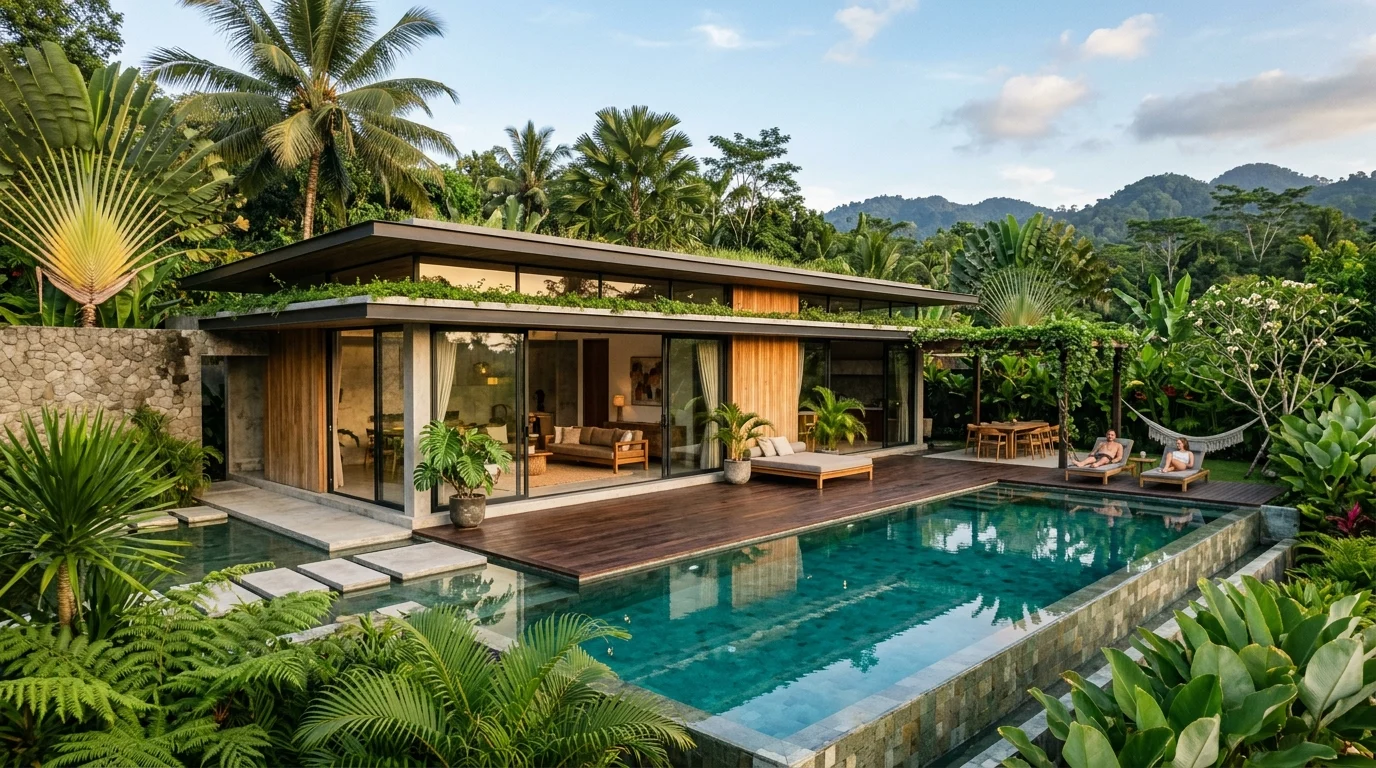
Strategy: Engaged a renowned architect. Used a blend of high-grade imported materials (for wet areas, foundations) and locally sourced teak and stone. Hired a senior mandor recommended by the architect. Allowed a 24-month build timeline with phased payments tied to milestones.
Outcome: Exceptional quality achieved, on a higher budget, and within a realistically extended timeframe. The owner accepted slower progress for superior craftsmanship.
2. Launching a Boutique Café (Cost-Led):
Priority: Launch on a tight budget to validate the market.
Strategy: Owner acted as project manager. Sourced second-hand commercial kitchen equipment from a closed hotel in Seminyak. Used reclaimed wood for tables from a local carpenter. Designed a simple, attractive fit-out using local tiles and paint. Launched with a limited menu.
Outcome: Achieved a charming, functional space at 60% of a typical café build cost. The “speed” sacrifice was real—finding deals and managing multiple small suppliers took longer—but it preserved capital for operations and marketing.
3. Destination Wedding (Speed-Led):
Priority: Flawless execution on a fixed date, 8 months away.
Strategy: Hired a premium, internationally experienced wedding planner with deep local ties. Paid for pre-selected, available vendors at set premium rates. Accepted a beautiful but available venue layout instead of demanding a completely custom build. The planner’s network secured priority for catering, décor, and entertainment.
Outcome: A stunning, perfectly timed wedding. The budget was significantly higher than a DIY approach, but it bought certainty and expertise, eliminating the stress of time constraints for the couple.
Conclusion: Embracing the Balinese Rhythm for Successful Outcomes
Balancing cost, quality, and speed in Bali is ultimately an exercise in mindful intentionality. It requires you to shed a purely Western, deadline-obsessed mindset and embrace a more holistic, relational approach. The island rewards those who plan thoughtfully, respect local wisdom, build genuine partnerships, and communicate with clarity and patience.
By first declaring your non-negotiable priority, you set a clear compass. Then, by employing the strategies of phased development, deep local engagement, professional mediation, and realistic contingency planning, you can navigate the complex terrain. Remember, the goal is not to conquer the triangle but to dance with it, finding the unique balance that allows your project to not just succeed, but to thrive in harmony with the timeless spirit of Bali. The process itself, with all its learning curves and cultural exchanges, often becomes as valuable as the finished product—a true part of the Balinese experience.
 By Jaya Construction Bali June 16, 2026
8 min read
By Jaya Construction Bali June 16, 2026
8 min read