Back to the journal
Construction insights
How to Prepare a Comprehensive Brief for Your Bali Builder
 By Jaya Construction Bali June 16, 2026
13 min read
By Jaya Construction Bali June 16, 2026
13 min read
By Jaya Construction Bali June 16, 2026
13 min read
By Jaya Construction Bali June 16, 2026
13 min read
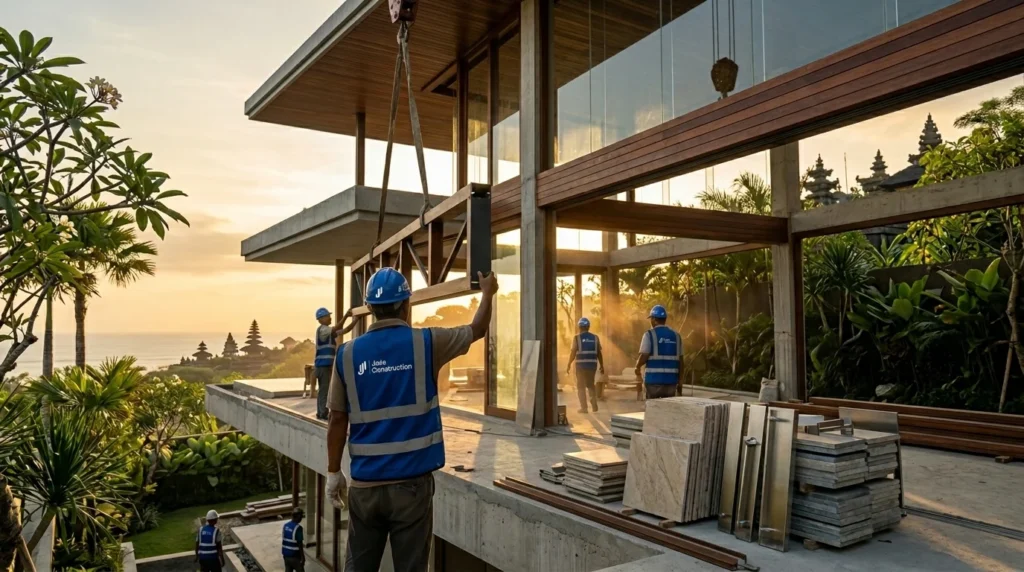
Building a property in Bali is one of the most exciting ventures you can undertake. Whether you envision a private villa nestled among rice terraces in Ubud, a modern beachfront retreat in Canggu, or a commercial property in the bustling heart of Seminyak, the journey from dream to reality begins with a single, critical document: the project brief. A well-prepared brief serves as the foundation for your entire build, guiding every decision from initial design sketches to the final finishing touches. Without one, miscommunication, budget blowouts, and costly delays become almost inevitable.
Bali’s construction landscape is unique. It operates at the intersection of tropical climate challenges, local building traditions, evolving regulations, and a diverse workforce that often includes both Balinese artisans and international project managers. For these reasons, the way you communicate your expectations to your builder matters profoundly. A vague or incomplete brief leaves too much room for interpretation, and in a cross-cultural building environment, interpretation can lead to very different outcomes than what you imagined.
This article walks you through every element of preparing a thorough, effective brief for your Bali builder. By the time you finish reading, you will have a clear framework for articulating your vision, setting realistic parameters, and establishing the groundwork for a successful construction project.
Before diving into the specifics of what to include, it is worth understanding why a detailed brief holds such significance, particularly in the context of building in Bali.
Construction in Bali often involves navigating a web of cultural norms, local regulations, and environmental considerations that may differ vastly from what you are accustomed to in your home country. The Balinese approach to building is often more fluid and relationship-based than the rigid contract-driven model found in Western countries. While this flexibility can be a strength, it also means that expectations must be clearly documented from the outset to prevent misunderstandings.
A comprehensive brief acts as a single source of truth for everyone involved in the project. It ensures that your architect, builder, interior designer, and any other stakeholders are all working toward the same goal. It also provides a reference point throughout the construction process, allowing you to measure progress and flag deviations before they become expensive problems.
Moreover, a well-crafted brief demonstrates professionalism and seriousness to your builder. It signals that you have thought through your project carefully and that you expect the same level of commitment and attention to detail from your construction team.
The starting point of any brief is a clear articulation of your overall vision. This section should capture the essence of what you want to achieve with your Bali property.
Begin by describing the purpose of the property. Is it a personal residence, a holiday rental villa, a boutique hotel, a restaurant, or a co-working space? The intended use fundamentally shapes every aspect of the design and construction, from the number of bedrooms and bathrooms to the layout of communal spaces and the type of infrastructure required.
Next, outline the aesthetic and experiential goals. What feeling do you want the property to evoke? Do you envision a contemporary minimalist design with clean lines and open-plan living, or are you drawn to traditional Balinese architecture with alang-alang thatched roofs, carved stone walls, and lush tropical gardens? Perhaps you want a fusion of both. Be as descriptive as possible, using sensory language to paint a picture of the finished product.
Consider the relationship between the built environment and the natural surroundings. Bali’s beauty lies in its landscapes, and the most successful properties are those that integrate seamlessly with their environment. Do you want the building to frame views of the ocean, a river valley, or terraced rice paddies? Should indoor and outdoor spaces flow into each other? These considerations should be front and center in your brief.
Also, think about your long-term goals. Are you building to sell, to hold as a rental investment, or to live in permanently? This affects decisions about material quality, design longevity, and maintenance requirements.
One of the most important sections of your brief is the budget. Being transparent about your financial constraints from the beginning prevents a host of problems down the line.
Start by stating your total project budget. This should include not just construction costs, but also land acquisition (if applicable), architectural and design fees, permits, landscaping, furnishing, and a contingency fund. In Bali, it is wise to allocate a contingency of at least 15 to 20 percent of the total budget, as unexpected costs frequently arise due to site conditions, regulatory changes, or material price fluctuations.
Break down the budget into categories if possible. For example, allocate specific amounts for structural work, finishing materials, plumbing and electrical systems, landscaping, interior design, and furnishing. This helps your builder understand where your priorities lie and where there might be room for flexibility.
Be honest about your expectations regarding quality. In Bali, construction costs can vary dramatically depending on the level of finish you desire. A basic but functional villa might cost significantly less per square meter than a luxury property with imported marble, custom joinery, and state-of-the-art smart home systems. Your builder needs to know which end of the spectrum you are targeting so they can plan accordingly.
It is also helpful to discuss your preferred payment structure. Many Bali builders work on a milestone-based payment schedule, where funds are released at specific stages of completion. Clarify your expectations around this, including how you will verify that work has been completed to the required standard before releasing the next payment.
Time is a critical factor in any construction project, and Bali presents some unique scheduling considerations that your brief should address.
Bali has distinct wet and dry seasons. The dry season, roughly from April to October, is generally considered the best time for major construction work, particularly for tasks like pouring concrete, roofing, and exterior finishing. The wet season, from November to March, can bring heavy rains that slow progress and affect material quality. Your brief should acknowledge these seasonal factors and outline your desired start date and completion target with these realities in mind.
Specify any hard deadlines. Are you building a rental property that needs to be operational before peak tourist season? Are you planning to move into the property by a specific date? Hard deadlines should be clearly stated, along with an acknowledgment of what happens if they are not met. This might include penalty clauses or agreed-upon extensions.
Break the timeline into phases if possible. A typical Bali villa build might include phases for land clearing and site preparation, foundation work, structural framing, roofing, plumbing and electrical rough-in, wall finishing, tiling and flooring, painting, fixture installation, landscaping, and final punch-list items. Assigning approximate durations to each phase helps your builder plan resources and gives you a framework for monitoring progress.
It is also worth noting that obtaining permits and approvals in Bali can sometimes take longer than expected. Your brief should acknowledge this and ideally indicate who will be responsible for managing the permit process — you, your builder, or a third-party agent.
This section of the brief is where you translate your vision into tangible design elements. The more specific you are, the less room there is for misinterpretation.
Start with the layout and floor plan. How many bedrooms and bathrooms do you need? Do you want an open-plan kitchen and living area, or separate rooms? Should there be a private pool, a rooftop terrace, a home office, a yoga shala, or a staff quarter? Sketch out rough layouts if possible, even if they are hand-drawn. Many builders and architects in Bali appreciate visual references as much as written descriptions.
Discuss structural preferences. Do you want a single-story or multi-story building? What ceiling heights do you prefer? In Bali, higher ceilings are popular because they promote air circulation and keep interiors cooler. However, they also increase construction costs and material usage, so be clear about your preferences.
Address the issue of natural ventilation versus air conditioning. Traditional Balinese architecture prioritizes open-air living with natural breezes, while modern construction often relies heavily on air conditioning. Many successful Bali builds combine both approaches, using open-plan designs with large operable windows and ceiling fans in communal areas while providing enclosed, air-conditioned bedrooms. State your preference in the brief so that the structural design can accommodate it from the start.
Detail your preferences for materials. Bali offers a rich palette of local materials, including volcanic stone (paras), teak wood, bamboo, coconut wood, terrazzo, and local ceramics. Many builders also work with imported materials such as Italian tiles, European fixtures, and engineered stone. Specify which materials you prefer for floors, walls, countertops, and structural elements. If sustainability is important to you, highlight your interest in locally sourced, renewable materials.
Bali’s regulatory environment for construction can be complex, and your brief should include relevant legal and land information to ensure a smooth building process.
If you already own or lease the land, include the following details in your brief: the exact location and address, the land size and dimensions, the topography and slope, the land certificate type (such as Hak Milik, Hak Guna Bangunan, or Hak Pakai), and any existing structures or features on the site.
If you are still in the process of acquiring land, indicate your preferred location, desired land size, and budget for the land itself. Discuss any zoning restrictions or building height limitations that may apply to the area.
Outline the permit requirements. In Bali, the primary construction permit is the PBG (Persetujuan Bangunan Gedung), which replaced the older IMB (Izin Mendirikan Bangunan). Depending on the nature and scale of your project, additional permits may be required. Clarify in your brief who will be responsible for obtaining these permits and how the costs will be handled.
If you are building in a green zone or an area with special environmental protections, include this information as it may significantly impact what you can build and how the construction must be carried out.
It is highly advisable to consult with a local legal expert or notaris before finalizing this section of your brief. Including legally accurate information protects both you and your builder.
One of the most common sources of frustration in Bali construction projects is communication breakdowns. Your brief should establish clear expectations about how communication will be handled throughout the project.
Specify your preferred communication channels. Do you prefer updates via WhatsApp, email, or a dedicated project management platform? How frequently do you expect progress reports — daily, weekly, or at the completion of each milestone?
If you will not be on-site regularly, indicate how you want to be kept informed. Many successful projects in Bali use regular photo and video updates, often supplemented by video calls, to keep remote clients in the loop. Some builders also use construction management software that allows clients to track progress in real time.
Clarify the decision-making process. Who has authority to make day-to-day decisions on-site? If you are not in Bali full-time, will you appoint a representative or project manager to act on your behalf? If changes arise during construction — and they almost always do — how should they be documented and approved?
Establishing these communication protocols in your brief sets the tone for a professional and transparent working relationship.
For many property owners in Bali, the interior design is just as important as the structure itself. If you have specific ideas about the interior, include them in the brief.
Outline your desired aesthetic for interiors. This includes color palettes, furniture styles, lighting preferences, and decorative elements. Are you going for a Javanese antique look, a Scandinavian-Balinese fusion, or a contemporary tropical style?
Specify whether you want the builder to handle furnishing or whether you plan to engage a separate interior designer. In Bali, many builders offer turnkey packages that include full furnishing, while others focus exclusively on the shell and core. Clarify your expectation to avoid scope confusion.
Detail any special features you want incorporated. This might include built-in storage, custom lighting fixtures, a particular style of bathroom, a specific type of pool (infinity, plunge, lap), outdoor living areas, fire pits, water features, or entertainment systems.
If you are building a rental property, consider the practical aspects of furnishing. Durable, easy-to-clean materials and standardized replacement parts can save significant time and money in the long run. Include these considerations in your brief.
Bali faces real environmental challenges, including water scarcity, waste management issues, and the impact of unchecked development on natural ecosystems. If sustainability matters to you, your brief is the place to make that clear.
Discuss your expectations regarding energy efficiency. This might include solar panels, energy-efficient appliances, LED lighting, and passive cooling design strategies such as cross-ventilation and thermal mass.
Address water management. Rainwater harvesting, greywater recycling, and sustainable drainage systems are increasingly common in Bali’s more thoughtful developments. If these are priorities for you, they should be specified in the brief, as they often require additional planning and infrastructure.
Outline your approach to construction waste. Will you require the builder to implement a waste management plan that includes recycling and responsible disposal? Bali’s waste infrastructure is limited, so proactive planning in this area is important.
Mention any green building certifications or standards you are targeting, such as those from the Green Building Council Indonesia or international frameworks like LEED or BREEAM.
A picture is worth a thousand words, and nowhere is this more true than in construction. Including visual references in your brief dramatically improves the quality of communication between you and your builder.
Compile a collection of images that represent your desired aesthetic. This might include photos from Pinterest, Instagram, architectural magazines, or other Bali properties that you admire. Annotate these images with notes explaining what specifically appeals to you about each one — the layout, the materials, the lighting, the landscaping, the overall mood.
If you have architectural drawings, mood boards, or concept sketches, include these as well. Even rough sketches help convey spatial relationships and design ideas more effectively than words alone.
Consider creating a tiered inspiration board that separates your “must-have” elements from your “nice-to-have” preferences. This helps your builder understand where to focus their efforts if compromises need to be made due to budget or site constraints.
Before sending your brief to your builder, run through this checklist to ensure completeness:
Review the brief with a trusted advisor, ideally someone with experience in Bali construction, before finalizing it. A fresh pair of eyes can catch gaps or ambiguities that you might have overlooked.
Preparing a thorough brief for your Bali builder is not just an administrative exercise — it is the single most impactful step you can take to ensure the success of your construction project. A well-crafted brief aligns expectations, prevents costly misunderstandings, and establishes a professional framework for collaboration between you and your building team.
Bali offers extraordinary opportunities for creating stunning properties that blend tropical beauty with thoughtful design. But realizing those opportunities requires clarity of vision and disciplined communication from the very beginning. By investing the time and effort to prepare a comprehensive brief, you lay the groundwork not just for a beautiful building, but for a smooth, enjoyable, and ultimately rewarding construction experience.
Take the time to get your brief right. Your future Bali property — and your peace of mind throughout the building process — will be all the better for it.
Share your site, plans, priorities, or questions. Our team can help turn early information into a practical construction path.