Back to the journal
Construction insights
The Most Common Mistakes People Make Building in Bali
 By Jaya Construction Bali October 16, 2026
15 min read
By Jaya Construction Bali October 16, 2026
15 min read
By Jaya Construction Bali October 16, 2026
15 min read
By Jaya Construction Bali October 16, 2026
15 min read
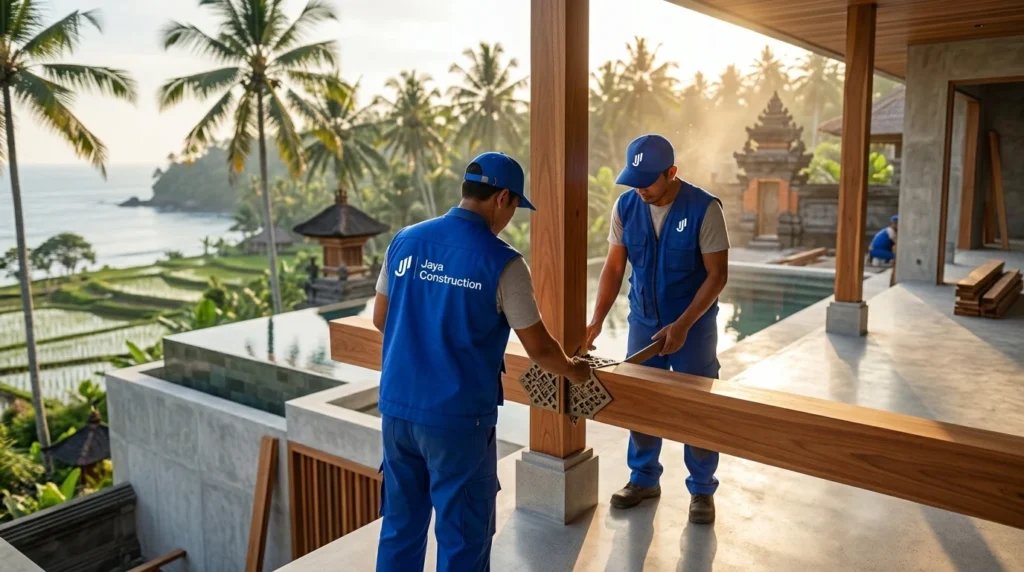
Bali has long captured the imagination of travelers, entrepreneurs, and dreamers from around the world. With its lush rice terraces, vibrant culture, and relatively affordable cost of living, it is no surprise that thousands of foreigners each year decide they want to build a villa, a boutique hotel, a restaurant, or a creative studio on the Island of the Gods. What begins as an exciting vision of tropical living can, however, quickly spiral into a nightmare of blown budgets, legal disputes, construction defects, and broken promises if the process is not approached with careful planning and realistic expectations.
Building in Bali is fundamentally different from building in Western countries or other parts of Southeast Asia. The regulatory environment, the cultural norms around business and construction, the tropical climate, and the nature of land ownership all present unique challenges that catch even experienced developers off guard. Whether you are a first-time builder looking to create your dream retirement villa or a seasoned investor planning a commercial project, understanding the pitfalls that have trapped others before you is essential.
This article explores the most common mistakes people make when building in Bali, offering insight into why these errors occur and how to avoid them. By learning from the experiences of those who have navigated this process — both successfully and unsuccessfully — you can approach your Bali building project with greater confidence, better preparation, and a much higher chance of achieving the result you envision.
—
Every year, Bali attracts a growing number of foreign residents and investors who are drawn not only to the island’s natural beauty and spiritual atmosphere but also to the perceived affordability of construction and real estate. Social media is filled with images of stunning infinity pools, open-air living spaces draped in tropical greenery, and architectural marvels that blend Balinese tradition with modern design. These images create a powerful pull, and many people begin their building journey with more enthusiasm than preparation.
The reality of building in Bali, however, involves navigating a complex web of legal, logistical, cultural, and environmental factors. Language barriers, unfamiliar business practices, inconsistent enforcement of regulations, and the sheer physical challenges of building in a tropical environment all conspire to create problems for those who are not adequately prepared. Stories of unfinished projects, disappearing contractors, and financial losses are, unfortunately, not uncommon.
The good news is that none of these problems are inevitable. With the right knowledge, the right team, and the right approach, building in Bali can be a deeply rewarding experience that results in a beautiful, functional, and legally sound property. The key lies in knowing what to watch out for. Let us examine the most frequent and consequential mistakes that builders make on the island.
—
One of the most significant and potentially devastating mistakes people make when building in Bali is failing to fully understand the legal landscape governing land ownership and construction. Indonesia has strict laws regarding land ownership, and foreigners are not permitted to own land outright under Indonesian law. This is a point that catches many newcomers by surprise, as it is fundamentally different from the legal systems in their home countries.
Foreigners typically access land through a hak pakai (right to use) or, more commonly, a leasehold agreement. Some attempt to circumvent ownership restrictions by using a nominee arrangement, where an Indonesian citizen holds the title on behalf of the foreigner. While this practice is widespread, it carries significant legal risk. Nominee arrangements are technically illegal under Indonesian law, and if the relationship between the foreign investor and the nominee breaks down, the foreigner may have little legal recourse.
Beyond ownership, there are numerous regulations governing zoning, building permits, environmental impact, and land use. Bali has designated zones for tourism, residential, agricultural, and commercial use, and building in a zone that does not match your intended use can result in fines, demolition orders, or the inability to obtain necessary permits. Many people purchase land in areas that are zoned for agriculture without realizing that obtaining a building permit for a villa or commercial property on agricultural land may be extremely difficult or impossible.
Working with a reputable Indonesian lawyer who specializes in property and land law is not optional — it is essential. A qualified legal professional can help you understand your rights, structure your land access arrangement in the most secure way possible, verify the legitimacy of land titles, and ensure that your project complies with all applicable regulations.
—
The construction industry in Bali operates very differently from what most foreigners are accustomed to. There is no centralized licensing body for contractors, no standardized system of professional certification, and limited regulatory oversight of construction quality. This means that anyone can present themselves as a builder or contractor, regardless of their actual qualifications, experience, or financial stability.
Many foreign builders in Bali have learned this lesson the hard way. Stories of contractors who disappear mid-project with advance payments, builders who cut corners on materials and workmanship, and projects that drag on months or years past their intended completion date are distressingly common. The temptation to hire the cheapest option is often the root cause of these problems. While Bali does offer more affordable construction costs compared to many Western countries, extremely low quotes should always be treated as a red flag rather than a bargain.
When selecting a contractor, thorough due diligence is critical. Ask for references from previous clients — and actually contact them. Visit completed projects to inspect the quality of work firsthand. Verify that the contractor has a legitimate business registration. Discuss the project timeline in detail and include penalties for delays in the contract. Be wary of contractors who ask for large upfront payments before any work has begun; a reasonable payment schedule tied to project milestones is a much safer arrangement.
It is also worth considering hiring an independent project manager or construction consultant who can oversee the work on your behalf, especially if you will not be on the island full-time during the construction process. This adds to the cost but can save enormous amounts of money and stress in the long run by catching problems early and holding the contractor accountable.
—
In Bali, as in any jurisdiction, building a structure legally requires obtaining the appropriate permits and licenses. The primary building permit in Indonesia is the Persetujuan Bangunan Gedung (PBG), which replaced the older Izin Mendirikan Bangunan (IMB). Depending on the nature and scale of your project, you may also need environmental permits, tourism licenses, or other regulatory approvals.
Some builders in Bali choose to construct without permits, either because the process seems too complicated, too slow, or because they have been told by someone that permits are not necessary for their type of project. This is an extremely risky decision. Buildings constructed without proper permits can be subject to demolition orders, and the lack of permits can create serious problems when trying to sell the property, obtain insurance, or secure financing in the future.
The permit process in Bali can indeed be bureaucratic and time-consuming, involving multiple government agencies and requiring detailed architectural drawings, structural calculations, and environmental assessments. However, navigating this process is a necessary part of building legally and protecting your investment. Working with an architect or permit consultant who has experience with the local bureaucracy can streamline the process considerably.
It is also important to note that regulations can change, and enforcement practices can vary between different areas of the island. What was tolerated in one regency a few years ago may not be tolerated now, and vice versa. Staying current with regulatory requirements and seeking professional guidance is essential.
—
Bali has a tropical climate characterized by high humidity, heavy rainfall during the wet season, intense sun exposure, and warm temperatures year-round. This climate has profound implications for building design, and many foreign builders make the mistake of designing structures that are suited to their home climates rather than to the conditions in Bali.
One of the most common design mistakes is insufficient ventilation. In a climate where temperatures regularly exceed 30 degrees Celsius and humidity often surpass 80 percent, passive ventilation is not a luxury — it is a necessity. Buildings that are designed as sealed, air-conditioned boxes without consideration for natural airflow can become unbearably hot and humid if the air conditioning fails, and the constant reliance on mechanical cooling drives up energy costs significantly.
Roof design is another area where climate considerations are frequently overlooked. Bali’s tropical downpours can be intense, and roofs need to be designed with adequate slope, proper drainage, and sufficient overhang to protect the walls and interior from water damage. Flat roofs, while aesthetically popular in modern design, are particularly prone to leaking in tropical environments if not constructed and waterproofed to a very high standard.
Material selection also matters enormously. Certain types of wood, metal, and finishing materials may look beautiful initially but deteriorate rapidly in Bali’s humid, salty air. Teak and other tropical hardwoods are popular choices because of their natural resistance to moisture and insects, but even these require proper treatment and maintenance. Using imported materials that are designed for temperate climates is a common and costly mistake.
Engaging an architect with specific experience designing for tropical climates is one of the best investments you can make. Such a professional will understand how to create spaces that are comfortable, durable, and energy-efficient in Bali’s specific conditions, incorporating features like cross-ventilation, elevated floors, shaded outdoor spaces, and appropriate material selections.
—
Budget overruns are perhaps the single most common complaint among people who build in Bali. While construction costs per square meter can indeed be lower than in many Western countries, the total cost of a project frequently exceeds initial estimates by 30 to 50 percent or more. This happens for a variety of reasons, many of which are preventable with better planning.
One major source of budget problems is the failure to account for all the costs associated with a building project beyond just the construction itself. Land lease payments, legal fees, permit costs, architectural and engineering fees, interior furnishing, landscaping, pool construction, utility connections, and contingency reserves are all expenses that need to be included in the budget from the beginning. Many people focus exclusively on the construction cost per square meter and are then shocked by the total bill.
Another common issue is scope creep — the gradual expansion of the project beyond its original parameters. As the building takes shape, it is natural to want to make changes or additions, but each modification adds cost and complexity. Without a clear, detailed plan established before construction begins, it is easy for the project to grow far beyond its original budget.
Currency fluctuations can also affect costs, particularly for projects that rely on imported materials or are funded from overseas. The Indonesian rupiah can be volatile, and changes in exchange rates can significantly impact the effective cost of materials and labor.
Building a realistic budget requires detailed planning, professional cost estimation, and the inclusion of a substantial contingency fund — typically 15 to 20 percent of the total project cost — to cover unexpected expenses. It is far better to overestimate costs and be pleasantly surprised than to underestimate and find yourself unable to complete the project.
—
Bali’s landscape is diverse, ranging from volcanic highlands to coastal lowlands, from steep hillsides to flat rice paddies. Each type of terrain presents different challenges for construction, and failing to properly analyze and prepare a building site is a mistake that can have serious structural consequences.
Many attractive building plots in Bali are located on former rice paddies or in areas with high water tables. While these locations can be beautiful, the soil conditions may be problematic for construction. Soft, waterlogged soil can lead to foundation settling, cracking, and structural instability if the foundations are not designed and constructed appropriately. Proper soil testing before construction begins is essential to determine the bearing capacity of the soil and the appropriate foundation design.
Hillside plots, which are popular for their views, present their own set of challenges. Slope stability, erosion control, and drainage management all need to be carefully addressed. Cutting into hillsides for construction can destabilize slopes, and inadequate drainage can lead to landslides during heavy rains — a real and present danger in Bali’s wet season.
Before purchasing land or beginning construction, engage a qualified geotechnical engineer or surveyor to assess the site. This assessment should include soil testing, topographic surveying, and an evaluation of drainage patterns and potential environmental hazards. The cost of this assessment is trivial compared to the cost of correcting foundation problems or dealing with structural failures after construction.
—
In Bali’s construction industry, it is not unusual for projects to proceed based on informal agreements, verbal understandings, or loosely written contracts. While this approach may work in some cases, it leaves both parties vulnerable to misunderstandings, disputes, and exploitation. A clear, detailed, legally enforceable contract is the foundation of any successful building project.
The contract should specify, in unambiguous terms, the scope of work, the materials to be used, the project timeline with specific milestones, the payment schedule, the responsibilities of each party, the process for handling changes and variations, the warranty terms, and the dispute resolution mechanism. It should be written in both English and Indonesian, and both parties should understand and agree to all terms before work begins.
Payment terms are particularly important. Avoid contracts that require large upfront payments. Instead, structure payments to align with project milestones — for example, a percentage upon completion of the foundation, another percentage upon completion of the structure, and so on. This protects you in the event that the contractor fails to complete the work.
Some foreign builders in Bali have lost significant amounts of money because they trusted verbal promises or relied on informal agreements that provided no protection when problems arose. Taking the time and spending the money to have a proper contract drafted and reviewed by a qualified lawyer is one of the most important steps you can take to protect your investment.
—
Building in Bali inevitably involves working with local architects, contractors, workers, and officials, and cultural differences can create significant challenges if they are not understood and managed. Balinese culture places a high value on harmony, indirect communication, and respect for hierarchy and tradition. These values are admirable and enriching, but they can clash with the directness, urgency, and contractual mindset that many foreign builders bring to the process.
For example, saying “no” directly is considered impolite in Balinese culture, which means that a contractor might agree to a deadline or specification that they know is unrealistic rather than express disagreement openly. This can lead to frustration and conflict when expectations are not met, even though the underlying issue might have been apparent to someone more attuned to the cultural context.
Similarly, the concept of time in Bali can be more fluid than what foreigners are accustomed to. Projects frequently take longer than expected, not necessarily because of incompetence or dishonesty, but because of a different cultural relationship with time and scheduling. Understanding this from the outset and building generous timelines into your project plan can help manage expectations and reduce frustration.
Building strong relationships based on mutual respect, clear communication, and genuine engagement with Balinese culture is not just a nice-to-have — it is a practical necessity for a successful building project. Taking the time to learn some basic Bahasa Indonesia, understanding local customs and traditions, and treating workers and partners with respect and fairness will go a long way toward ensuring a smooth and productive collaboration.
—
A beautiful Bali villa or commercial property is not a finished product on the day of completion — it is an ongoing commitment. The tropical environment that makes Bali so attractive also imposes significant demands on buildings. High humidity promotes mold and mildew growth, intense sun degrades paint and finishes, heavy rain tests roofing and drainage systems, and the salty coastal air accelerates corrosion of metal components.
Many people who build in Bali focus exclusively on the construction phase and give little thought to what it will take to maintain the property in good condition over time. This oversight can lead to rapid deterioration, costly repairs, and a significant decline in property value and guest satisfaction — the latter being particularly important for those who plan to rent their property.
When designing and building a property in Bali, consider maintenance from the beginning. Choose materials and finishes that are durable and easy to maintain in tropical conditions. Design systems and structures for easy access and repair. Budget for regular maintenance, including painting, waterproofing, pest control, pool and garden care, and mechanical system servicing. Establish relationships with reliable maintenance professionals before you need them.
—
Perhaps the underlying mistake behind many of the specific errors discussed above is the tendency to rush. The excitement of building in Bali, the desire to see the finished product, pressure from contractors to begin work quickly, or simply the constraints of a limited time on the island can all lead people to skip important steps, make hasty decisions, and cut corners on due diligence.
Taking the time to do things right from the beginning is the single most important piece of advice for anyone building in Bali. This means thoroughly researching the legal framework before purchasing land. It means spending time interviewing and vetting multiple contractors before hiring one. It means investing in proper architectural design, soil testing, and permit applications. It means negotiating a detailed contract and establishing clear communication channels. It means visiting the construction site regularly and addressing problems as they arise rather than hoping they will resolve themselves.
Building a property in Bali is a major financial and emotional investment. Treating it with the seriousness and diligence it deserves — rather than treating it as a casual tropical adventure — is what separates successful projects from cautionary tales.
—
Building in Bali can be one of the most rewarding experiences of your life. The island offers an extraordinary combination of natural beauty, cultural richness, creative inspiration, and relative affordability that is hard to find anywhere else in the world. Many people have successfully built stunning properties in Bali and enjoy them for years or even decades, whether as personal residences, vacation retreats, or profitable rental businesses.
However, the path to that success is paved with potential pitfalls that have ensnared many before you. From legal and regulatory issues to poor contractor selection, from inadequate climate-responsive design to unrealistic budgeting, from cultural misunderstandings to insufficient site preparation, the challenges are real and the consequences of missteps can be severe.
The common thread running through all of these mistakes is a lack of preparation, patience, and professional guidance. The builders who succeed in Bali are those who take the time to educate themselves, surround themselves with qualified and trustworthy professionals, plan meticulously, communicate clearly, and respect both the legal framework and the cultural context in which they are operating.
If you approach your Bali building project with humility, thoroughness, and a commitment to doing things properly, you can turn your vision into reality and create something truly special in one of the most beautiful places on earth. Learn from the mistakes of others, invest in the right support, and enjoy the journey — Bali has a way of rewarding those who treat it with respect.
Share your site, plans, priorities, or questions. Our team can help turn early information into a practical construction path.