Commercial vs Residential Construction in Bali: Understanding the Key Differences
By Jaya Construction BaliOctober 17, 202611 min read
In this article
Bali has long captivated the world with its stunning landscapes, rich cultural heritage, and thriving tourism industry. In recent decades, the island has experienced a construction boom driven by both domestic and international interest in developing residential villas, luxury resorts, commercial complexes, and mixed-use properties. For anyone looking to invest in construction on the Island of the Gods, understanding the fundamental differences between commercial and residential construction is absolutely essential. These two categories of building projects differ significantly in terms of regulations, design requirements, costs, timelines, and the overall approach needed to bring a project to successful completion.
Whether you are a foreign investor planning to build a boutique hotel in Seminyak, a local entrepreneur developing a restaurant in Canggu, or a family envisioning a private villa in Ubud, knowing how commercial and residential projects diverge will save you time, money, and potential legal headaches. This article explores the critical distinctions between these two types of construction in the unique Balinese context, providing you with the knowledge you need to make informed decisions.
—
Introduction: The Construction Landscape in Bali
Bali’s construction sector operates within a unique framework shaped by Indonesian national law, provincial regulations, and deeply rooted local adat (customary) traditions. The island attracts a diverse range of construction projects, from modest family homes in rural villages to sprawling commercial developments in rapidly urbanizing areas like Kuta, Seminyak, and Sanur. The distinction between commercial and residential construction is not merely academic — it carries profound implications for every phase of a project, from initial planning and permitting through to construction execution and long-term maintenance.
Residential construction in Bali typically refers to the building of private homes, villas, and small-scale dwellings intended for personal use or rental. Commercial construction, on the other hand, encompasses projects designed for business purposes, including hotels, restaurants, retail spaces, office buildings, and entertainment venues. While both categories share certain universal construction principles, the Balinese context introduces specific layers of complexity that set them apart in meaningful ways.
Understanding these differences is particularly important for foreign investors, who may be unfamiliar with Indonesia’s regulatory environment and the cultural nuances that influence construction practices on the island. The following sections break down the key areas where commercial and residential construction diverge in Bali.
—
Regulatory Framework and Permit Requirements
Residential Construction Permits
One of the most significant differences between commercial and residential construction in Bali lies in the permitting process. Residential projects generally require a Building Construction Permit (IMB), known locally as Izin Mendirikan Bangunan. For smaller-scale residential projects, the permitting process tends to be relatively straightforward, particularly when the construction is within designated residential zones and adheres to local spatial planning regulations.
The IMB for residential construction is typically obtained through the local district (kecamatan) or village (desa) office. Applicants need to submit architectural plans, proof of land ownership or lease rights, and other supporting documentation. The process can take several weeks to a few months, depending on the complexity of the project and the responsiveness of local authorities. For foreigners building in Bali — often through a leasehold arrangement or a PT PMA (foreign-owned company) — additional documentation and legal structures may be required.
Residential projects in Bali are also subject to height restrictions and setback requirements that vary by location. In areas classified as kawasan (zones) for residential use, buildings are typically limited in height to preserve the island’s cultural and aesthetic character. For instance, buildings in certain sacred or culturally sensitive areas may not exceed the height of coconut palms — a rule rooted in Balinese tradition.
Commercial Construction Permits
Commercial construction, by contrast, demands a more extensive and rigorous permitting process. In addition to the standard IMB, commercial projects often require additional licenses such as a Location Permit (Izin Lokasi), an Environmental Impact Assessment (AMDAL) or at minimum an Environmental Management Effort (UKL-UPL), and various sector-specific permits depending on the nature of the business.
For example, a hotel project will need tourism-related permits from the provincial tourism office, while a restaurant may require health and sanitation permits, liquor licenses, and signage approvals. Retail developments may need trade licenses and parking facility approvals. The complexity of commercial permitting reflects the broader public impact these projects have, including effects on traffic, infrastructure, the environment, and community well-being.
Commercial projects are also more likely to face scrutiny from multiple government agencies, including the provincial spatial planning board (BAPPEDA), the public works department, and environmental agencies. The timeline for obtaining all necessary permits for a commercial project can extend to six months or longer, particularly for large-scale developments. This makes early and thorough planning essential for anyone pursuing commercial construction in Bali.
—
Design and Architectural Considerations
Residential Design Philosophy
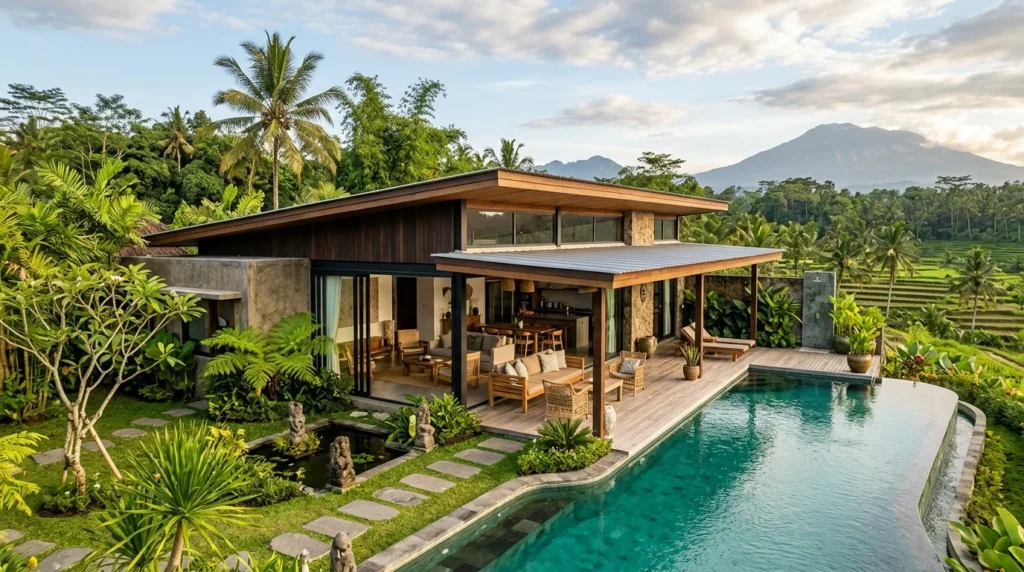
Residential construction in Bali is heavily influenced by the island’s unique architectural traditions and the desire for harmony with the natural environment. Traditional Balinese architecture emphasizes open-air living spaces, integration with tropical gardens, and the use of natural materials such as stone, wood, and thatch. Many residential projects — particularly villas intended for the luxury rental market — blend contemporary design with traditional Balinese elements to create spaces that are both functional and aesthetically captivating.
Design considerations for residential projects typically focus on privacy, comfort, and the creation of serene living environments. Features such as private pools, lush landscaping, open-plan living areas, and outdoor pavilions (bale) are common in Bali’s residential construction. The orientation of buildings relative to cardinal directions and sacred mountains (particularly Gunung Agung) may also play a role in residential design, reflecting the Balinese philosophy of Tri Hita Karana — the three causes of well-being, which emphasizes harmony among people, nature, and the spiritual world.
Commercial Design Priorities
Commercial construction in Bali must balance aesthetic appeal with functionality, safety, compliance, and the ability to accommodate higher volumes of people and activity. A commercial building must be designed not only to attract customers or clients but also to meet the operational requirements of the business it houses.
For instance, a commercial hotel or resort must incorporate adequate parking, service areas, fire safety systems, accessible pathways, and back-of-house facilities such as kitchens, laundry rooms, and staff quarters. Retail spaces need efficient layouts that maximize display areas while ensuring smooth customer flow. Restaurants must have ventilation systems, waste management facilities, and kitchen designs that comply with health and safety standards.
Commercial projects in Bali also tend to incorporate more advanced engineering solutions, including structural systems capable of handling larger spans and heavier loads, sophisticated electrical and plumbing infrastructure, and climate control systems suited to the tropical environment. The design process for commercial projects typically involves a larger team of professionals, including architects, structural engineers, mechanical and electrical engineers, and interior designers, all working in coordination to produce a cohesive and compliant design.
—
Construction Costs and Budgeting
Cost Factors in Residential Construction
Residential construction in Bali can vary widely in cost, depending on the level of finish, the location of the project, and the materials used. A basic residential build may cost significantly less per square meter than a luxury villa with high-end finishes, imported materials, and custom-designed features. On average, residential construction costs in Bali range from moderate to high by Indonesian standards, particularly in popular tourist areas where demand for quality construction is strong.
Key cost drivers for residential projects include land preparation (especially on sloped or terraced terrain, which is common in areas like Ubud and the southern cliff regions), the quality of structural and finishing materials, labor costs, and the fees associated with design professionals and permit acquisition. Foreign investors should also budget for legal costs related to establishing land rights and navigating the regulatory environment.
Cost Considerations for Commercial Construction
Commercial construction in Bali generally involves higher overall costs than residential projects of comparable size. This is due to several factors. Commercial projects typically require more robust structural systems, specialized installations (such as commercial-grade kitchens, fire suppression systems, elevators, and backup power generators), and compliance with more stringent building codes and safety standards.
Additionally, commercial projects often involve higher-grade materials selected for durability and high-traffic use. Flooring, for example, must withstand heavy foot traffic, while exterior cladding must endure the tropical climate with minimal maintenance. The design and engineering fees for commercial projects are also higher, reflecting the greater complexity and professional expertise required.
Another important cost factor is the provision of adequate infrastructure. Commercial developments may need to invest in road improvements, drainage systems, and utility connections to support the higher demands of a business operation. These infrastructure costs can be substantial and are sometimes overlooked in initial budgeting.
—
Construction Timeline and Project Management
Residential Project Timelines
Residential construction projects in Bali typically have shorter timelines than commercial projects. A standard villa construction project may take anywhere from six months to over a year, depending on the scale and complexity of the design. The relatively smaller scope of residential projects means that construction phases are more manageable, and the coordination requirements are less demanding.
However, residential projects in Bali are not immune to delays. Common causes of delays include the rainy season (which typically runs from November to March and can significantly impact construction progress), material delivery challenges (particularly for projects in remote or difficult-to-access locations), and labor shortages during peak construction periods or cultural holidays such as Nyepi (Balinese New Year) and Galungan.
Commercial Project Timelines
Commercial construction projects in Bali typically require longer timelines, often ranging from one to three years or more for larger developments. The extended timeline reflects the greater complexity of commercial projects, including the longer permitting process, the need for more extensive site preparation, and the more intricate construction sequences required.
Project management for commercial construction demands a higher level of coordination among multiple teams, suppliers, and regulatory bodies. A dedicated project manager or construction management firm is often essential for keeping commercial projects on track. Effective scheduling, procurement planning, and quality control processes become critical for avoiding costly delays and ensuring that the finished product meets all required standards.
—
Structural and Safety Standards
Residential construction in Bali must meet basic structural safety requirements, including resistance to seismic activity (Indonesia lies on the Pacific Ring of Fire, making earthquake resilience a priority), adequate drainage, and compliance with local building codes. However, the enforcement of these standards can vary significantly by location and project scale.
Commercial construction is held to a higher standard of structural and safety compliance. Fire safety systems, emergency exits, accessibility features for people with disabilities, and structural load calculations are all subject to more rigorous review and inspection. Commercial buildings must be designed and constructed to accommodate higher occupancy levels, which places greater demands on structural integrity, ventilation, and emergency response systems.
The enforcement of building codes and safety standards has become increasingly strict in Bali in recent years, particularly following high-profile incidents and growing awareness of the importance of construction quality. Both commercial and residential developers should work with qualified professionals who understand the current regulatory requirements and can ensure compliance throughout the construction process.
—
Environmental and Cultural Sensitivities
Environmental Considerations
Bali’s natural environment is one of its greatest assets, and construction projects — both commercial and residential — must take environmental considerations into account. However, commercial projects are typically subject to more extensive environmental review due to their greater potential impact on the surrounding ecosystem.
Commercial developments may be required to prepare environmental management plans that address issues such as water usage and waste management, traffic generation, noise pollution, and the preservation of natural habitats. Large-scale projects near sensitive areas such as beaches, rivers, rice terraces, and forests face particular scrutiny from environmental agencies and community groups.
Residential projects, while generally subject to less stringent environmental review, are still expected to respect the natural environment and incorporate sustainable practices where possible. Rainwater harvesting, natural ventilation, solar energy systems, and the use of locally sourced materials are increasingly common features in Balinese residential construction.
Cultural and Community Considerations
Bali’s cultural identity is deeply intertwined with its physical landscape, and construction projects must navigate the island’s rich tapestry of adat traditions and community expectations. Both commercial and residential developers are expected to engage with local communities and, in many cases, to seek approval from the village council (banjar) before beginning construction.
Commercial projects, with their greater visibility and impact, often face more intense community engagement requirements. Developers may need to participate in public consultations, address community concerns about traffic, noise, and environmental impact, and contribute to local infrastructure or community programs as a condition of approval.
Residential projects, particularly those in rural or semi-rural areas, are also expected to show respect for local customs and traditions. This may include incorporating traditional Balinese architectural elements, observing sacred spatial orientations, and participating in community ceremonies related to the construction process.
—
Conclusion: Choosing the Right Path for Your Bali Construction Project
The differences between commercial and residential construction in Bali extend far beyond the simple distinction of purpose. From the regulatory framework and permitting process to design requirements, cost considerations, construction timelines, and cultural sensitivities, these two categories of construction demand distinct approaches and professional expertise.
For investors and developers, the key to a successful construction project in Bali lies in thorough preparation, a deep understanding of the local regulatory and cultural landscape, and the engagement of qualified professionals who can navigate the complexities of the Balinese construction environment. Whether you are building a private villa nestled among rice paddies or a commercial complex in a bustling urban area, respecting the island’s traditions, protecting its natural beauty, and complying with its legal requirements will lay the foundation for a project that is not only profitable but also sustainable and harmonious with its surroundings.
Bali continues to offer extraordinary opportunities for both residential and commercial construction. By understanding and respecting the key differences between these two paths, you can approach your project with confidence, clarity, and a genuine appreciation for what makes this island so remarkable.
 By Jaya Construction Bali October 17, 2026
11 min read
By Jaya Construction Bali October 17, 2026
11 min read