Building Commercial Premises for Lease in Bali: A Strategic Guide for Investors
By Jaya Construction BaliOctober 5, 20267 min read
In this article
Bali, the famed “Island of the Gods,” has long captivated the world with its unique blend of breathtaking natural beauty, profound cultural heritage, and a thriving tourism industry. Beyond its appeal as a holiday destination, Bali presents a compelling opportunity for investors seeking to tap into its dynamic commercial real estate market. Building commercial premises specifically designed for lease is a strategic investment that can generate significant, long-term returns. However, navigating this process requires a nuanced understanding of local regulations, construction practices, and market dynamics. This comprehensive guide outlines the essential steps, considerations, and best practices for successfully developing a commercial property for lease in Bali.
Understanding the Balinese Commercial Real Estate Market
Before breaking ground, a thorough analysis of the market is indispensable. Bali’s commercial landscape is diverse, with demand driven by several key sectors.
The tourism and hospitality sector remains the primary engine of demand. This includes not only hotels and villas but also restaurants, bars, cafes, spas, and boutique retail shops catering to tourists. Areas like Seminyak, Canggu, Kuta, and Ubud are perennial hotspots. However, the market is evolving. The rise of “digital nomads” and long-stay tourists has spurred demand for co-working spaces, fitness studios, and specialty clinics. Furthermore, the local expat community and growing Indonesian middle class support demand for professional services like legal and accounting firms, medical centers, and international schools.
Identifying your target tenant is the first critical step. Will your building cater to a high-end restaurant, a chain retail outlet, a tech startup hub, or a wellness center? The answer will dictate location, design, size, and amenities. Conducting a feasibility study, analyzing rental rates in your chosen area, and studying occupancy trends are fundamental tasks that inform your entire project plan.
The Foundation: Legal and Regulatory Framework
The legal terrain in Indonesia, particularly concerning land and property, is complex and requires meticulous navigation. Engaging a reputable notary and a legal consultant specializing in property law is not advisable—it is essential.
Land Titles and Ownership
Foreigners cannot directly own freehold land (Hak Milik) in Indonesia. The most common structures for commercial investment are:
*Hak Sewa*: This is a leasehold right, typically granted for 25 to 30 years, with the option to extend. As the developer, you would secure a long-term lease on the land before construction.
Right to Use (Hak Pakai): This title can be held by foreign-owned companies (PT PMA) for a specific period (initially 30 years, extendable). It is suitable for commercial use.
Foreign Direct Investment Company (PT PMA): Establishing a PT PMA is the most common and recommended route for serious investors. It allows you to lease land under the company’s name and grants the legal standing to operate a commercial business, making it easier to secure the necessary building and operational permits.
Critical Permits and Licenses
The permitting process is multi-layered. Key permits include:
Location Permit (Izin Lokasi): Grants the right to use land for investment purposes.
Environmental Permit (AMDAL or UKL-UPL): A mandatory environmental impact assessment. For larger commercial projects, a full AMDAL is required; smaller developments may need a simpler UKL-UPL study.
Building Permit (Izin Mendirikan Bangunan – IMB): The most crucial permit, authorizing construction based on approved architectural plans that comply with local zoning (Rencana Tata Ruang), height restrictions, and building codes. As of recent regulations, this has been integrated into a broader Persetujuan Bangunan Gedung (PBG) system.
Certificate of Function (Sertifikat Laik Fungsi – SLF): Issued after construction is complete and the building passes inspection, certifying it is safe and suitable for occupancy.
The process is iterative and involves multiple government agencies at the village (Banjar), district (Kecamatan), and provincial levels. Patience and strong local relationships are vital.
The Blueprint: Design, Construction, and Project Management
With legalities underway, the focus shifts to creating a physical asset that is both functional and attractive to tenants.
Architectural Design and Planning
Your building’s design should be a synthesis of market appeal, functionality, and local context. Consider:
Flexibility: Design open-plan layouts that can be easily partitioned to accommodate different tenant needs.
Infrastructure: Ensure robust infrastructure for modern business needs: high-speed internet fiber conduits, adequate power capacity, centralized air-conditioning, and quality water and waste management systems.
Aesthetics and Branding: A distinctive, well-maintained building becomes a brand in itself. Blending contemporary design with traditional Balinese architectural elements (such as the use of paras stone, alang-alang roofing accents, or temple-inspired entrances) can create a unique selling point.
Sustainability: Green features like rainwater harvesting, solar panels, and energy-efficient materials are increasingly valued, reducing operational costs for tenants and enhancing the property’s long-term value.
Selecting Your Construction Team
Choosing the right partners is arguably the most critical operational decision.
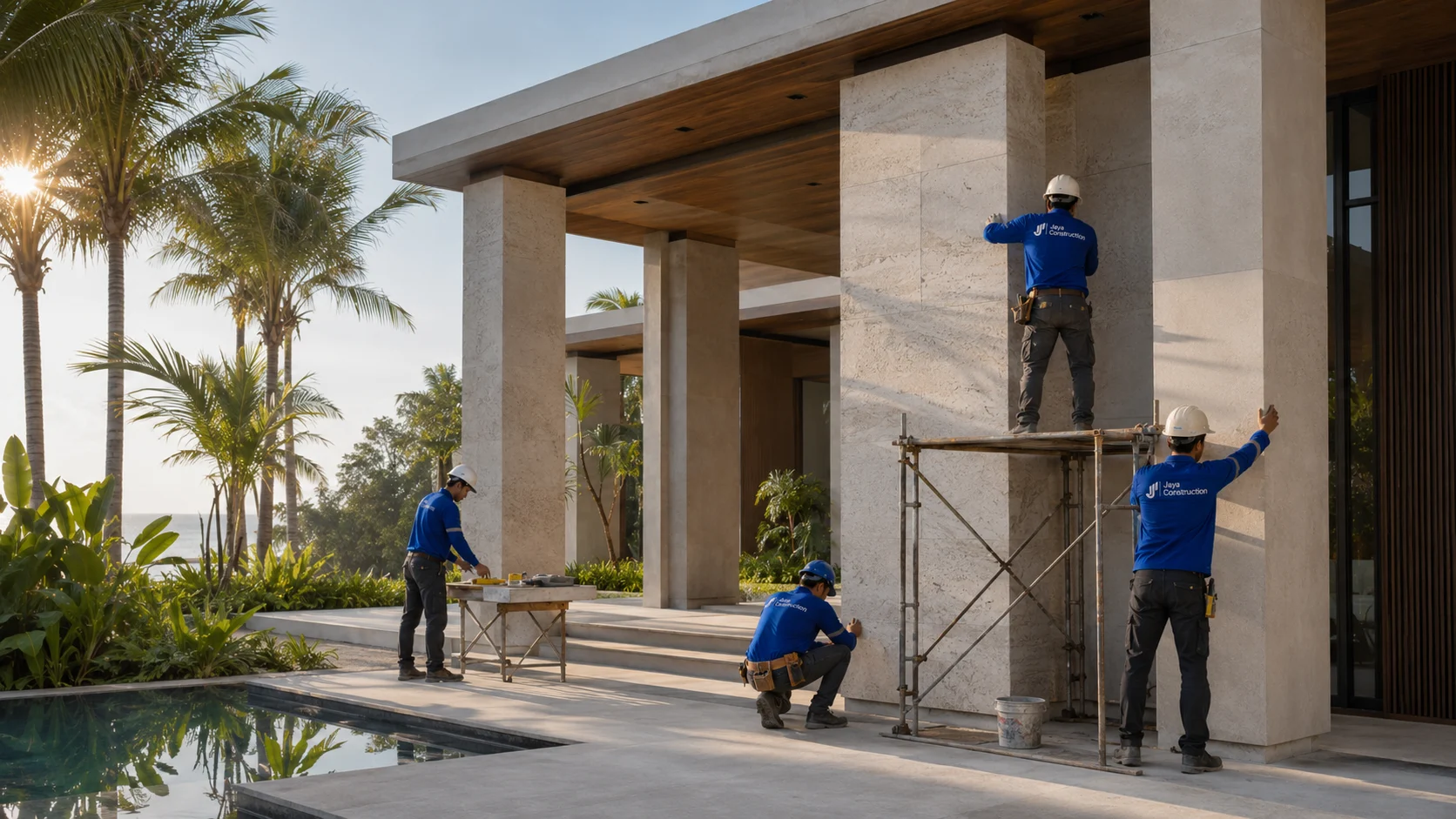
Reputable Contractor (Kontraktor): Look for contractors with a proven track record in commercial construction in Bali. Request to visit previous projects, speak with past clients, and thoroughly review their portfolio. A local partnership is key for navigating labor dynamics and material sourcing.
Project Manager: For larger projects, hiring an independent project manager to oversee the contractor, budget, and timeline can save significant money and headaches. They act as your watchdog on the ground.
Supervision: You or a trusted representative should be present regularly to monitor progress, quality of workmanship, and adherence to plans.
Material Procurement and Labor
Bali has access to both high-quality local materials (teak wood, sandstone, bricks) and imported goods. A skilled contractor will know how to source materials cost-effectively without compromising quality. Labor costs are relatively lower than in Western countries, but skilled tradespeople (electricians, plumbers) command a premium. Clear contracts, fair wages, and good working conditions prevent disputes and ensure a motivated workforce.
Financial Planning and Investment Return
A detailed financial model is the backbone of your project. It should account for:
Land Acquisition/Lease Cost: Often the largest single expense.
Construction Costs: Typically calculated per square meter. Costs vary widely based on location, materials, and finish quality (basic, mid-range, high-end). Get detailed quotes from multiple contractors.
Professional Fees: Architect, engineer, notary, legal consultant, and surveyor fees.
Permit and Licensing Fees: A substantial and sometimes unpredictable budget line.
Contingency Fund: Allocate at least 15-20% of the total budget for unforeseen expenses. Delays, price fluctuations, and design changes are common.
Fit-Out Period: Consider offering a “white box” or “shell and core” condition to tenants, allowing them to customize interiors. This reduces your upfront cost but may extend the time before rent commences.
The ultimate goal is to calculate the Return on Investment (ROI). Research comparable rental yields in your target area. Factor in potential vacancy periods (usually 6-12 months for a new build), property management fees, ongoing maintenance, and taxes. A well-located, professionally built commercial property in a prime Bali area can offer attractive rental yields, often exceeding those in more saturated markets, but patience for the development phase is required.
From Completion to Lease: Property Management and Marketing
The work does not end with the issuance of the SLF. A successful transition to a leased property requires proactive management.
Effective Marketing Strategy
Professional Listing: High-quality photography, drone videos, and 3D renderings are non-negotiable.
Online Presence: List on major property portals (like Rumah.com, Lamudi) and consider international commercial listing sites. A dedicated website for the property can be highly effective.
Local Network: Engage with local commercial real estate agents who have strong networks of potential tenants.
Signage: Prominent “For Lease” signage at the property is essential for capturing local and passing interest.
Lease Structure and Tenant Relations
A clear, comprehensive lease agreement is your protection. It should specify:
Lease term and renewal options.
Rental amount, escalation clauses, and payment schedule.
Security deposit and advance rent.
Responsibilities for maintenance, repairs, and utilities.
Permitted use of the premises.
Signage and branding policies.
Insurance requirements for both parties.
Establishing a good relationship with your tenant from the outset fosters long-term occupancy. Responsive property management—ensuring the common areas are clean, amenities are functional, and issues are addressed promptly—is crucial for tenant satisfaction and retention.
Conclusion: A Rewarding Endeavor with Due Diligence
Building commercial premises for lease in Bali is a significant undertaking that promises substantial rewards for the prepared investor. The island’s enduring appeal, coupled with its growing sophistication as a business hub, creates a resilient market for well-positioned commercial real estate. Success, however, is not guaranteed by location alone. It is the direct result of rigorous due diligence, strict adherence to legal protocols, strategic design, disciplined financial planning, and professional management.
By approaching this venture as a long-term business—leveraging expert local knowledge while applying sound investment principles—you can construct more than just a building. You can create a valuable, income-generating asset that contributes to Bali’s evolving commercial landscape and stands as a testament to strategic international investment.
 By Jaya Construction Bali October 5, 2026
7 min read
By Jaya Construction Bali October 5, 2026
7 min read