Building a Villa in Canggu: A Comprehensive Guide for Aspiring Owners
By Jaya Construction BaliAugust 15, 20267 min read
In this article
Canggu, a coastal gem on Bali’s southwestern shore, has transformed from a sleepy surfers’ haven into a vibrant hub of international lifestyle and investment. Its unique blend of world-class waves, trendy cafés, a burgeoning wellness scene, and a palpable creative energy makes it a prime location for owning a slice of paradise. For many, this dream crystallizes into the ambitious project of building a custom villa. However, navigating the process in a foreign country with distinct regulations and cultural practices is a complex endeavor. This guide provides a detailed roadmap, covering everything from legal groundwork to final finishing touches, to help you turn your vision into a reality.
Introduction: The Allure and the Reality
The appeal of building in Canggu is undeniable. Unlike buying an existing property, constructing your own villa allows you to tailor every detail to your preferences—from the architectural style and floor plan to the sustainable materials and smart home integrations. You can position the pool to capture the best sunset view and design indoor-outdoor living spaces that embrace Bali’s tropical climate. However, this freedom comes with significant responsibility. Success hinges on meticulous planning, a deep understanding of local laws, and assembling a trustworthy, professional team. Rushing in without this foundation is a recipe for budget overruns, legal headaches, and immense stress. The goal of this article is to equip you with the essential knowledge to embark on your building journey with confidence and clarity.
Part 1: The Legal and Ownership Framework
Before you even start looking at land, you must understand the legal landscape governing property ownership and construction in Indonesia, which is particularly nuanced for foreign nationals.
Understanding Land Titles and Ownership
This is the most critical initial step. Foreigners cannot directly own freehold land (Hak Milik) in Indonesia. Instead, they typically use two main avenues:
Leasehold (Hak Sewa): The most common and straightforward method. You lease the land for a fixed period, usually 25 or 30 years, often with options to extend. The lease agreement is registered and provides strong rights to use the land and any structures on it.
Establishing a PT PMA (Foreign-Owned Company): To hold the land under a Right to Build (Hak Guna Bangunan – HGB) title, you can set up an Indonesian limited liability company with foreign investment. This is a more complex and costly structure but can offer longer-term security and business benefits.
Always conduct thorough due diligence on the land title with a reputable notary (Notaris) or legal consultant to ensure it is clean, free of disputes, and has the correct designation for building (e.g., residential vs. agricultural).
Navigating the Building Permit Maze
The Indonesian building permit system underwent a major overhaul. The old Izin Mendirikan Bangunan (IMB) has been largely replaced by the Persetujuan Bangunan Gedung (PBG). However, the principle remains: you cannot legally build without this permit. The PBG is issued by the local Public Works agency and certifies that your architectural plans comply with zoning regulations, safety standards, and spatial planning. For villas intended for short-term rental (a common use in Canggu), you may also need a Pondok Wisata (homestay) license or a commercial tourism business license, depending on scale and classification. Engaging a local expert to handle permit applications is not a luxury—it is a necessity.
Part 2: Assembling Your Professional Team
Your project’s success is directly proportional to the quality of the team you build. Cutting corners here is ill-advised.
The Essential Roles
Architect: A good architect does more than draw pretty pictures. They design for the local climate (ensuring proper ventilation, shade, and drainage), understand Canggu’s aesthetic (from sleek modern to rustic bohemian), and are familiar with building regulations. They will produce the detailed drawings required for the PBG application and contractor bidding.
Construction Manager / Main Contractor: This is the entity that will execute the build. You have two primary paths:
* Hiring a Main Contractor (Kontraktor): They take full responsibility for construction, sourcing subcontractors, and managing the site. This offers a single point of accountability but requires trust in their management.
* Appointing a Construction Manager (Manajer Proyek): This independent professional acts as your agent, overseeing the contractor’s work, ensuring quality, managing the budget, and reporting to you. This is highly recommended for owners not residing in Bali during construction.
Notary (Notaris): Essential for drafting and legally registering all contracts, especially the land lease or purchase agreement (Akta Jual Beli – AJB).
Vetting and Selection
Do not rely solely on online portfolios or promises. Visit completed projects, speak to former clients, and request detailed, itemized quotations. A transparent contractor will provide a clear breakdown of material costs and labor. Contracts must be comprehensive, in both English and Bahasa Indonesia, detailing payment schedules (typically tied to project milestones), timelines, specifications, and warranties.
Part 3: Finding the Perfect Plot in Canggu
Location within Canggu varies greatly. Consider these factors:
Proximity: Do you want to be steps from the beach (Batu Bolong, Berawa), in the heart of the action near cafés, or in a quieter, more rural area like Pererenan or Seseh?
Access: Is the road to the plot paved and accessible for construction trucks? Narrow, unpaved access can create major logistical and cost issues.
Topography and Orientation: A flat plot is easier and cheaper to build on. A slope might offer stunning views but requires more complex (and expensive) foundations and terracing. Consider the orientation for sun paths and prevailing winds.
Zoning: Confirm with the local village head (Kepala Desa) and your architect/consultant that the land is zoned for residential construction (Permukiman). Agricultural land cannot be built on without a difficult and often unsuccessful change of use permit.
Part 4: Design, Budgeting, and the Construction Process
With your team and land secured, the physical journey begins.
Design Philosophy
Work closely with your architect to create a design that is both beautiful and functional for the tropics. Key considerations include:
Indoor-Outdoor Flow: Large sliding doors, open pavilions (bale), and shaded terraces are hallmarks of Balinese design.
Ventilation: High ceilings, strategically placed windows, and open-air spaces reduce reliance on air conditioning.
Materials: Using local materials like volcanic stone (paras), wood, and alang-alang grass roofing not only blends with the environment but also supports the local economy.
Creating a Realistic Budget
This is where many projects falter. Your budget must include:
Land Cost
Legal & Professional Fees (architect, notary, permits, consultants)
Construction Costs (materials and labor)
Contingency Fund:This is non-negotiable. Allocate 15-20% of your total construction budget for unexpected issues, material price fluctuations, and design changes.
Furnishing & Landscaping
Post-Completion Costs (e.g., setting up utilities, pool equipment, smart home systems).
The Construction Phases
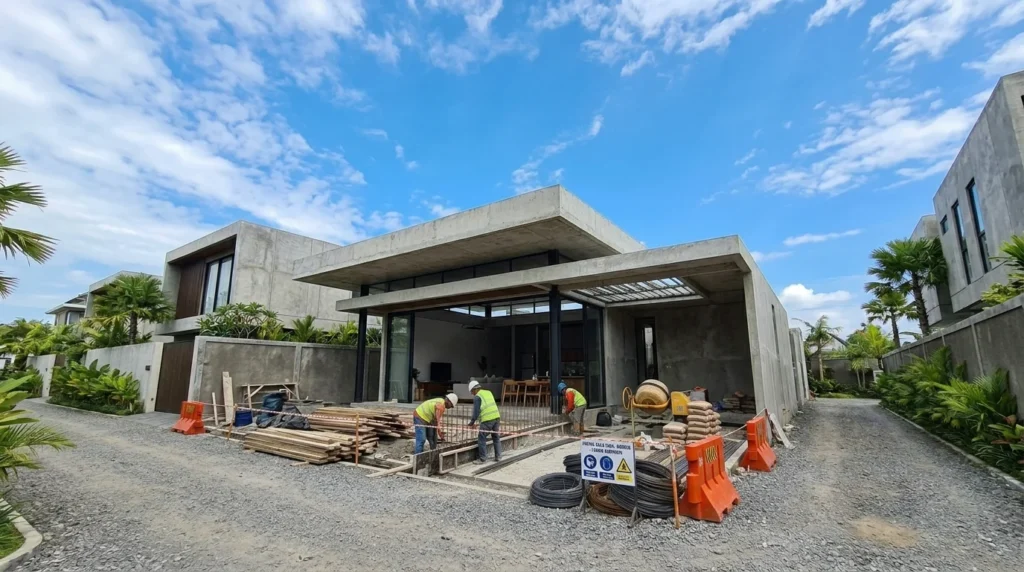
Site Preparation: Clearing, leveling, and soil testing.
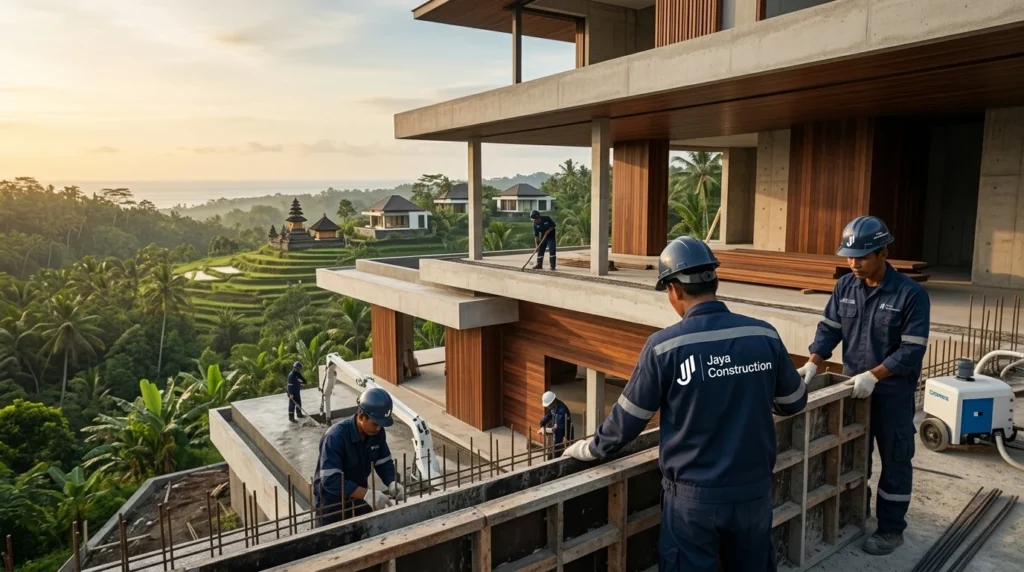
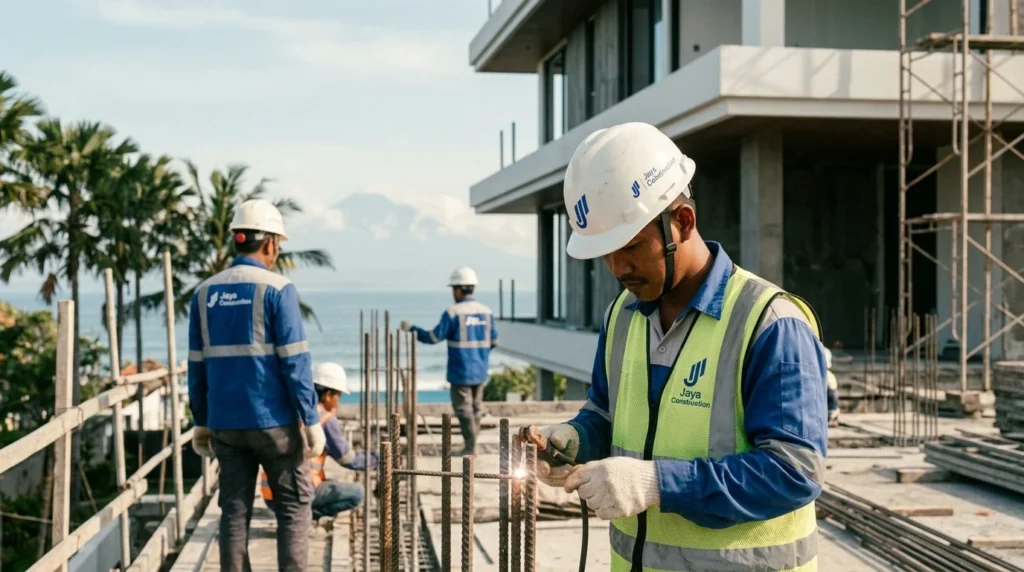
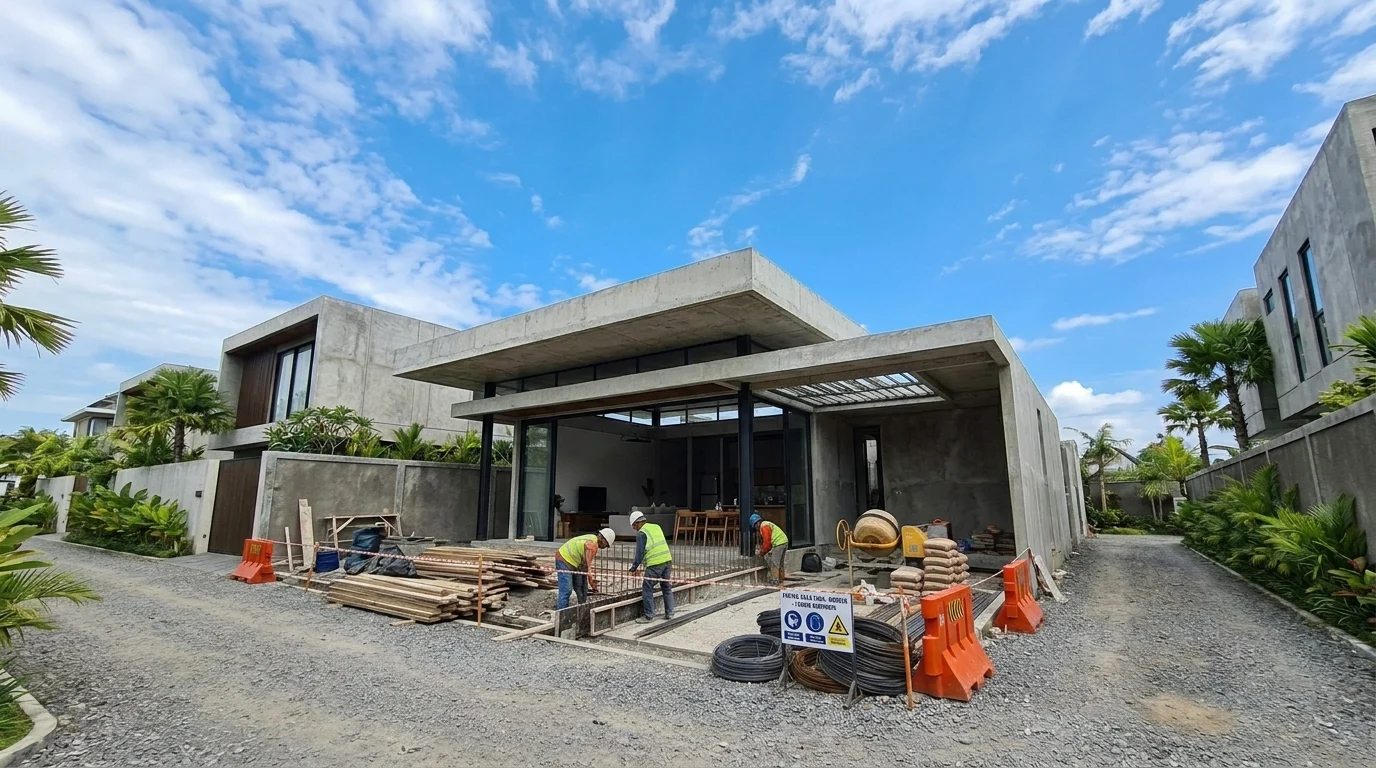
Structural Work: Foundation, columns, beams, and roof structure. This is when you use reinforced concrete (beton bertulang).
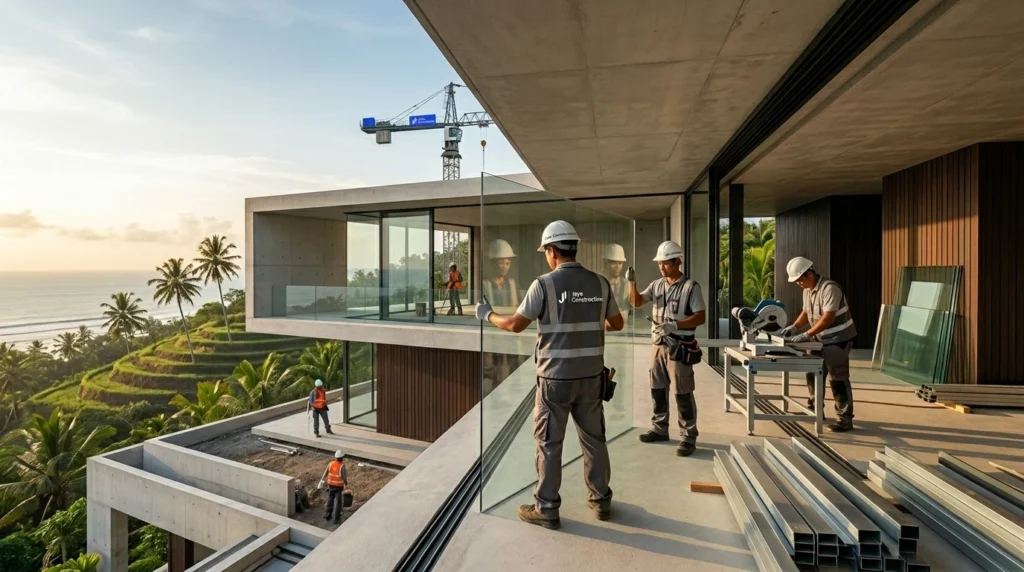
Building Envelope: Walls, roofing, and installation of windows/doors.
Mechanical, Electrical, and Plumbing (MEP): Laying pipes for water and drainage, electrical wiring, and HVAC planning. This is done before plastering.
Finishing: Plastering, tiling, painting, installation of fixtures (lights, taps, cabinets).
Landscaping & Pool: Hardscaping, planting, and pool construction.
Handover & Snagging: A thorough inspection with your contractor to identify and rectify any defects (snag list) before final payment.
Part 5: Navigating Common Challenges and Cultural Nuances
Building in Bali is a cultural experience as much as a construction one.
Communication and Pace
The Balinese concept of jam karet (“rubber time”) means schedules can be fluid. Daily, clear communication with your site manager is vital. Regular meetings (weekly is recommended) help keep the project on track. Patience is a required virtue.
Respect for Local Customs
Bali is a deeply spiritual island. You will likely need to conduct a small blessing ceremony (melaspas) before construction begins to appease the spirits of the land. Respect for Nyepi (Day of Silence) and other major religious holidays will mean work pauses. Integrating respectful practices fosters goodwill with your workforce and the community.
Sustainability and Eco-Conscious Building
Canggu’s rapid growth has stressed local resources. Consider integrating sustainable features: rainwater harvesting, solar water heaters, solar panels, wastewater treatment systems, and the use of recycled or sustainable materials. This is not only environmentally responsible but can also lead to long-term operational savings.
Conclusion: Building Your Dream with Eyes Wide Open
Building a villa in Canggu is an incredibly rewarding venture that offers both a personal sanctuary and a valuable asset. However, it is a serious undertaking that demands preparation, patience, and a significant financial commitment. The key to success lies in respecting the legal framework, investing in a qualified professional team, engaging deeply in the design process, budgeting conservatively with a hefty contingency, and embracing the local culture and pace.
By treating this not just as a construction project but as a holistic journey—blending legal acumen, architectural vision, and cultural sensitivity—you can navigate the complexities and emerge with a bespoke villa that perfectly captures the spirit of Canggu and serves as your personal gateway to the magic of Bali. The path is intricate, but for those who walk it carefully, the destination is unparalleled.
 By Jaya Construction Bali August 15, 2026
7 min read
By Jaya Construction Bali August 15, 2026
7 min read