The Sacred Harmony: Understanding the Philosophical Core of Authentic Balinese Architecture
By Jaya Construction BaliJune 16, 20268 min read
In this article
Authentic Balinese architecture is far more than a style of building; it is a profound physical manifestation of spiritual beliefs, cosmic order, and a deep, symbiotic relationship with nature. To the untrained eye, it may appear as a series of beautifully ornate pavilions, thatched roofs, and serene water gardens. However, to truly understand it, one must look beyond the aesthetic and into the very soul of the island—a soul shaped by centuries of Hindu-Javanese tradition, animistic beliefs, and a community-centric way of life. This architecture is not designed merely for shelter, but for creating a harmonious environment where humans, the divine, and the natural world can coexist in balance. Its definitions are found not in rigid blueprints, but in guiding principles that allow each structure to respond to its specific context, ritual, and place.
The Philosophical Foundations: A Cosmic Blueprint
The bedrock of authentic Balinese architecture is the concept of Tri Hita Karana, the three causes of well-being. This core Balinese philosophy dictates that happiness and harmony are achieved through a balanced relationship with God (Parahyangan), with other people (Pawongan), and with the natural environment (Palemahan). Every architectural decision, from the orientation of a temple to the layout of a family compound, is an attempt to nurture these three relationships.
Closely intertwined with this is the principle of Tri Angga, which views the cosmos, and by extension the built environment, as having three distinct parts: the head (utama), the body (madya), and the feet (nista). This hierarchy is meticulously applied to spatial organization. In a temple complex, the most sacred inner courtyard (jeroan) is the “head,” the middle courtyard (jaba tengah) is the “body,” and the outer courtyard (jaba) is the “feet.” This tripartite division is mirrored in everything from the design of a single shrine (padmasana) to the master plan of a royal palace, ensuring that the sacred order is embedded at every scale.
The cardinal directions are also imbued with sacred meaning, primarily derived from Hindu cosmology and the ancient Javanese text Asta Kosala Kosali. The holiest direction, kaja, points towards the sacred mountain Gunung Agung, the abode of the gods. The opposite direction, kelod, points towards the sea, associated with the demonic realm. Kangin (east) is considered auspicious and associated with the rising sun and life, while kauh (west) is associated with the setting sun and the afterlife. This cosmic compass dictates the placement of every element within a compound: the family temple is always situated in the kaja-kangin corner, the sleeping quarters are often aligned with heads pointing kangin, and the kitchen is typically placed in the kelod-kauh area, as it deals with fire and earthly matters.
The Spatial Logic: The Family Compound (Karang)
The fundamental unit of Balinese architecture is not a single house, but the family compound, or karang. This walled enclosure is a self-contained world, meticulously arranged according to the philosophical principles mentioned above. The layout reflects the social and spiritual structure of the family, functioning as a microcosm of the universe.
As one enters through the compound gate (angkul-angkul), which is often a decorated split gate symbolizing the separation of the sacred and profane, the spatial organization becomes immediately apparent. The compound is divided into zones. The northernmost (kaja) part is exclusively for the family temple (sanggah or merajan), where ancestors are worshipped and daily offerings are made. This is the most sacred and elevated area.
The central area contains the bale, or pavilions, each with a specific function and oriented to a particular direction. The bale daja, located in the northern part, is the sleeping pavilion for the family head and senior members. The bale dangin, in the east, is used for ceremonies involving the living, such as tooth-filing or weddings, and also serves as a guest pavilion. The bale delod, to the south, is often used for storage or as a workspace. The bale dauh, in the west, is a general-purpose pavilion for daily activities.
Crucially, there is no single, consolidated “house” as understood in Western architecture. Daily life unfolds in these open-sided pavilions, blurring the boundary between inside and outside. This design is perfectly adapted to the tropical climate, promoting natural ventilation and a constant connection with the surrounding garden and landscape. The garden is not merely decorative; it is a productive and sacred space filled with flowering plants, fruit trees, and medicinal herbs, all playing a role in daily rituals and sustenance.
Material Honesty and Structural Poetry
Authentic Balinese architecture exhibits a profound honesty in its use of materials, which are largely derived from the immediate environment. The primary building materials are stone, brick, wood, and thatch, each selected for its structural properties, spiritual significance, and ability to age gracefully.
Stone and Brick: Used for foundations, walls, and temple structures (pelinggih). Volcanic stone is particularly revered for its connection to the island’s sacred geography. Brick is often plastered with a mixture ofite and lime, creating a smooth, white or ochre surface that serves as a canvas for intricate carvings.
Wood: Used extensively for structural columns, beams, and intricate roof frameworks. The most sacred woods, like cendana (sandalwood) and suning, are reserved for temple shrines. The wood is often left unpainted, showcasing its natural grain, or is blackened with a traditional oillamp smoke treatment (abu) to preserve it and give it a distinguished, aged appearance.
Thatch (ijuk): The iconic black, fibrous thatch from the sugar palm (enau) is the material of choice for roofs. It is waterproof, insulating, and has a natural aesthetic that blends seamlessly into the landscape. The process of weaving the thatch (alang-alang) is a skilled art form in itself.
There is a deliberate avoidance of large expanses of solid wall. Instead, structures are defined by rhythmic rows of carved wooden pillars (saka) that support elaborate, multi-tiered roofs. This creates a sense of lightness, permeability, and grace. The structural system is often based on a post-and-beam framework without nails, using intricate joinery that reflects a high degree of craftsmanship passed down through generations.
The Language of Ornamentation: More Than Decoration
The ornamentation in Balinese architecture is not mere decoration; it is a symbolic language rich with meaning. Every carving, statue, and color choice tells a story from the Hindu epics (Ramayana, Mahabharata), depicts guardian spirits, or represents natural elements essential to maintaining cosmic balance.
Stone Carvings (Batu Padasan): These adorn temple walls and gateways, depicting complex scenes from mythology, protective deities (bhoma, kala), and intricate floral motifs symbolizing the cycle of life. The fearsome kala head above entrances serves as a powerful protector, warding off evil spirits.
Wooden Carvings (Paes): Intricate carvings embellish doors, window shutters, and roof supports. Motifs often include the naga (mythical serpent), which represents water and fertility, and the garuda (mythical bird), the mount of Vishnu.
Color Symbolism: Colors are applied with symbolic intent. White (putih) represents purity and the gods of the east. Red (abang) symbolizes Brahma and the south. Yellow (kuning) is associated with Vishnu and the west. Black (hitam) represents Shiva and the north, while multi-colored patterns represent Vishnu in his role as preserver of the universe.
The overall effect is an environment saturated with meaning, where every glance can yield a spiritual lesson or a reminder of the epic narratives that underpin Balinese life.
The Human Scale and Community Integration
Despite its cosmic ambitions, Balinese architecture remains deeply human in scale. Buildings are designed to facilitate community interaction and the rituals of daily life. The open-sided pavilions encourage gathering, conversation, and the performance of communal tasks, from preparing offerings (canang sari) to weaving.
This human scale extends to the village (banjar) level. The village temple (pura desa) and the communal meeting hall (bale banjar) are architectural expressions of social cohesion. The design of these public structures follows the same principles as the family compound, reinforcing the collective identity and shared spiritual framework of the community.
Modern Adaptations and Challenges
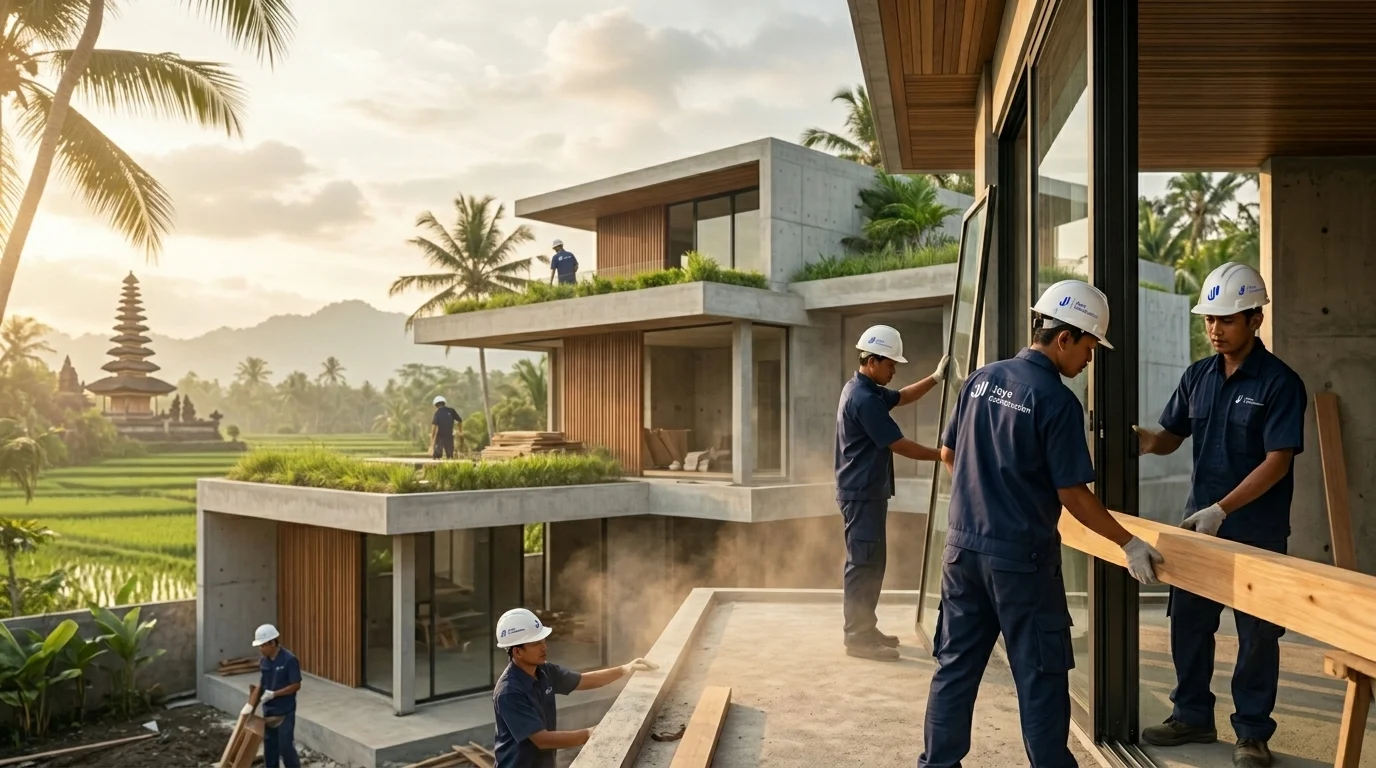
In the contemporary era, the principles of Balinese architecture face both opportunities and challenges. The global demand for “Bali-style” resorts and villas has led to the widespread adoption of its aesthetic elements—thatch roofs, stone carvings, and water features—often stripped of their deeper philosophical context. This risks reducing a sacred tradition to a mere decorative style.
However, a growing movement of conscious architects and developers is seeking to apply the principles of authentic Balinese architecture, not just its surface features. This involves:
Responsive Site Planning: Orienting buildings according to the kaja-kelod axis and respecting the natural topography and water systems.
Sustainable Material Use: Prioritizing locally sourced, renewable materials and traditional construction techniques that have a low environmental impact.
Bioclimatic Design: Embracing the open-pavilion model for natural cross-ventilation and shading, reducing the need for energy-intensive air conditioning.
Integrating Ritual Space: Even in contemporary homes, incorporating a small sanggah and spaces designed for ceremonial life, acknowledging the continued importance of Tri Hita Karana.
The true challenge lies in ensuring that the essence—the sacred harmony, the community focus, and the environmental symbiosis—is preserved alongside the beautiful forms.
Conclusion: A Living Tradition
In conclusion, authentic Balinese architecture is defined by a holistic system of thought that seeks to create balance between the spiritual, human, and natural realms. It is an architecture of the cosmos, where spatial organization follows sacred directions, materials are chosen for their inherent truth and connection to the earth, and ornamentation serves as a visual scripture. It rejects monumental permanence in favor of a poetic, human-scale expression that breathes with the climate and is interwoven with the rhythms of daily and ceremonial life.
To define it, one must look beyond the iconic tiered roofs and serene pools. One must see it as a *living tradition*—a practice that encodes the Balinese worldview into every wall, garden, and pathway. It is not a relic of the past, but a dynamic and resilient framework for creating meaning and harmony in the built environment, offering timeless lessons in sustainable, humane, and spiritually grounded design for the modern world. Its preservation depends not on freezing its forms, but on understanding and continuing the profound philosophy that gave it life.
 By Jaya Construction Bali June 16, 2026
8 min read
By Jaya Construction Bali June 16, 2026
8 min read