Back to the journal
Construction insights
Strategies for Building Affordable Housing in Bali
 By Jaya Construction Bali June 16, 2026
6 min read
By Jaya Construction Bali June 16, 2026
6 min read
By Jaya Construction Bali June 16, 2026
6 min read
By Jaya Construction Bali June 16, 2026
6 min read
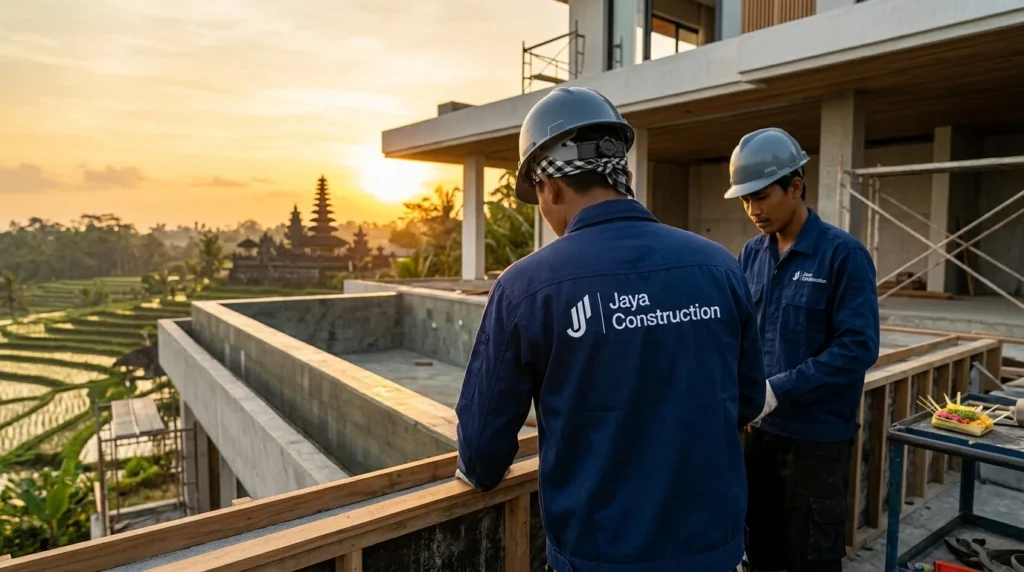
Bali, the famed “Island of the Gods,” presents a paradox in its housing market. While luxury villas and boutique hotels dot its landscape, a severe and growing shortage of affordable housing for local residents poses a significant socio-economic challenge. The influx of tourism and foreign investment has inflated land prices and construction costs, pushing adequate, permanent housing out of reach for many Balinese families, particularly younger generations and workers in the service sector. Building affordable housing here is not merely a construction project; it is a complex endeavor requiring a nuanced understanding of land tenure, local culture (adat), legal frameworks, and innovative building practices. This article provides a comprehensive guide to navigating these complexities, outlining practical strategies for developers, non-governmental organizations, and community groups committed to creating dignified, sustainable, and financially accessible homes in Bali.
Before a single brick is laid, a clear-eyed assessment of the primary obstacles is essential. These challenges define the project’s scope and strategy.
First and foremost is the prohibitive cost of land. In desirable areas close to employment centers, schools, and infrastructure, land prices have soared due to speculative development and tourism demand. Acquiring clear title land (Hak Milik) is extremely expensive, often constituting the largest single project cost. The second major hurdle is the complex and sometimes ambiguous legal framework governing land ownership, particularly for non-Indonesians. Foreigners cannot own freehold land, leading to intricate leasehold (Hak Sewa) or right-to-build (Hak Guna Bangunan) arrangements that require meticulous legal navigation to avoid future disputes. Finally, the very definition of “affordable” is context-dependent. It must align with the median income of the target demographic—often local service industry workers, artisans, and young families—requiring innovative design to drastically reduce both upfront construction and long-term maintenance costs.
The land acquisition phase is the most critical and delicate part of the process. Several pathways can be explored to mitigate cost and legal risk.
Partnering with a local village government (desa adat or kelurahan) or a community land trust can be a highly effective strategy. These entities may lease or allocate land on a long-term basis for community benefit projects at rates below commercial market value. This approach embeds the project within the local social fabric, garnering community support and ensuring the housing serves its intended residents. Alternatively, developers can focus on less commercially zoned areas, though this requires ensuring the eventual residents have reasonable access to transportation and services. Utilizing land with only Hak Guna Bangunan (right to build) status is more common and affordable than Hak Milik, but it typically has a 30-year term (extendable). Every land agreement must be vetted by a trusted, independent Indonesian notaris (notary public) and a legal expert specializing in Indonesian property law. This step is non-negotiable to secure clear contracts, verify land certificates (sertifikat), and check for any disputes or encumbrances.
With land secured, the focus shifts to designing and building the actual structures in the most cost-efficient manner. The goal is to achieve durability and comfort without the high price tag of conventional methods.
Adopting a standardized, modular design is one of the most powerful cost-saving strategies. Instead of unique architectural statements for each unit, creating a replicable design for a cluster of homes drastically reduces architectural and engineering fees, minimizes material waste, and speeds up construction. These designs should prioritize natural ventilation and lighting—leveraging Bali’s tropical climate—to reduce future energy costs. Simple rectangular footprints, efficient room layouts, and shared walls in townhouse-style configurations can maximize the number of units on a plot of land. Material selection is equally crucial. Instead of expensive imported finishes, projects should source locally available materials like volcanic rock (paras), sustainable timber from certified plantations, and bamboo. Modern, reinforced bamboo construction, when treated and engineered properly, offers a strong, flexible, and aesthetically pleasing alternative at a fraction of the cost of concrete and steel. Furthermore, investing in high-quality, durable roofing and foundations is a long-term cost saver, preventing expensive repairs.
Engaging the local workforce and employing traditional building techniques, overseen by a skilled project manager, can also reduce costs while providing valuable employment within the community. Utilizing a mixed construction model—where the core structure (foundation, walls, roof) is professionally built, and finishing tasks (plastering, painting, cabinetry) can be completed by the future owners under guidance—can further reduce the final price tag and instill a sense of ownership.
Overcoming the financing barrier requires moving beyond traditional developer-financed models. A multi-stakeholder approach is often necessary.
Microfinance institutions and social impact investors can provide loans tailored to low-income borrowers with more flexible terms than commercial banks. For community-led initiatives, a “sweat equity” model can be incorporated, where future homeowners contribute a set number of hours of labor during the construction phase, reducing labor costs and building community cohesion. Securing grants or subsidies from governmental housing programs (like the KemenPUPR or provincial initiatives) or international development agencies can provide critical initial capital to subsidize land costs or infrastructure (water, electricity, roads), making the overall project financially viable.
Crowdfunding platforms and partnerships with corporations seeking to fulfill Corporate Social Responsibility (CSR) mandates can also be explored. In all cases, transparency in financial management is paramount to maintain trust among investors, donors, and the homebuyers themselves. Establishing a cooperative (koperasi) structure for the housing community can help manage shared finances, maintenance funds, and future resale in an equitable manner.
An affordable house is not an island; its value and livability are deeply tied to its context. Developers must plan and often fund the integration of basic infrastructure.
This includes ensuring access to clean water (through community wells, water filtration systems, or connection to the local PDAM supply), reliable electricity, and effective waste management and sanitation solutions (such as community-scale composting or septic systems). Internal pathways and access roads must be designed for safety and connectivity. Ignoring these elements leads to isolated, unhealthy, and ultimately unsuccessful developments.
Cultural integration is just as important. Housing projects should respect the spatial and spiritual principles of Balinese architecture, such as the orientation of buildings according to the cardinal directions (kaja-kelod axis) and the inclusion of spaces for communal and family rituals. Engaging the local banjar (community council) early in the planning process is essential. This fosters acceptance, helps tailor the project to real needs, and can provide invaluable logistical support. The most successful projects are those seen as a collaborative effort that strengthens, rather than disrupts, the existing social and environmental fabric of Bali.
Constructing affordable housing in Bali is a formidable but profoundly necessary undertaking. It demands a hybrid approach that blends legal savvy, architectural innovation, financial creativity, and deep cultural respect. The path forward lies not in simply replicating mainland development models, but in crafting solutions that are uniquely adapted to Balinese realities. Success should be measured not only in square meters built or costs saved, but in the creation of vibrant, stable communities where local Balinese can continue to live, work, and thrive on their ancestral island. By prioritizing partnerships with local institutions, embracing cost-conscious design and materials, and engaging the community as active stakeholders, it is possible to build more than just houses; it is possible to build a more equitable and sustainable future for Bali itself. The challenge is great, but the opportunity to preserve the island’s soul while providing for its people is greater still.
Share your site, plans, priorities, or questions. Our team can help turn early information into a practical construction path.