Is Building a Villa in Bali a Good Investment? A Comprehensive Analysis
By Jaya Construction BaliJuly 4, 20267 min read
In this article
Bali, the famed “Island of the Gods,” has long captivated the world with its stunning landscapes, rich cultural tapestry, and spiritual allure. For decades, it has been a top-tier tourist destination, and in recent years, it has also emerged as a hot spot for property investors. The idea of owning a private villa amidst rice terraces or perched above the Indian Ocean is undeniably appealing. But beyond the dream, is building a villa in Bali a sound financial investment? The answer is not a simple yes or no. It is a complex equation where high potential returns are balanced against significant risks and logistical challenges. This article provides a deep dive into the critical factors you must consider before embarking on such a venture.
The Allure: Why Bali’s Villa Market is Thriving
The primary driver behind Bali’s villa investment appeal is its tourism engine. While the island saw a sharp dip during the global pandemic, it has roared back with a vengeance. In 2023, Bali welcomed over 5 million international tourists, surpassing pre-pandemic levels, with targets set even higher. This consistent influx of visitors creates a robust and seemingly insatiable demand for private, high-quality accommodation. Unlike hotels, villas offer privacy, space, and a personalized experience that many modern travelers, especially families and groups, actively seek out.
This demand translates into compelling financial metrics. High rental yields are often the most cited advantage. In prime locations like Seminyak, Canggu, or Ubud, well-managed villas can achieve gross rental yields ranging from 10% to 15% annually, and sometimes even higher for exceptional properties. This is significantly above the global average for residential property and dwarfs the returns from traditional assets like savings accounts or bonds. Furthermore, Bali’s property market has demonstrated strong potential for capital appreciation. Over the last decade, land values in sought-after areas have seen steady double-digit annual growth. Building a villa not only generates rental income but also positions you to benefit from the increasing value of the underlying land.
Beyond pure numbers, there are lifestyle and strategic benefits. For some, it’s a hybrid investment—a personal holiday home that generates income when not in use. For others, particularly expatriates and digital nomads who now form a large part of Bali’s resident community, it represents a tangible asset in a beloved location. The island’s continued development of international schools, healthcare facilities, and co-working spaces solidifies its status as more than just a holiday spot, broadening the potential tenant or buyer pool.
The Legal Labyrinth: Navigating Ownership Structures
Perhaps the single greatest barrier and risk factor for foreign investors in Bali is the legal framework surrounding property ownership. Indonesian land law is complex and does not allow freehold ownership (Hak Milik) by foreigners. This fundamental fact dictates that every foreign investor must navigate one of several alternative, often less straightforward, pathways.
The most common and generally recommended structure for villa investment is through a leasehold ownership arrangement, known as Hak Sewa. This involves leasing the land directly from an Indonesian landowner for a fixed term, typically 25 or 30 years, with the option to extend for another period (often for a fee). While you own the physical building on the land, you do not own the land itself. The security of your investment hinges entirely on the strength of the lease agreement and the reliability of the landowner. A poorly drafted lease or a dispute with the landowner can jeopardize your entire asset.
The alternative, setting up a foreign-owned company (PT PMA) to hold the land under a Hak Guna Bangunan (Right to Build) title, is a more capital-intensive and administratively heavy process. It requires significant ongoing compliance with Indonesian corporate law and tax regulations. While it offers a clearer title on the building, the underlying land is still leased, and the corporate structure adds layers of cost and complexity. The infamous “nominee” arrangement, where a foreigner uses an Indonesian citizen’s name to hold freehold title, is technically illegal and extremely risky. This practice offers the foreigner zero legal protection and can lead to the total loss of the investment. Due diligence on land status and titles is non-negotiable.
The Financial Realities: Construction, Management, and Hidden Costs
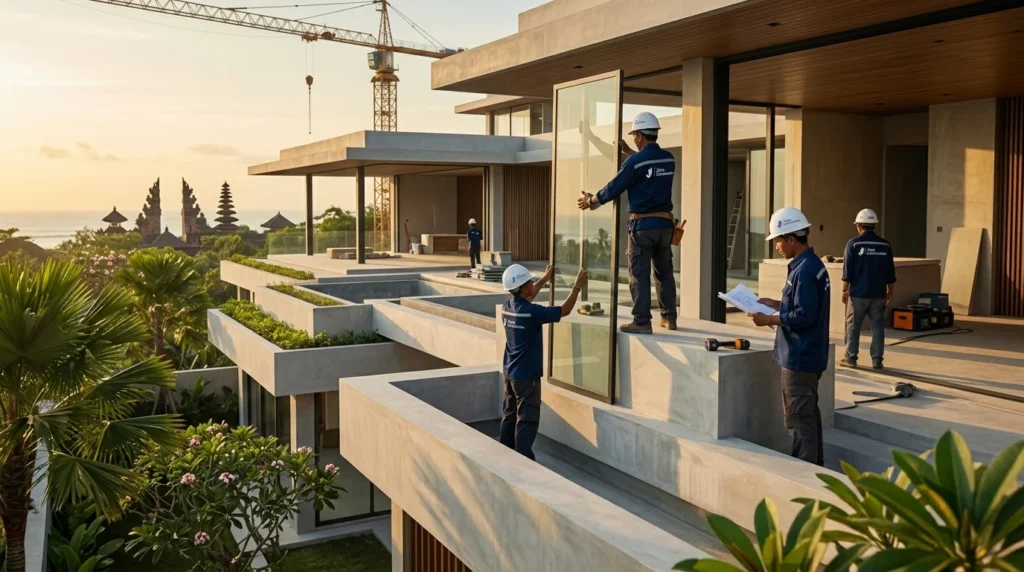
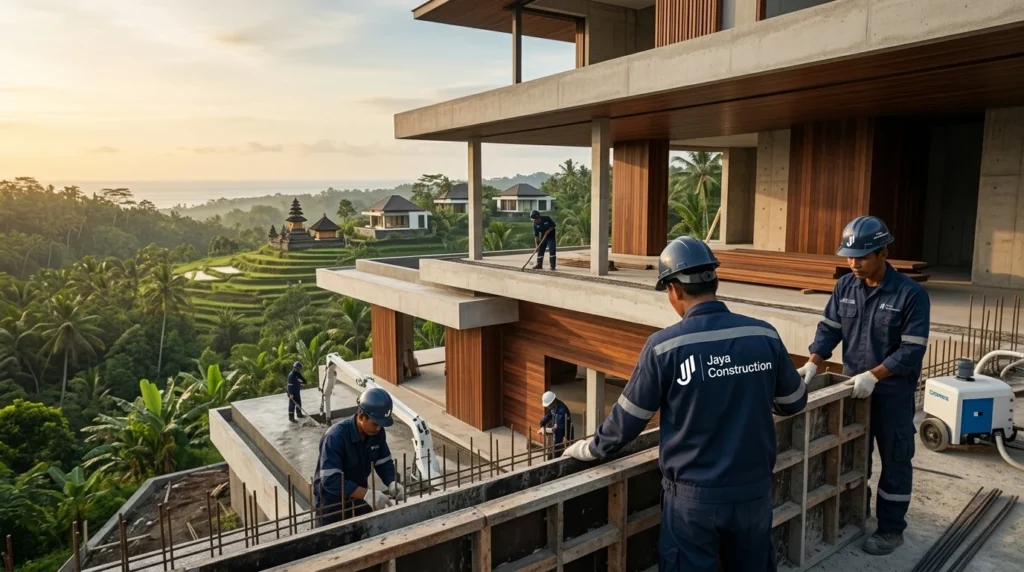
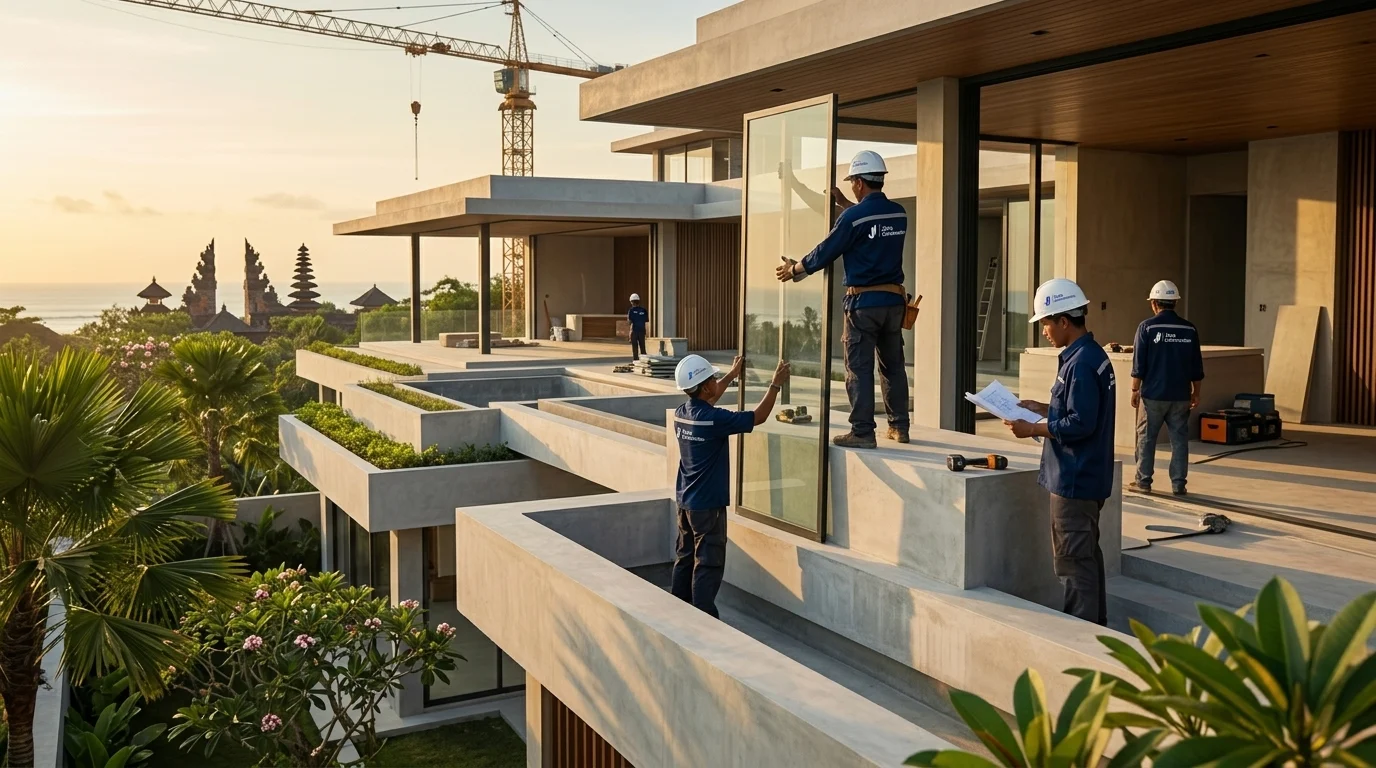
The romantic image of building your dream villa can quickly clash with the gritty realities of construction in Bali. Costs can spiral out of control due to a variety of factors. While per-square-meter construction costs may appear lower than in Western countries, this is often offset by a lack of transparent pricing, potential for material substitutions, and project management challenges. Hiring a reputable architect and an independent project manager (not affiliated with the contractor) is crucial but adds to upfront expenses.
Once the villa is built, the operational phase begins, and this is where the “passive income” myth is often busted. A successful rental villa requires professional, hands-on management. This includes marketing across multiple platforms (Airbnb, Booking.com, luxury agency listings), 24/7 guest communication, check-in/out services, rigorous housekeeping, garden and pool maintenance, and swift technical repairs. While you can manage it remotely, the time zone difference and cultural nuances make this extremely difficult. Most investors hire a local villa management company, which typically charges a 15-25% commission on gross rental income, significantly impacting your net yield.
Other recurrent costs are often underestimated: staff salaries (including mandatory religious holiday bonuses), utilities, insurance, local community fees (banjar contributions), property tax (PBB), and marketing fees. There’s also the factor of seasonality. While Bali’s peak seasons (July-August, Christmas-New Year) can be very lucrative, the quieter months can see occupancy rates drop, impacting overall annual returns. A comprehensive financial model accounting for all these costs, with conservative occupancy rate assumptions, is essential before breaking ground.
The Competitive Landscape and Market Saturation
The very popularity of the Bali villa investment has led to concerns about market saturation, particularly in established tourist corridors. In areas like Seminyak or Canggu, the supply of villas is vast, creating intense competition. New investors are not just competing with other individual owners but also with professionally run boutique hotel chains and villa management corporations with sophisticated marketing budgets.
To succeed, a new villa must offer a compelling unique selling proposition (USP). This could be an unparalleled location (absolute beachfront, rice field view), exceptional architectural design, superior amenities (cinema room, gym, staff quarters), or a highly specific service offering (wellness-focused, family-centric, event-friendly). Simply building a generic three-bedroom villa is no longer a guarantee of high occupancy. Investors must also be prepared for the constant cycle of maintenance and refreshment to keep the property competitive in a fast-evolving market.
Mitigating the Risks: A Strategic Approach to Investment
Despite the challenges, building a villa in Bali can indeed be a highly rewarding investment for those who approach it strategically. Success hinges on thorough preparation and professional guidance at every step.
First, assemble the right team. This includes a reputable bilingual lawyer specializing in Indonesian real estate and foreign investment, an architect with a strong portfolio in Bali, an independent project manager, and a well-regarded property management company. Cutting corners on professional fees is a false economy.
Second, conduct exhaustive due diligence. Verify land titles, check for zoning restrictions and building permits (IMB), understand the community dynamics in your chosen area, and investigate potential infrastructure developments (a new highway or airport could transform the value of your investment, positively or negatively).
Third, financial prudence is paramount. Secure financing for the entire project lifecycle, including a buffer of at least 20-30% for construction overruns. Model your returns based on realistic, long-term averages, not peak-season projections. Understand your tax obligations both in Indonesia and your home country.
Finally, consider your exit strategy from the outset. The market for selling leasehold properties is less liquid than for freehold in many countries. Your investment horizon should be long-term (10+ years) to comfortably ride out market fluctuations and maximize capital appreciation.
Conclusion: A Calculated Gamble with Potential for High Reward
So, is building a villa in Bali a good investment? The verdict is that it is a potentially excellent investment, but it is far from a guaranteed or passive one. It is best suited for investors with a high risk tolerance, a significant capital outlay, and a long-term perspective. Those seeking a simple, hands-off asset should consider established rental properties rather than a new build.
The island’s enduring appeal, robust tourism fundamentals, and lifestyle appeal provide a strong foundation. The high rental yields and capital growth potential are real and well-documented. However, these are unlocked only by successfully navigating the legal complexities, managing construction carefully, and treating the villa as a serious business—not just a holiday home.
For the diligent investor who does their homework, assembles a trustworthy team, and engages actively with the management of their property, building a villa in Bali can offer a rare combination of financial return and personal fulfillment. It is a venture where the financial and emotional rewards can be deeply intertwined, but only if the romance of the island is tempered with the rigor of sound business practice.
 By Jaya Construction Bali July 4, 2026
7 min read
By Jaya Construction Bali July 4, 2026
7 min read