How to Budget for a Villa Build in Bali: A Comprehensive Guide for Homeowners and Investors
By Jaya Construction BaliJuly 2, 202613 min read
In this article
Building a villa in Bali is a dream shared by thousands of expatriates, entrepreneurs, and investors from around the world. The island’s lush tropical landscapes, vibrant culture, relatively low cost of living, and thriving tourism industry make it one of the most attractive destinations for property development in Southeast Asia. However, translating that dream into reality requires more than a vision — it demands a thorough, disciplined, and well-researched budgeting process.
Many aspiring villa owners arrive in Bali with enthusiasm and a rough idea of costs, only to discover that the financial landscape is far more nuanced than expected. Unexpected expenses, fluctuating material prices, regulatory requirements, and the complexities of managing a construction project in a foreign country can quickly derail even the most carefully considered plans. Without a proper budget, costs can spiral by 30 to 50 percent or more, turning what seemed like an affordable project into a financial burden.
This guide will walk you through every major cost component involved in building a villa in Bali, from land acquisition to final furnishing. It will help you understand the local construction market, identify hidden costs, and develop a realistic financial plan that protects your investment while still allowing you to build the villa of your dreams.
Understanding the Bali Construction Market
Before diving into specific numbers, it is essential to understand the unique characteristics of the construction market in Bali. Unlike building in your home country, constructing a villa in Bali involves navigating a different regulatory framework, working with local contractors who may operate under different business standards, and managing costs that can vary widely depending on location, materials, and the complexity of the project.
Bali’s construction industry has grown enormously over the past two decades, driven by the island’s booming tourism and real estate sectors. This growth has brought both opportunities and challenges. On one hand, there is now a well-established ecosystem of architects, contractors, interior designers, and project managers who specialize in building luxury villas. On the other hand, the market is also rife with unlicensed builders, unreliable suppliers, and operators who may cut corners or inflate costs.
The quality and cost of your build will depend heavily on the team you assemble. Taking the time to vet contractors, check references, and understand the local market before committing to a budget is one of the most important steps you can take.
Location Matters
The cost of building a villa varies significantly depending on its location within Bali. Prime areas such as Seminyak, Canggu, Uluwatu, and Ubud tend to command higher land prices and, in some cases, higher construction costs due to increased demand. More remote areas in the north or east of the island may offer lower land prices but could incur additional transportation costs for materials and labor.
It is also worth noting that certain areas of Bali are subject to specific zoning regulations and building restrictions, particularly those near sacred sites, coastlines, or rice terraces. These regulations can affect what you are allowed to build, how high you can go, and what design elements are permissible — all of which can influence your budget.
Major Cost Components of a Villa Build
Budgeting for a villa build in Bali requires a detailed understanding of each cost component. Below is a thorough breakdown of the primary expenses you should expect.
Land Acquisition
The first and often most significant expense is purchasing or leasing land. In Bali, foreigners cannot directly own freehold land (hak milik). Instead, the most common arrangements are:
Leasehold (hak sewa): This is the most popular option for foreign investors. Lease terms typically range from 25 to 30 years, often with options to extend. Leasehold prices vary dramatically depending on location, size, and proximity to popular areas. In prime Seminyak or Canggu locations, leasehold prices for a 300 to 500 square meter plot can range from $80,000 to $300,000 or more for a 25-to-30-year lease. In less developed areas, prices may drop to $20,000 to $60,000.
Right to Build (hak guna bangunan, or HGB): This is available to foreign-owned companies (PT PMA) and grants the right to build on land for a set period, usually 30 years with extensions. Setting up a PT PMA involves additional legal and administrative costs, which should be factored into your budget.
Nominee Arrangements: Some foreigners use Indonesian nominees to hold freehold land on their behalf. While this has been common in practice, it exists in a legal grey area and carries significant risks. This route is generally discouraged by legal professionals.
When budgeting for land, always factor in additional costs such as notary fees, due diligence surveys, boundary checks, and any taxes or duties associated with the transaction. These ancillary costs can add 2 to 5 percent to the overall land price.
Permits and Legal Fees
Building a villa in Bali requires several permits and legal documents. The primary ones include:
IMB (Izin Mendirikan Bangunan): This is the building permit required before construction begins. In recent years, this has been replaced or supplemented by the PBG (Persetujuan Bangunan Gedung) under newer regulations. The cost depends on the size and type of building but typically ranges from $500 to $3,000 for a standard villa.
Environmental and Zoning Approvals: Depending on your location, you may need additional approvals related to environmental impact, water usage, or proximity to protected areas.
Legal Fees: Hiring a reputable lawyer to handle land agreements, company setup (if applicable), and contract review is essential. Legal fees for a villa project typically range from $2,000 to $8,000, depending on the complexity of the transaction and the lawyer’s experience.
It is strongly recommended that you work with a qualified legal professional who specializes in Balinese property law. Skimping on legal costs at the outset can lead to far more expensive problems down the line.
Architectural Design and Planning
The design phase is where your vision begins to take shape, and it is also where you make decisions that will significantly impact your construction budget. Hiring an experienced architect who understands both your aesthetic preferences and the practical realities of building in Bali’s tropical climate is essential.
Architectural fees in Bali typically range from 5 to 12 percent of the total construction cost, depending on the firm and the level of service. Some architects offer full-service packages that include concept design, detailed construction drawings, structural engineering, and project supervision. Others may charge separately for each phase.
Investing in quality design can actually save you money during construction. A well-designed villa that accounts for natural ventilation, efficient spatial planning, and locally available materials will be cheaper to build and maintain than a poorly planned one that requires expensive modifications during the construction phase.
Construction Costs
This is the heart of your budget. Construction costs in Bali can be broken down into several sub-categories:
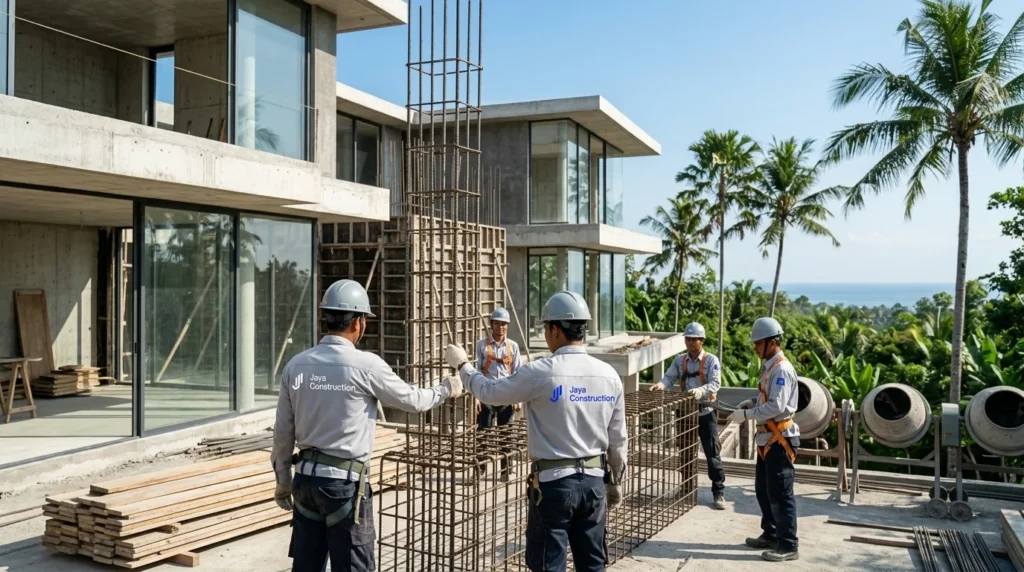
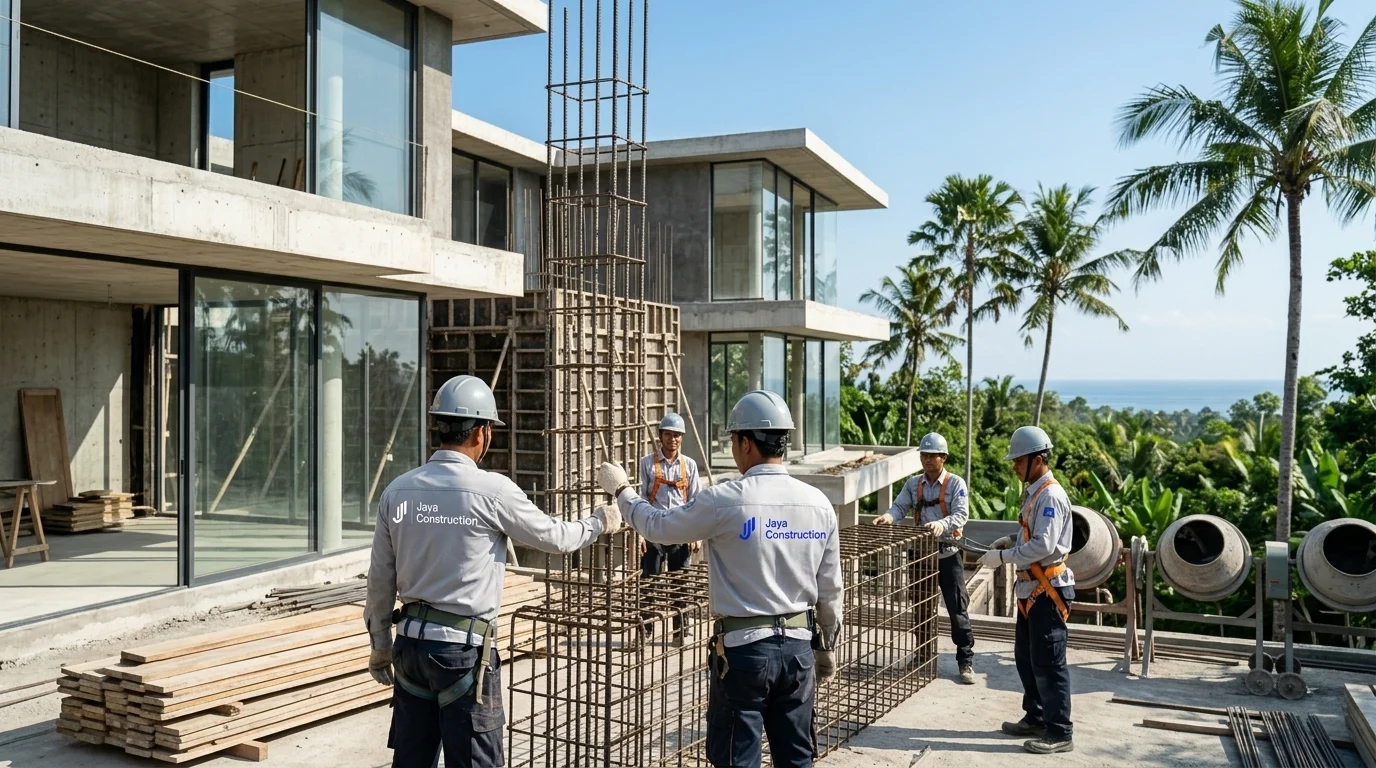
Structural Work: This includes the foundation, columns, beams, slabs, and walls. In Bali, most villas are built using reinforced concrete with brick or block infill walls. Structural costs typically account for 30 to 40 percent of total construction expenses.
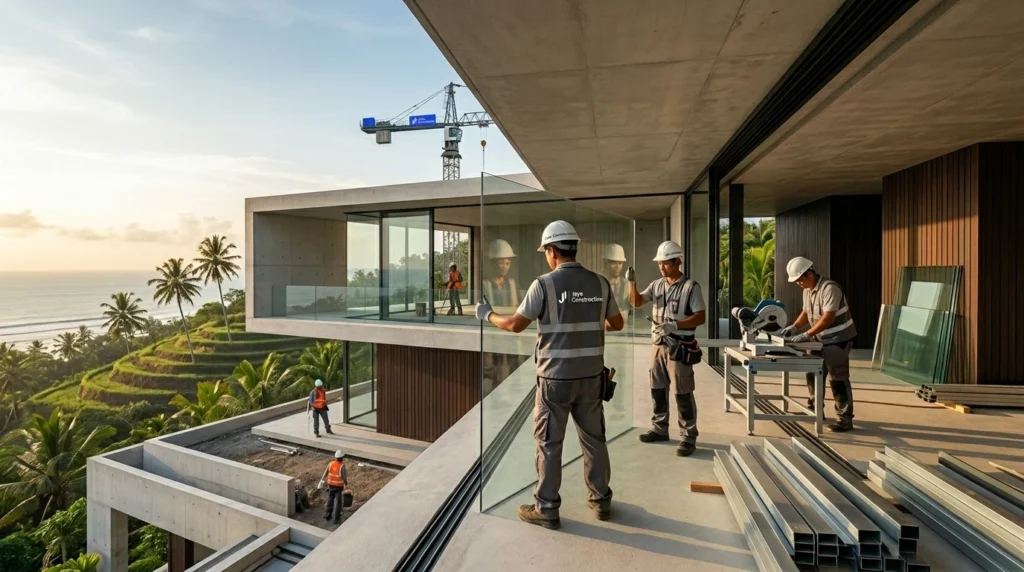
Finishing Materials: This category includes flooring, tiles, fixtures, windows, doors, roofing, and paint. Finishing costs vary enormously depending on the quality of materials you choose. A villa with locally sourced stone floors, standard fittings, and basic fixtures will cost significantly less than one with imported marble, custom woodwork, and high-end bathroom fittings.
Mechanical, Electrical, and Plumbing (MEP): This covers electrical wiring, lighting, water supply, drainage, air conditioning, and any other systems. In Bali, it is common to install water filtration systems, backup generators, and robust drainage systems due to the tropical climate. MEP costs typically represent 15 to 20 percent of total construction expenses.
As a general guideline, construction costs for a villa in Bali range from approximately $500 to $1,500 per square meter, depending on the level of finish. A basic but comfortable villa might cost $500 to $700 per square meter, a mid-range villa $700 to $1,000, and a high-end luxury villa $1,000 to $1,500 or more per square meter.
For a typical three-bedroom villa of around 200 to 300 square meters of built area, this translates to a construction budget of roughly $100,000 to $450,000.
Labor Costs
Labor in Bali is relatively affordable compared to Western countries, but costs have been rising steadily as the construction industry matures. Skilled workers such as carpenters, electricians, plumbers, and tile setters command higher wages than general laborers. A typical construction crew for a villa project might include a foreman, several skilled tradespeople, and a team of general laborers.
Labor costs generally account for 30 to 40 percent of total construction expenses. The quality of workmanship can vary significantly from one contractor to another, which is why it is so important to review previous projects, check references, and ensure that your contractor has a proven track record of delivering quality work.
Interior Design and Furnishing
Once the structure is complete, you will need to furnish and decorate the interior. Interior design costs include furniture, lighting fixtures, artwork, textiles, kitchenware, electronics, and decorative items. This is another area where costs can vary dramatically based on your taste and the level of luxury you are aiming for.
A basic furnishing package for a three-bedroom villa might cost $15,000 to $30,000. A mid-range package could run $30,000 to $70,000, while a high-end luxury interior could easily exceed $100,000. Many expatriates choose to work with local interior designers who can source unique Balinese furnishings, handcrafted pieces, and locally made textiles that add character to the villa while keeping costs manageable.
Landscaping and Outdoor Spaces
Bali’s tropical climate makes outdoor living a central part of the villa experience. Landscaping, pool construction, outdoor decking, garden features, and irrigation systems are all important budget items.
A standard swimming pool in Bali (approximately 8 by 4 meters) typically costs between $15,000 and $35,000, depending on the design, materials, and features such as infinity edges or integrated jacuzzis. Landscaping for a medium-sized villa garden can range from $5,000 to $25,000, depending on the complexity of the design and the types of plants used.
Utilities and Infrastructure
Depending on your location, you may need to budget for connecting to municipal water and electricity, installing a private well, setting up a septic system, or running internet and cable lines to the property. In more remote areas, these infrastructure costs can be substantial.
Budget approximately $3,000 to $10,000 for basic utility connections and infrastructure, though this can increase significantly for larger properties or those in undeveloped areas.
Hidden Costs and Contingencies
One of the most critical aspects of budgeting for a villa build in Bali is accounting for hidden costs and maintaining a contingency fund. Even the most carefully planned projects encounter unexpected expenses.
Common Hidden Costs
Material Price Fluctuations: The cost of materials such as cement, steel, and wood can fluctuate, especially if your project spans several months or longer.
Transportation Costs: Delivering materials to your building site, particularly if it is in a remote area or down a narrow road, can incur additional charges.
Design Changes: Mid-project design changes are one of the most common causes of budget overruns. Even small modifications to room layouts, window placements, or finishing materials can add up quickly.
Water Table and Soil Issues: Bali’s varied terrain means that soil conditions can be unpredictable. Some sites may require deeper foundations, additional drainage, or soil stabilization, all of which add costs.
Project Management Fees: If you hire a project manager to oversee the construction on your behalf, their fees (typically 5 to 10 percent of the construction cost) should be included in your budget.
Regulatory Compliance: Changes in regulations or additional requirements imposed by local authorities can lead to unexpected costs.
The Importance of a Contingency Fund
Always set aside a contingency fund of at least 15 to 20 percent of your total budget. This fund acts as a financial safety net that protects you from the inevitable surprises that arise during construction. A contingency fund ensures that your project can continue moving forward even when unexpected costs appear, rather than stalling due to a cash shortfall.
If you do not use the contingency fund, you will have extra savings at the end of the project. If you do need it, you will be grateful that you planned ahead.
Steps to Create Your Villa Build Budget
Now that you understand the various cost components, here is a step-by-step approach to building a realistic budget.
Step 1: Define Your Vision and Scope
Before you can budget accurately, you need to know what you are building. How many bedrooms? What level of finish? Will there be a pool, a garden, an outdoor kitchen, or a guest house? The more specific your vision, the more accurate your budget will be.
Step 2: Research Market Rates
Spend time researching current market rates for land, construction, and materials in your desired area. Speak with multiple architects, contractors, and real estate agents to get a range of estimates. Online forums and expat communities in Bali can also be valuable sources of information.
Step 3: Assemble Your Team
Hire reputable professionals — an architect, a lawyer, and eventually a contractor — and involve them in the budgeting process. Their expertise will help you identify costs you may have overlooked and refine your estimates.
Step 4: Develop a Detailed Cost Breakdown
Create a comprehensive spreadsheet that lists every anticipated cost, organized by category. Include columns for estimated costs, actual costs, and variances. This spreadsheet will become your primary budget management tool throughout the project.
Step 5: Add Your Contingency
Once you have tallied all estimated costs, add a 15 to 20 percent contingency on top. This is your total project budget.
Step 6: Establish a Payment Schedule
Work with your contractor to establish a payment schedule tied to project milestones. Avoid paying large sums upfront. A typical payment structure might involve an initial deposit of 10 to 20 percent, followed by progress payments at defined stages of construction, with a final payment (usually 5 to 10 percent) held back until the project is completed to your satisfaction.
Common Budgeting Mistakes to Avoid
Even experienced investors can fall prey to common budgeting pitfalls. Here are some of the most frequent mistakes to watch out for.
Underestimating Costs
The single most common mistake is underestimating the total cost of the project. This often happens when people base their budgets on the lowest quotes they receive without accounting for the full scope of work, finishing standards, or hidden costs. Always err on the side of caution and build in generous contingencies.
Failing to Account for Soft Costs
Soft costs — including legal fees, architectural fees, permit costs, project management, and interior design — are often overlooked in initial budget calculations. These costs can collectively represent 15 to 25 percent of your total project budget.
Choosing the Cheapest Contractor
While it is tempting to select the contractor with the lowest bid, this approach often backfires. Low bids may indicate that the contractor is cutting corners, using substandard materials, or planning to make up the difference through change orders and additional charges later. Choosing the right contractor based on quality, reliability, and transparency is far more important than choosing the cheapest one.
Not Having a Written Contract
Always have a detailed, written contract with your contractor that specifies the scope of work, materials to be used, payment schedule, timelines, and penalties for delays or defects. A well-drafted contract protects both parties and provides a clear reference point if disputes arise.
Ignoring the Long-Term Costs
Building a villa is not just about the initial construction cost. You should also consider ongoing maintenance, staff salaries (if you plan to hire a villa manager, housekeeper, or gardener), insurance, taxes, and potential renovation costs down the line. Factoring these into your overall financial plan will give you a more realistic picture of the total cost of ownership.
Conclusion
Building a villa in Bali can be one of the most rewarding investments you ever make, both personally and financially. The island offers a unique combination of natural beauty, cultural richness, and economic opportunity that is hard to find anywhere else in the world. However, the key to a successful project lies in meticulous planning and disciplined budgeting.
By understanding the full range of costs involved — from land acquisition and legal fees to construction, furnishing, and landscaping — you can develop a budget that is both realistic and comprehensive. By assembling a qualified team, maintaining a generous contingency fund, and avoiding common pitfalls, you can navigate the complexities of building in Bali with confidence.
The process requires patience, research, and a willingness to adapt, but the result — a beautiful villa nestled in one of the world’s most enchanting locations — is well worth the effort. Start your budget planning early, seek professional guidance at every stage, and remember that a well-planned build is not just about controlling costs. It is about ensuring that the final product meets your expectations and stands the test of time.
 By Jaya Construction Bali July 2, 2026
13 min read
By Jaya Construction Bali July 2, 2026
13 min read