Understanding Construction Payment Schedules in Bali: A Guide for Homeowners and Investors
By Jaya Construction BaliJune 29, 20267 min read
In this article
Embarking on a construction project in Bali, whether it’s a private villa, a boutique resort, or a commercial property, is an exciting venture that blends cultural appreciation with architectural ambition. However, beyond the design and material selection lies a critical operational framework that determines the project’s financial health and timeline: the construction payment schedule. This structured plan for releasing funds is the financial backbone of any build, ensuring that the contractor is compensated for work completed while protecting the client’s investment from mismanagement or non-performance. In Bali’s unique construction landscape, where legal frameworks, cultural business practices, and logistical challenges intersect, a well-understood and meticulously documented payment schedule is not just a convenience—it is an absolute necessity for a successful and stress-free project.
This comprehensive guide will demystify the components, common structures, and critical considerations of construction payment schedules in Bali, empowering you with the knowledge to negotiate fairly, mitigate risk, and ensure your vision is built to the highest standard without financial surprises.
The Standard Structure of a Balinese Construction Payment Schedule
Unlike a single lump-sum payment at the end, payment schedules in Bali are almost universally tied to measurable progress. This milestone-based approach aligns the interests of both client and contractor, as payment is contingent on verifiable completion of specific project phases. While the exact percentages can be negotiated, the structure typically follows a sequential logic that mirrors the construction process itself.
A standard and widely accepted payment schedule is usually broken down into the following stages:
Down Payment / Mobilization Fee (10-20%): This initial payment is required upon signing the contract. Its purpose is to secure the contractor’s commitment, cover initial costs for materials procurement (often for items with long lead times like custom stone or specific fixtures), and mobilize the workforce and equipment to the site. Given the risks involved for the contractor in mobilizing for a foreign client, this is a non-negotiable starting point. However, it should never exceed 20% to protect the client.
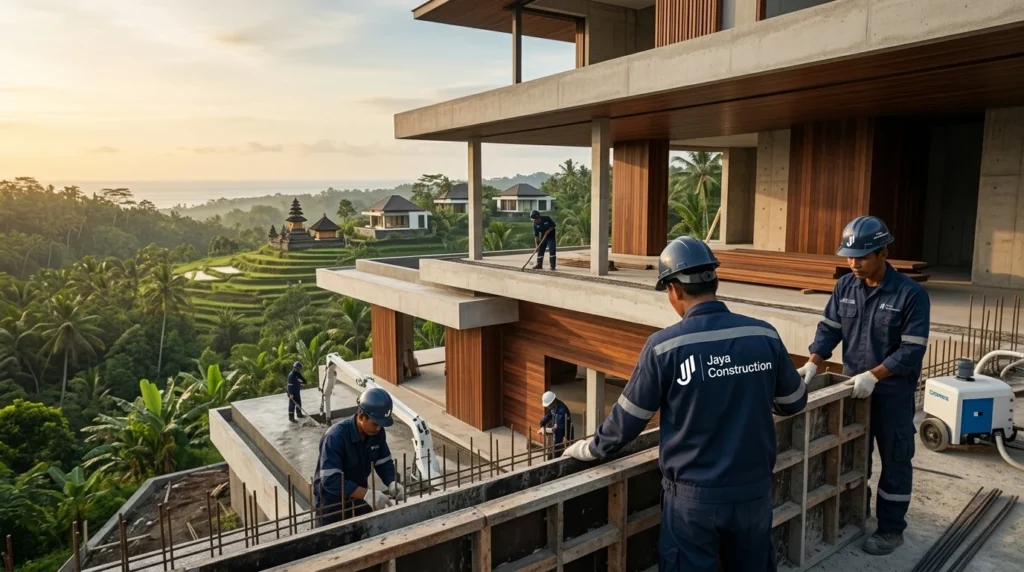
Foundation & Structure Completion (25-30%): Payment is released after the excavation, foundation, and the primary structural frame (columns, beams, slabs) are completed and have passed necessary inspections. This stage represents the core skeletal integrity of the building.
Roofing and Enclosure (15-20%): Funds are disbursed once the roof structure, tiles, and waterproofing are installed, and the building is fully enclosed with walls, windows, and doors. This stage makes the structure weathertight, allowing internal works to begin.
Major Systems Rough-In (15-20%): This payment covers the installation of the hidden infrastructure: electrical wiring, plumbing pipes, and air conditioning conduits within walls and floors before they are plastered over. Verification often requires pressure tests for plumbing and electrical inspections.
Finishing Works (15-20%): Released upon the completion of tiling, carpentry (built-in cabinets, doors), painting, and the installation of fixtures and fittings (sanitaryware, light switches, sockets). This stage transforms the space from a shell into a functional interior.
Final Completion and Handover (5-10%): The final payment is contingent upon the completion of all punch-list items (minor defects rectification), a thorough final clean, and the formal handover of the project, including all keys, warranties, manuals, and as-built drawings. Retaining this final amount is your crucial leverage to ensure every detail is addressed to your satisfaction.
Key Elements to Insist Upon in Your Contract
The payment schedule is only as good as the contract that binds it. In Bali, where verbal agreements still hold cultural weight but are insufficient for complex projects, your written contract must be unequivocally clear.
Clear Definition of Milestones: Each payment stage must be described in granular detail, not just with generic terms. For example, “Roofing Complete” should specify “roof structure, tiles, ridge caps, and gutters fully installed, and site cleaned of roofing debris.” Include reference to architectural drawings and specifications as appendices.
Triggering Mechanism: The contract must state that payment is due only after the milestone is verified. Specify who conducts the verification (usually the client or their appointed project manager/architect) and the timeframe (e.g., within 5 working days of the contractor’s notification of completion).
Method of Payment: Specify the currency (usually USD or IDR) and method (international bank transfer is most common and provides a clear trail). Ensure the bank account details are in the contract and match the registered company name of the contractor.
Dispute Resolution Clause: Include a clause that outlines the process if there is disagreement over milestone completion. This could involve mediation through a mutually agreed third party before escalating to legal action, specifying jurisdiction (Indonesian courts) or arbitration.
Navigating Common Pitfalls and Cultural Nuances
Understanding the typical challenges in the Balinese construction context can save you from significant headaches and financial loss.
The “Artisan” Contractor Challenge: Many excellent builders in Bali operate as skilled artisans rather than large corporations. They may have limited capital and rely heavily on your progress payments to pay for labor and materials. While this is normal, it underscores the importance of the schedule. Releasing funds too early can leave you vulnerable if the contractor faces cash-flow issues or abandons the project. Conversely, holding funds back too tightly can stall the project as the contractor cannot pay their team.
Material Cost Fluctuations: The contract should clarify how material price escalations are handled after the contract is signed. Ideally, fixed-price contracts should lock in material costs for the agreed scope. If allowances are made, they must be clearly defined with a cap or a transparent mechanism for adjusting the final cost.
The Role of a Project Manager: For anyone not residing full-time in Bali, hiring an independent, reputable project manager is arguably the most important investment you can make. They act as your eyes and ears on-site, verify milestone completion against the specifications, authorize payments based on certified progress, and manage day-to-day communication with the contractor. Their fee, typically a percentage of the total project cost, pays for itself by preventing costly mistakes and delays.
Force Majeure and Delays: The contract must address delays due to factors beyond the contractor’s control, such as severe weather, government-mandated holidays (like Nyepi), or material delivery delays at ports. It should outline the process for granting time extensions and how this interacts with the payment schedule—usually meaning payments are delayed accordingly, with no penalty to the client.
The Critical Final Payment and Defects Liability Period
The final 5-10% of the contract sum is your most powerful tool. Rushing to pay this final installment in exchange for immediate access to the property is a common and grave mistake. Upon substantial completion, conduct a detailed “punch list” walkthrough with the contractor and project manager, documenting every minor defect, incomplete item, or unsatisfactory finish in writing.
Hold the final payment until every single item on this punch list is rectified to your standard. Furthermore, your contract must include a Defects Liability Period (DLP), which in Bali typically ranges from 6 to 12 months after handover. During this period, the contractor is legally obligated to return and repair any defects that appear in workmanship or materials at no additional cost. You can agree to release a portion of the final payment at handover (e.g., 5%) and the remaining portion (e.g., 5%) at the end of a successful DLP, ensuring the contractor remains responsive.
Payment Schedules for Renovation vs. New Builds
The principles are the same, but the milestones differ. Renovation schedules are often more complex and customized. They might include stages for:
Demolition and Site Clearance.
Structural Repair and Modification.
Waterproofing and Anti-termite Treatment.
Systems Upgrade (old electrical/plumbing).
Restoration of Original Features.
The key is to break the project into logical, inspectable phases that make sense for the specific scope of work.
Conclusion: Your Financial Blueprint for a Successful Build
In conclusion, a construction payment schedule in Bali is far more than a simple payment plan; it is a contractually binding framework that governs the entire financial and operational relationship between you and your builder. It ensures cash flow aligns with tangible progress, incentivizes quality and timeliness, and provides critical leverage to protect your investment. By insisting on a detailed, milestone-based schedule embedded within a comprehensive contract, understanding the local nuances, and potentially engaging a professional project manager, you transform a potentially risky endeavor into a structured and manageable process. This disciplined approach allows you to focus on the exciting aspects of creation—watching your Balinese dream take shape—secure in the knowledge that the financial foundations of your project are as solid as the physical ones.
 By Jaya Construction Bali June 29, 2026
7 min read
By Jaya Construction Bali June 29, 2026
7 min read