Building a Sustainable Off-Grid Villa in Bali: A Blueprint for Eco-Luxury Living
By Jaya Construction BaliSeptember 17, 20267 min read
In this article
Bali, the fabled “Island of the Gods,” conjures images of lush rice terraces, vibrant culture, and serene spiritual retreats. In recent years, it has also become a magnet for a new kind of traveler and resident: one seeking a harmonious blend of luxury, self-sufficiency, and deep environmental responsibility. The concept of building a sustainable off-grid villa here is no longer a niche pursuit for hardcore environmentalists, but an aspirational model for conscious living. This endeavor goes far beyond simply installing solar panels; it is a holistic philosophy that intertwines cutting-edge green technology with ancient Balinese wisdom to create a dwelling that treads lightly on the earth while offering unparalleled comfort. Constructing such a villa is a complex but profoundly rewarding journey, demanding careful planning, respect for local traditions, and a commitment to true sustainability.
The Guiding Philosophy: Beyond Greenwashing
Before breaking ground, it’s crucial to understand that a truly sustainable project is defined by its lifecycle impact, not just its energy source. This means considering the origin of every material, the energy expended in construction, the daily operational footprint, and the structure’s ultimate end-of-life. In Bali, this philosophy finds a powerful ally in the indigenous concept of Tri Hita Karana, which translates to “Three Causes of Well-Being.” This sacred doctrine promotes harmony with God (Parahyangan), harmony with people (Pawongan), and harmony with nature (Palemahan). A sustainable off-grid villa must strive to embody all three. It is not a standalone fortress of technology imposed on the landscape, but a living system designed to integrate respectfully with its ecosystem, support the local community, and reflect a mindful way of life.
The Pillars of Off-Grid Self-Sufficiency
Achieving true off-grid status in Bali’s tropical climate requires mastering four key systems: energy, water, waste, and building envelope. Each presents unique challenges and opportunities.
1. Energy Independence: Capturing the Tropical Sun
Bali’s abundant sunshine is the single greatest asset for off-grid energy. A robust solar photovoltaic (PV) system is the cornerstone. This involves more than just slapping panels on a roof. A professional assessment must determine the villa’s total energy load—from high-efficiency air conditioning (if used) and appliances to lighting and pumps. This dictates the size of the array and, critically, the capacity of the battery bank. Lithium-ion phosphate (LiFePO4) batteries are now the standard for their longevity, efficiency, and safety.
A common mistake is to design a system for “average” days. Energy resilience requires designing for the worst-case scenario—prolonged cloudy periods common during the rainy season. This means oversizing the battery bank or, more sustainably, incorporating a secondary renewable source. Many successful villas integrate a small, quiet, biogas generator fueled by kitchen and garden waste, creating a closed-loop backup system. All wiring and appliances must be ultra-efficient (LED lighting, inverter-technology AC and refrigerators) to minimize the load and thus the system’s size and cost.
2. Water Wisdom: The Circle of Life
Water is sacred in Bali, managed through the centuries-old Subak irrigation system. A sustainable villa must honor this. Total water independence involves a multi-pronged strategy. Rainwater harvesting is the primary source, with large, clean catchment areas (often the roof) directing water via gutters and first-flush diverters into massive underground or ferrocement storage tanks. The volume must be calculated based on roof area and the historically driest months.
This harvested rainwater is then treated for potable use. A multi-stage filtration system—typically sediment filters, activated carbon, and a final ultraviolet (UV) sterilization stage—ensures safe drinking water. For non-potable uses like irrigation and toilets, a simpler filtration may suffice. Greywater from showers, sinks, and laundry becomes a vital resource. After basic filtration through a grease trap and a constructed wetland or a biofilter system, this water can be repurposed for subsurface irrigation of gardens and fruit trees, closing the water loop. Blackwater (from toilets) is best managed through a state-of-the-art biodigester septic system, which breaks down waste without chemicals, producing treated effluent safe for irrigation and biogas for the backup generator.
3. Waste Management: From Problem to Resource
The goal is a “zero-waste-to-landfill” villa. This is achieved through strict segregation at the source. Organic kitchen scraps and garden waste are composted in dedicated systems (like hot composters or worm farms) or fed into the biodigester to produce biogas. Recyclables are cleaned and sent to local collection points, supporting the informal recycling economy. Non-recyclable waste must be minimized through conscious purchasing—buying in bulk, choosing products with minimal or compostable packaging. Any remaining residual waste should be stored safely for collection, but a well-designed system aims to reduce this to near zero.
4. The Building Itself: Materiality and Design
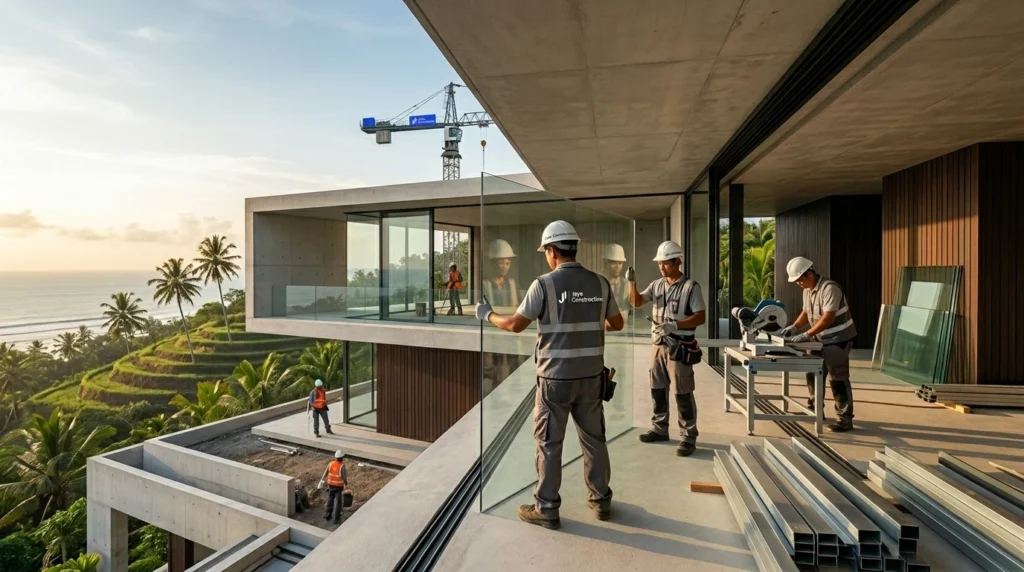
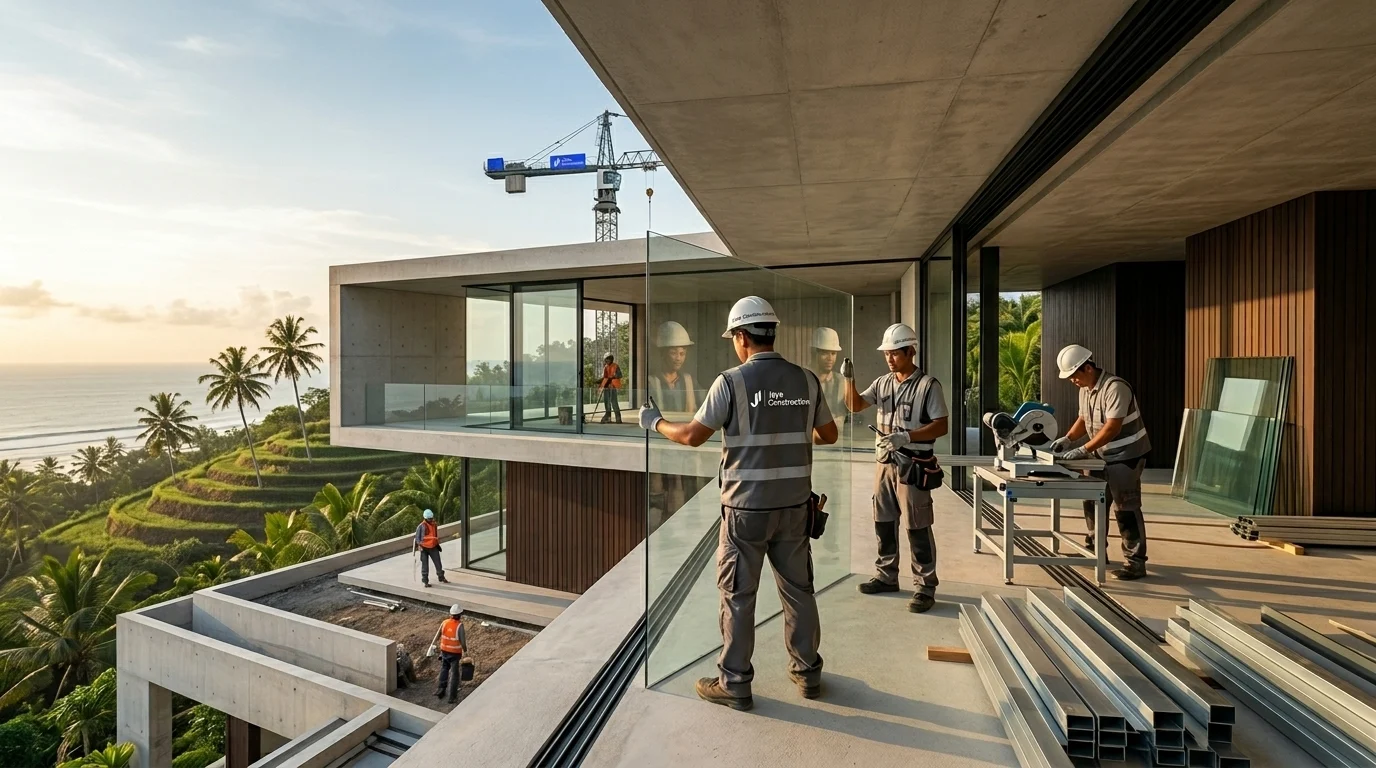
The structure’s design is passive sustainability in action. Balinese architecture inherently understands this. Deep overhanging eaves (sokong) protect walls and windows from rain and direct sun. Cross-ventilation is encouraged through careful placement of openings and the use of traditional louvered walls (sirap). Building orientation is paramount to capture prevailing breezes and minimize solar heat gain.
Material selection is a balance of local tradition and modern innovation. Prioritizing locally sourced, renewable materials dramatically reduces the embodied carbon of the villa. Bamboo is a supermaterial—fast-growing, strong, and beautiful, used for structures, flooring, and fixtures. Locally quarried stone (like paras kerobokan) for walls and foundations has a lower transport footprint. Reclaimed teak wood for decking and accents reduces demand for virgin timber. For insulation, materials like coconut fiber or cork are sustainable alternatives to synthetic options. Modern, breathable, and non-toxic insulation can be used in walls and roofs to enhance thermal comfort. High-performance, double-glazed windows with timber or aluminum frames are a worthy investment to maintain cool interiors.
Integrating with Culture and Community
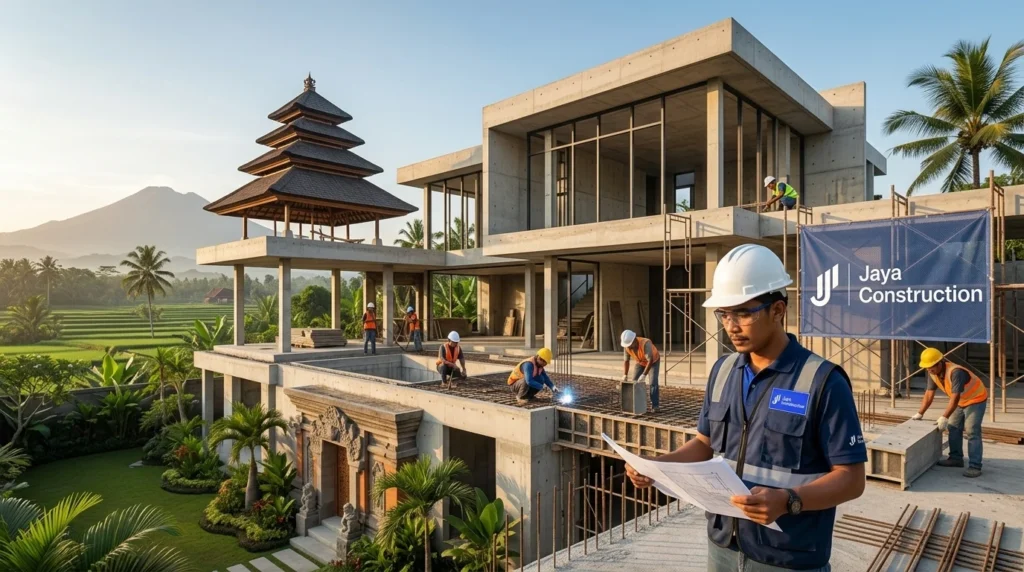
A villa’s sustainability is also social. Hiring and training local Balinese artisans and laborers is non-negotiable. It preserves traditional craftsmanship (like intricate stone carving and thatch roofing with ijuk palm fibers) and ensures economic benefits stay within the community. This approach transforms the construction site into a place of cultural exchange and skill development.
Furthermore, the villa’s operations should engage the local economy. Sourcing food from nearby organic permaculture gardens, employing local staff, and offering guests authentic cultural experiences create a positive economic ripple effect. The landscape design should incorporate native, drought-resistant plants and productive food gardens (a kebun), enhancing biodiversity and providing fresh produce, further reducing the villa’s footprint.
Navigating the Legal and Logistical Hurdles
Building in Bali, especially for foreigners, is a maze of regulations. Land ownership typically involves long-term leasehold (hak sewa) arrangements. Navigating the building permits (IMB) requires a trusted local notary (notaris) and often a liaison with village authorities (banjar). Environmental regulations are evolving; ensuring the project has proper environmental impact assessments and waste management plans is increasingly important. The most successful projects are those that engage with local bureaucracy transparently from the start, often through a professional project manager with specific experience in green building in Bali.
The Living Laboratory: Monitoring and Adaptation
Once completed, the off-grid villa is not a static product but a living laboratory. A central energy and water monitoring system (often a simple dashboard provided by the solar installer) is essential. It allows residents to track generation, consumption, and storage levels in real-time, fostering mindful usage and helping to quickly identify any system inefficiencies. The systems require maintenance—cleaning solar panels, servicing pumps and filters, managing compost—which itself becomes a part of the mindful, sustainable lifestyle.
Conclusion: A Model for a Regenerative Future
Building a sustainable off-grid villa in Bali is an ambitious undertaking that weaves together technology, ecology, culture, and community. It demands a significant upfront investment of capital, time, and intellect, but the returns are multi-dimensional. The result is not just a beautiful, luxurious home immune to power outages and water shortages, but a functional ecosystem that generates its own energy, cleans its own water, processes its own waste, and supports the surrounding environment and people. It stands as a tangible proof of concept—a demonstration that high-quality living need not come at the planet’s expense. In doing so, it offers more than a private retreat; it offers a blueprint for a regenerative future, deeply rooted in the sacred soil and timeless wisdom of Bali itself.
 By Jaya Construction Bali September 17, 2026
7 min read
By Jaya Construction Bali September 17, 2026
7 min read