How to Future-Proof a Commercial Building in Bali: A Comprehensive Guide for Long-Term Success
By Jaya Construction BaliOctober 9, 202612 min read
In this article
Introduction
Bali has long been recognized as one of Southeast Asia’s most dynamic destinations for tourism, hospitality, and international business. The island’s unique blend of cultural heritage, natural beauty, and growing economic infrastructure makes it an attractive location for commercial investment. However, building in Bali comes with a distinct set of challenges that demand forward-thinking strategies. The tropical climate, seismic activity, evolving regulations, and the rapid pace of technological change all require that developers and investors think beyond the present moment.
Future-proofing a commercial building in Bali is not simply an exercise in architectural ambition — it is a practical necessity. Buildings that are designed and constructed without consideration for the decades ahead risk becoming obsolete, costly to maintain, or vulnerable to natural disasters far sooner than expected. Whether you are developing a boutique hotel in Seminyak, a co-working hub in Canggu, a retail complex in Denpasar, or an office tower in the growing Jimbaran business corridor, the principles of future-proofing remain essential.
This article provides a comprehensive guide to ensuring that your commercial building in Bali remains relevant, resilient, and profitable for years and even decades to come. From sustainable design and smart technology to structural resilience and regulatory foresight, we will explore every critical dimension of future-proof construction on the Island of the Gods.
—
Understanding Bali’s Unique Building Environment
Before diving into specific strategies, it is important to appreciate why future-proofing carries particular significance in Bali. The island presents a convergence of environmental, economic, and cultural factors that are unlike almost any other location in the world.
The Tropical Climate
Bali sits near the equator, which means it experiences consistently high temperatures, intense humidity, and heavy seasonal rainfall. The wet season, typically running from November to March, brings torrential downpours that can test even well-constructed buildings. Meanwhile, the dry season subjects structures to prolonged heat and UV exposure. Over time, these conditions accelerate material degradation, promote mold growth, and place enormous demands on cooling and ventilation systems. Any commercial building that fails to account for these realities will face escalating maintenance costs and declining tenant or guest satisfaction.
Seismic Activity
Indonesia sits on the Pacific Ring of Fire, and Bali is no exception to the seismic risks that characterize the region. While the island has not experienced a catastrophic earthquake in recent memory, minor tremors are common, and the potential for a significant seismic event is ever-present. Future-proofing must include robust structural engineering that meets or exceeds earthquake-resistant standards.
A Tourism-Driven and Evolving Economy
Bali’s economy is heavily dependent on tourism, but it is also diversifying. The rise of digital nomads, remote workers, and international entrepreneurs has created new demand for co-working spaces, serviced offices, and mixed-use developments. At the same time, the Balinese government is actively encouraging sustainable tourism and responsible development. Commercial buildings that anticipate these economic and policy shifts will be better positioned to attract tenants and generate returns.
Cultural and Regulatory Considerations
Bali has a rich cultural tradition that permeates every aspect of daily life, including construction. The Tri Hita Karana philosophy — which emphasizes harmony among people, nature, and the spiritual world — influences local building practices and regulations. Additionally, Indonesia’s building codes and environmental laws continue to evolve, often trending toward stricter sustainability requirements. Ignoring these cultural and legal dimensions is not only disrespectful but also financially reckless.
—
Sustainable and Climate-Responsive Design
One of the most powerful ways to future-proof a commercial building in Bali is through sustainable design that responds intelligently to the local climate. This approach reduces operating costs, attracts environmentally conscious tenants, and positions the building favorably as green regulations tighten.
Passive Cooling and Ventilation
Air conditioning is one of the largest operational expenses for commercial buildings in tropical climates. By incorporating passive cooling strategies, developers can significantly reduce energy consumption. Wide overhanging eaves, strategically placed louvers, cross-ventilation corridors, and open-air atriums all allow natural breezes to flow through a building, reducing the reliance on mechanical cooling. Designing floor plans that maximize airflow and using reflective roofing materials can further enhance thermal comfort without increasing energy demand.
Rainwater Harvesting and Water Management
Bali’s wet season provides an opportunity to capture and store significant volumes of rainwater. Commercial buildings equipped with rainwater harvesting systems can use collected water for landscaping, toilet flushing, and other non-potable purposes. This reduces dependence on municipal water supplies, which can be inconsistent in some parts of the island. Proper drainage design is equally important — buildings must be engineered to handle sudden, heavy downpours without flooding, water damage, or foundation erosion.
Green Roofs and Living Walls
Incorporating vegetation into the building envelope offers multiple benefits. Green roofs absorb heat, reduce the urban heat island effect, manage stormwater runoff, and provide insulation. Living walls enhance air quality and create visually appealing environments that resonate with Bali’s natural aesthetic. These features also contribute to certifications under green building rating systems, which can increase the property’s market value.
—
Smart Building Technology Integration
The commercial real estate landscape is being transformed by technology. Buildings that lack digital infrastructure today will struggle to compete tomorrow. Integrating smart technology from the outset is far more cost-effective than retrofitting it later.
Building Automation Systems (BAS)
A centralized building automation system allows facility managers to monitor and control lighting, HVAC, security, and other systems from a single platform. Modern BAS platforms use sensors and data analytics to optimize energy use in real time. For example, occupancy sensors can dim or turn off lights in unoccupied areas, while smart thermostats adjust cooling based on real-time temperature and humidity readings. Over the life of the building, these efficiencies translate into substantial cost savings.
Internet of Things (IoT) Infrastructure
Future-proof commercial buildings should be wired — or wireless-enabled — for IoT connectivity. This means installing robust network cabling, Wi-Fi access points throughout the property, and infrastructure to support smart devices. IoT-enabled buildings can track everything from equipment performance and energy consumption to foot traffic patterns and indoor air quality. This data empowers building operators to make informed decisions and respond proactively to maintenance needs.
Energy Monitoring and Management
Dedicated energy monitoring systems allow building owners to track electricity and water consumption at a granular level. By identifying inefficiencies early, operators can take corrective action before small problems become expensive ones. Energy management systems also provide the documentation needed to demonstrate compliance with sustainability standards — a growing requirement in Bali’s regulatory environment.
Advanced Security Systems
Security technology continues to advance rapidly. Future-proof buildings should incorporate modern access control systems, high-definition CCTV with cloud storage, and visitor management platforms. As cybersecurity threats grow, building IT networks must also be designed with robust firewalls, encrypted communications, and regular update protocols.
—
Structural Resilience and Disaster Preparedness
Given Bali’s exposure to earthquakes, flooding, and occasional volcanic activity, structural resilience is a non-negotiable element of future-proofing.
Earthquake-Resistant Engineering
All commercial buildings in Indonesia must comply with the national seismic design code (SNI 1726), but forward-thinking developers should aim to exceed minimum requirements. Base isolation systems, reinforced concrete shear walls, flexible steel frames, and deep foundation systems all enhance a building’s ability to withstand seismic forces. Regular structural assessments should be built into the building’s long-term maintenance plan to ensure continued safety.
Flood Mitigation
Low-lying areas of Bali, particularly in parts of Denpasar and Kuta, are prone to seasonal flooding. Raising the building’s ground floor above the expected flood level, installing sump pumps, using waterproof materials in below-grade spaces, and creating effective stormwater drainage systems are all essential measures. Additionally, developers should consult local flood risk maps and historical data before finalizing site plans.
Wind and Storm Resistance
While Bali is not in the primary cyclone belt, it can experience strong winds and tropical storms. Commercial buildings should be designed with wind-resistant roofing systems, impact-resistant glazing in exposed areas, and secure exterior cladding. These measures protect both the building’s structure and its occupants during adverse weather events.
—
Flexible and Adaptive Spaces
One of the greatest threats to a commercial building’s long-term viability is inflexibility. Markets change, tenant needs evolve, and what is popular today may be obsolete in a decade. Designing for adaptability ensures that the building can be repurposed or reconfigured with minimal cost and disruption.
Modular and Open Floor Plans
Open floor plans with minimal load-bearing interior walls allow spaces to be easily subdivided, combined, or repurposed. A ground-floor retail space today could become a restaurant tomorrow or a wellness studio the year after. Modular partition systems, raised floors with accessible cabling, and demountable ceiling grids all support this kind of flexibility.
Multi-Purpose Common Areas
Lobbies, rooftop terraces, courtyards, and shared lounges can serve multiple functions — from event hosting and co-working to retail pop-ups and community gatherings. Designing these spaces with flexible furniture, movable partitions, and adaptable lighting ensures they remain useful regardless of how the market shifts.
Scalable Infrastructure
Mechanical, electrical, and plumbing systems should be designed with future expansion in mind. Electrical panels should have spare capacity. Chiller systems should be modular so additional units can be added as demand grows. Data rooms and server closets should be sized for future technology needs, not just current ones. Investing slightly more in oversized infrastructure during construction avoids costly and disruptive upgrades later.
—
Material Selection for Durability and Longevity
The materials used in a commercial building’s construction have a profound impact on its lifespan, maintenance requirements, and overall environmental footprint.
Corrosion-Resistant Materials
Bali’s coastal location means that salt-laden air is a constant threat to building materials. Steel components should be hot-dip galvanized or made from marine-grade stainless steel. Aluminum fixtures should be anodized or powder-coated. Timber elements — if used — should be treated for resistance to rot, termites, and moisture. Selecting the right materials at the outset prevents premature deterioration and reduces long-term maintenance costs.
Local and Sustainable Sourcing
Using locally sourced materials not only supports Bali’s economy but also reduces transportation emissions and ensures that materials are well-suited to the local environment. Volcanic stone, locally produced bricks, sustainably harvested bamboo, and traditional alang-alang thatching all have proven performance in Balinese conditions. When combined with modern engineering techniques, these materials can deliver both aesthetic appeal and structural integrity.
Low-Maintenance Finishes
Exterior finishes should be selected for their ability to withstand UV exposure, humidity, and biological growth such as algae and mold. High-quality exterior paints, ceramic or stone cladding, and treated concrete surfaces all reduce the frequency and cost of maintenance. Inside, durable flooring materials like polished concrete, porcelain tile, or engineered hardwood are better suited to Bali’s climate than moisture-sensitive alternatives.
—
Regulatory Compliance and Cultural Sensitivity
Future-proofing a commercial building in Bali requires more than technical excellence — it demands respect for local culture and proactive engagement with the regulatory environment.
Navigating Indonesian Building Regulations
Indonesia’s building codes cover structural safety, fire protection, accessibility, and increasingly, environmental performance. Working with experienced local architects and engineers who understand the national standards (SNI) and any provincial or regency-specific regulations is essential. Developers should also stay informed about upcoming regulatory changes, particularly those related to energy efficiency and carbon emissions.
Embracing Balinese Cultural Values
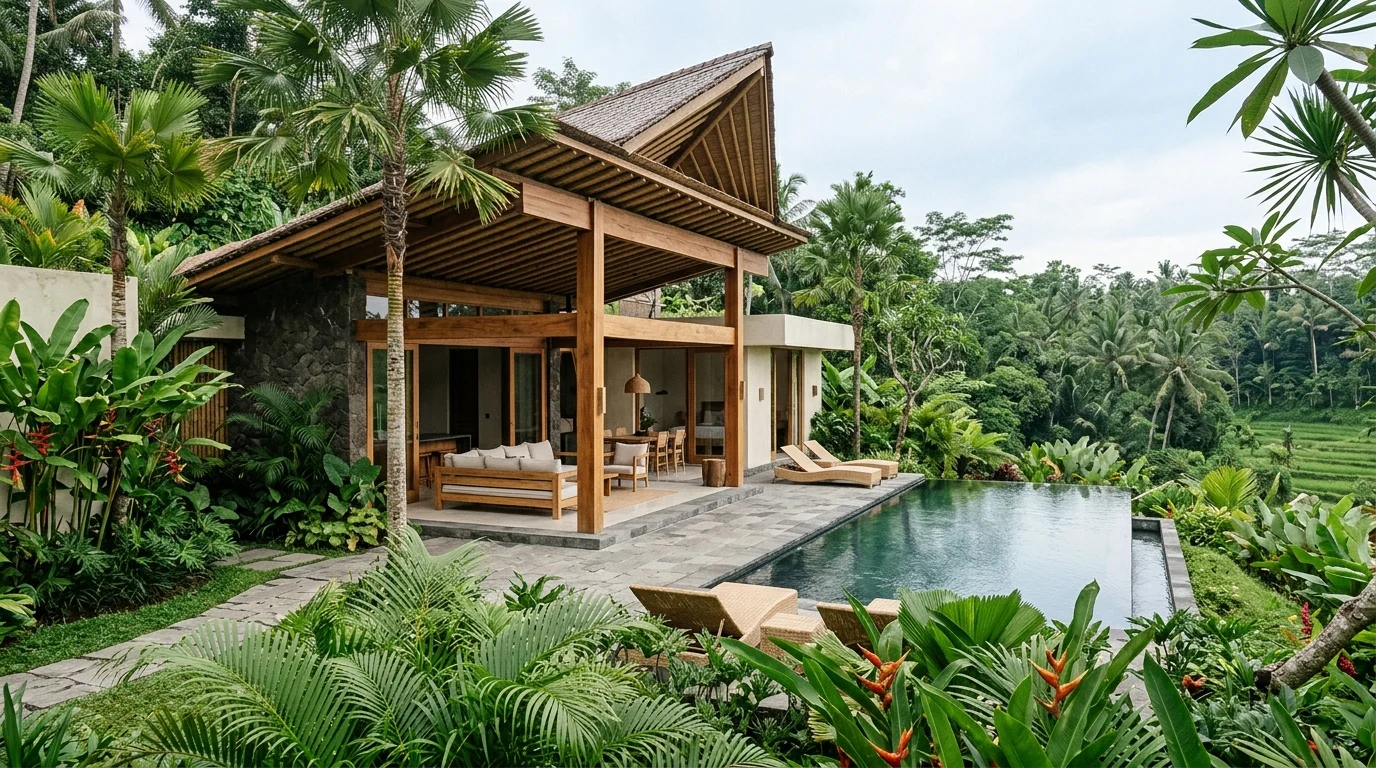
Buildings that integrate elements of Balinese design philosophy — such as spatial organization based on the Asta Kosala Kosali principles (Balinese architectural guidelines) — tend to gain stronger community acceptance and cultural resonance. Incorporating traditional design elements does not mean sacrificing modernity; rather, it means creating spaces that feel harmonious with their surroundings. Open courtyards, water features, temple-inspired gateways, and natural material palettes can all coexist with cutting-edge technology and contemporary aesthetics.
Environmental Impact Assessments
For larger commercial projects, an environmental impact assessment (AMDAL) may be required by Indonesian law. Even when not legally mandated, conducting an environmental review demonstrates responsible development and can prevent costly legal challenges or construction delays. Assessments should cover impacts on water resources, local ecosystems, traffic, waste management, and community well-being.
—
Renewable Energy and Energy Independence
Energy costs in Indonesia are rising, and the government is actively promoting renewable energy adoption. Commercial buildings that invest in clean energy today will benefit from lower operating costs and enhanced market positioning in the years ahead.
Solar Power Systems
Bali receives abundant sunlight year-round, making solar photovoltaic systems an excellent investment for commercial buildings. Rooftop or carport-mounted solar panels can offset a significant portion of a building’s electricity consumption. Recent improvements in panel efficiency and declining installation costs make solar power increasingly attractive from a financial perspective.
Battery Energy Storage
Pairing solar systems with battery storage allows buildings to store excess energy generated during peak sunlight hours for use during the evening or on cloudy days. Battery storage also provides backup power during grid outages — a meaningful advantage in areas where electricity supply can be unreliable.
Backup Power Systems
While renewable energy reduces grid dependence, most commercial buildings will still need backup generators. Selecting generators that can run on biodiesel or other lower-emission fuels aligns with long-term sustainability goals. Automatic transfer switches ensure seamless switchover during power interruptions, minimizing disruption to tenants and operations.
—
Professional Partnerships and Ongoing Maintenance
Future-proofing is not a one-time effort — it is an ongoing commitment that requires the right partnerships and maintenance practices.
Engaging Experienced Professionals
Working with architects, engineers, project managers, and consultants who have specific experience building in Bali is invaluable. These professionals understand the local permitting process, supply chain dynamics, labor practices, and environmental conditions. Their expertise can prevent costly mistakes and ensure that the building is designed and constructed to the highest standards.
Comprehensive Maintenance Planning
A future-proof building demands a comprehensive maintenance plan that addresses structural inspections, mechanical system servicing, façade cleaning, landscape management, and technology updates. Digital maintenance management platforms can schedule routine tasks, track work orders, and maintain a complete history of building repairs and upgrades. Proactive maintenance extends the building’s useful life and preserves its value.
Building a Relationship with the Local Community
Commercial buildings do not exist in isolation. They are part of a broader community, and their long-term success depends on positive relationships with neighbors, local authorities, and the surrounding environment. Supporting local employment, respecting cultural sites and practices, minimizing noise and traffic impacts, and contributing to community development all strengthen a building’s social license to operate.
—
Conclusion
Future-proofing a commercial building in Bali is a multifaceted endeavor that requires vision, expertise, and a genuine commitment to sustainability and resilience. The island’s tropical climate, seismic risks, evolving economy, and rich cultural heritage create both challenges and opportunities that demand thoughtful planning and intelligent design.
By investing in climate-responsive architecture, smart building technology, structural resilience, flexible spaces, durable materials, renewable energy, and strong professional partnerships, developers can create commercial buildings that not only withstand the test of time but also thrive in an ever-changing world. The most successful commercial buildings in Bali will be those that anticipate change rather than merely react to it.
Bali’s future belongs to developers and investors who see beyond short-term returns and embrace the long view. The strategies outlined in this guide provide a roadmap for creating commercial properties that are economically viable, environmentally responsible, culturally respectful, and structurally sound for generations to come. In a world where uncertainty is the only constant, future-proofing is not an option — it is the foundation of lasting success.
 By Jaya Construction Bali October 9, 2026
12 min read
By Jaya Construction Bali October 9, 2026
12 min read