Commercial Construction Timeline in Bali: A Complete Guide from Planning to Completion
By Jaya Construction BaliOctober 7, 202613 min read
In this article
Bali has long captivated the world with its stunning natural beauty, rich cultural heritage, and thriving tourism industry. Over the past few decades, the island has evolved into a prime destination not just for leisure travelers, but also for entrepreneurs and investors looking to establish commercial ventures such as hotels, restaurants, retail spaces, co-working hubs, wellness centers, and mixed-use developments. However, building commercial property in Bali is far from a straightforward process. It involves navigating a complex web of regulations, cultural expectations, environmental considerations, and logistical challenges that can significantly influence the overall construction timeline.
Understanding the commercial construction timeline in Bali is essential for anyone planning to invest in the island’s booming real estate and hospitality sectors. Unlike many Western countries where building timelines are relatively predictable, construction in Bali operates within a unique framework shaped by Indonesian law, local customs, weather patterns, and the availability of materials and skilled labor. Failing to account for these factors can result in costly delays, budget overruns, and unnecessary frustration.
This comprehensive guide walks you through every phase of the commercial construction process in Bali, from the initial planning stages to the final handover of your completed project. Whether you are a first-time investor or a seasoned developer expanding into the Indonesian market, this article will equip you with the knowledge needed to set realistic expectations and manage your project effectively.
Why Bali Is a Unique Construction Environment
Before diving into the specifics of the construction timeline, it is important to understand why Bali presents a distinct set of circumstances for commercial builders. The island operates under Indonesian national law but also adheres to local provincial and regency-level regulations that can vary from one area to another. Additionally, Bali has a deeply rooted community governance system known as the Banjar, which plays a significant role in local decision-making, including matters related to land use and construction.
Furthermore, Bali’s tropical climate means that construction schedules must account for the rainy season, which typically runs from November through March. Heavy rainfall can halt outdoor construction activities, cause flooding on building sites, and delay the delivery of materials. The island’s geographic location also means that certain specialized materials and equipment may need to be imported from Java or overseas, adding lead times to procurement.
All of these factors combine to create a construction environment that demands patience, careful planning, and strong local partnerships. A realistic commercial construction timeline in Bali typically ranges from 18 to 36 months, depending on the scale and complexity of the project.
Phase 1: Pre-Construction Planning and Land Acquisition (Months 1–4)
The pre-construction phase lays the foundation for your entire project. This is arguably the most critical stage, as mistakes or oversights during this period can cascade into significant problems later on.
Land Due Diligence
The first step in any commercial construction project in Bali is securing the right piece of land. Land ownership laws in Indonesia are complex, and foreigners cannot directly own freehold land (known as Hak Milik). Instead, most foreign investors operate through a foreign-owned company structure called a PT PMA (Penanaman Modal Asing), which allows the entity to hold a right-to-build title known as Hak Guna Bangunan (HGB).
Conducting thorough due diligence on the land is essential. This includes verifying the land certificate at the local National Land Agency (BPN) office, checking for any encumbrances or disputes, confirming zoning designations, and ensuring that the land is suitable for your intended commercial use. It is strongly recommended to hire a reputable local notary (PPAT) and a legal consultant who specializes in Indonesian property law during this stage.
Feasibility Studies and Market Research
Once a suitable parcel of land has been identified, the next step involves conducting a feasibility study. This study should assess the commercial viability of the project, considering factors such as location, target market, competition, projected revenue, and construction costs. Market research specific to Bali’s commercial landscape is vital because consumer behavior, tourism trends, and regulatory environments can differ significantly from those in other Indonesian regions.
Architectural Design and Concept Development
With feasibility confirmed, the project moves into the design phase. Engaging an architect who understands both international design standards and local building practices is crucial. Bali has a vibrant architectural community, and many firms specialize in blending contemporary design with traditional Balinese aesthetics — a combination that often resonates strongly with both tourists and locals.
The design process typically involves multiple rounds of revisions, client consultations, and technical reviews. For larger commercial projects, you may also need to engage structural engineers, MEP (mechanical, electrical, and plumbing) consultants, and interior designers during this phase. The design development stage generally takes between 6 and 12 weeks, depending on the complexity of the project and the responsiveness of the stakeholders involved.
Engaging a Project Manager
One of the most valuable investments you can make early in the process is hiring an experienced project manager who has a proven track record of delivering commercial projects in Bali. A skilled local project manager will serve as your eyes and ears on the ground, coordinating between architects, contractors, government officials, and community leaders. They will also help you navigate the bureaucratic processes and cultural nuances that can otherwise become major obstacles.
Phase 2: Permitting and Regulatory Approvals (Months 3–8)
The permitting phase is often where timelines begin to stretch in Bali. The Indonesian bureaucratic system, while improving, still involves multiple layers of approval that can be time-consuming to navigate. Patience and persistence are essential virtues during this stage.
Key Permits Required
Several permits are required before construction can legally begin in Bali. The most important ones include:
PBG (Persetujuan Bangunan Gedung): This is the building approval permit, which replaced the former IMB (Izin Mendirikan Bangunan) system under Indonesia’s 2021 Omnibus Law on Job Creation. The PBG confirms that your building plans comply with structural safety, environmental, and spatial planning regulations. The application process involves submitting detailed architectural drawings, structural calculations, and site plans to the local Public Works and Spatial Planning office.
Environmental Permits (AMDAL or UKL-UPL): Depending on the size and nature of your commercial project, you may be required to conduct an Environmental Impact Assessment (AMDAL) or, for smaller projects, an Environmental Management and Monitoring Effort (UKL-UPL). Projects near sensitive ecological areas, such as coastlines, rice terraces, or forests, are subject to stricter environmental scrutiny.
SLF (Sertifikat Laik Fungsi): While this certificate is obtained after construction is complete, planning for it from the outset ensures that your building is designed and built to meet all functional and safety standards.
Tourism-Specific Permits: If your commercial project is related to tourism — such as a hotel, villa resort, or restaurant — you may need additional permits from the Tourism Department and possibly a hotel and restaurant license.
Navigating the Banjar System
In addition to government permits, gaining the approval of the local Banjar (traditional community council) is an often-overlooked but critically important step. The Banjar wields significant influence at the village level, and their support — or lack thereof — can make or break a project. It is customary and advisable to meet with Banjar leaders early in the planning process, present your project respectfully, and address any concerns they may have regarding noise, traffic, cultural impact, or employment opportunities for local residents.
Building a positive relationship with the Banjar can expedite your project and help prevent conflicts during the construction phase. Ignoring this step is one of the most common mistakes foreign developers make in Bali.
Timeline Expectations for Permits
The permitting process can take anywhere from 2 to 6 months, depending on the location, the complexity of the project, and the responsiveness of the relevant government offices. Working with a knowledgeable local consultant or legal team can significantly reduce delays by ensuring that all documentation is complete and correctly formatted before submission.
Phase 3: Site Preparation and Foundation Work (Months 6–10)
Once all necessary permits have been secured, the physical construction process can begin. The first stage involves site preparation, which includes clearing the land, grading the terrain, and establishing temporary facilities such as worker accommodations, material storage areas, and site offices.
Soil Testing and Foundation Design
Before foundation work begins, a geotechnical survey should be conducted to assess the soil conditions. Bali’s terrain varies dramatically — from flat coastal lowlands to steep volcanic hillsides — and the type of foundation required will depend on the soil composition, water table, and load-bearing capacity. In some areas, particularly in Ubud and the surrounding highlands, the soil can be rocky and uneven, requiring specialized foundation techniques such as piling or reinforced concrete footings.
Drainage and Water Management
Given Bali’s heavy seasonal rainfall, proper drainage and water management systems must be integrated into the site design from the very beginning. Poor drainage can lead to flooding, erosion, and structural damage, all of which can derail your construction timeline and increase costs. Experienced contractors in Bali understand the importance of designing robust drainage systems that account for the island’s tropical weather patterns.
Phase 4: Structural Construction (Months 8–18)
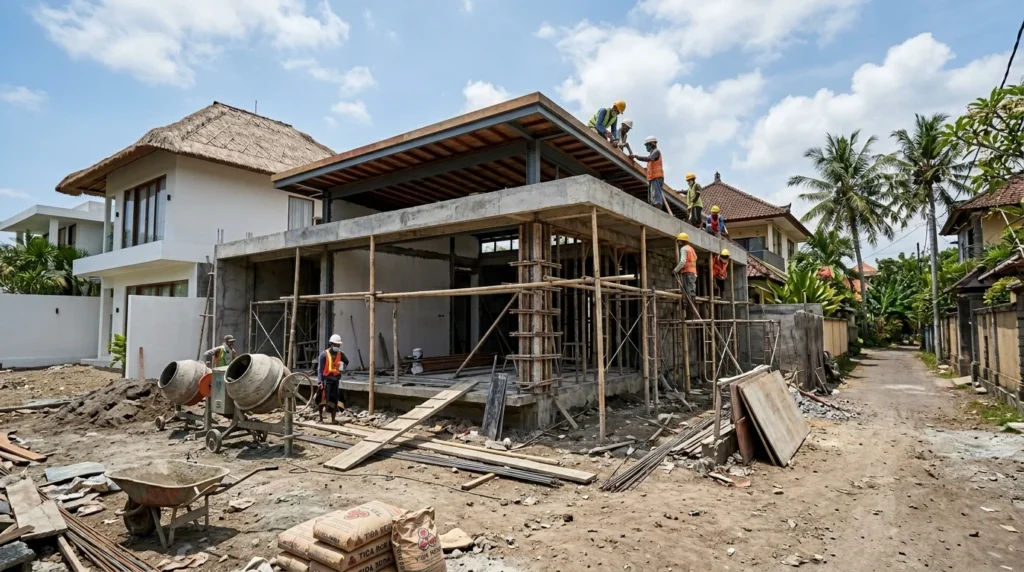
The structural construction phase is the most visible part of the building process and typically represents the longest segment of the overall timeline. This phase involves erecting the building’s frame, floors, walls, and roof.
Material Sourcing and Procurement
One of the unique challenges of building in Bali is material procurement. While local materials such as volcanic stone (paras), teak wood, and bamboo are readily available, specialized materials — including certain types of steel, glass, fixtures, and mechanical systems — often need to be imported from Java or overseas. Lead times for imported materials can range from several weeks to several months, making early procurement planning essential to avoid construction delays.
Many experienced project managers in Bali maintain relationships with reliable suppliers and logistics companies to ensure timely delivery. However, even with the best planning, occasional delays due to shipping disruptions, customs clearance, or supplier shortages are not uncommon.
Labor and Workforce Considerations
Bali has a sizable construction workforce, but the availability of highly skilled workers — particularly those with expertise in specialized areas such as high-end finishes, advanced MEP systems, or seismic-resistant construction — can be limited. Engaging a reputable general contractor with a strong team of subcontractors is critical for maintaining quality and keeping the project on schedule.
It is also worth noting that Balinese culture places great importance on religious ceremonies and holidays, including the island-wide Nyepi (Day of Silence) and various temple festivals. Construction work typically halts during these periods, and scheduling should account for these cultural observances. Respecting local customs in this regard not only maintains good relations with your workforce but also helps avoid disruptions.
Phase 5: MEP Systems, Interior Finishing, and Landscaping (Months 14–24)
As the structural work nears completion, the focus shifts to the installation of mechanical, electrical, and plumbing systems, followed by interior finishing and landscaping.
MEP Installation
The MEP phase involves installing air conditioning systems, electrical wiring and panels, plumbing networks, fire suppression systems, and any specialized systems such as solar panels, smart building technology, or swimming pool filtration units. Coordination between different trades is essential during this stage, as poor communication can lead to clashes between systems and costly rework.
Interior Finishing
Interior finishing is where the character of your commercial space truly comes to life. This includes flooring, wall treatments, cabinetry, lighting, furniture installation, and decorative elements. In Bali, there is a strong tradition of craftsmanship, and many developers choose to incorporate locally made fixtures, carvings, and artworks into their designs. While this adds a unique and authentic touch, it also requires careful coordination with local artisans, who may need lead time to produce custom pieces.
Landscaping and Outdoor Spaces
For many commercial properties in Bali, the outdoor environment is just as important as the interior. Landscaping, garden design, pool construction, and outdoor lighting all contribute to the overall guest experience and aesthetic appeal. Working with a landscape architect who understands Bali’s tropical flora and microclimate can help create stunning outdoor spaces that thrive year-round.
Phase 6: Inspections, Testing, and Handover (Months 22–28)
The final phase of the commercial construction timeline involves rigorous inspections, testing, and the formal handover of the completed project to the owner or operator.
Quality Inspections
A thorough quality inspection should be conducted to identify any defects, deficiencies, or incomplete work. This inspection covers structural integrity, MEP functionality, finishes, safety systems, and compliance with approved building plans. Any issues identified during this inspection should be documented and addressed by the contractor before final acceptance.
Obtaining the SLF Certificate
As mentioned earlier, the Sertifikat Laik Fungsi (SLF) is the certificate of functional feasibility that confirms the building is safe and suitable for occupancy. Obtaining this certificate requires a final inspection by the local Public Works office and the submission of as-built drawings and test results. The SLF is a prerequisite for operating a commercial establishment legally in Bali.
Handover and Operational Readiness
Once all inspections are passed and the SLF is obtained, the project is formally handed over to the owner. This includes the delivery of all project documentation, warranties, operation manuals, and keys. For hospitality-related projects, an additional ramp-up period may be needed to recruit and train staff, install operational systems, and conduct soft-opening events before the official launch.
Factors That Can Influence Your Construction Timeline
While the phases outlined above provide a general framework, it is important to recognize that numerous factors can cause your actual timeline to deviate from the plan. Some of the most common influences include:
Monsoon season: Heavy rains between November and March can significantly slow down outdoor work, particularly foundation and structural phases.
Regulatory changes: Indonesia’s regulatory environment is evolving, and new laws or policy changes can affect permitting timelines and requirements.
Land disputes: Undisclosed land disputes or boundary issues can surface unexpectedly and cause major delays.
Budget constraints: Cash flow problems or underestimating costs can halt construction mid-stream.
Community relations: Conflicts with local communities or Banjar councils can impede progress if not managed proactively.
Global supply chain disruptions: International events affecting shipping and trade can delay the arrival of imported materials and equipment.
Practical Tips for Managing Your Timeline Effectively
To maximize your chances of completing your commercial construction project on time and within budget, consider the following best practices:
Invest in thorough pre-construction planning. The more detailed your plans and specifications are before breaking ground, the fewer surprises you will encounter during construction.
Build a realistic contingency into your timeline and budget. Most experienced developers in Bali recommend adding a 20 to 30 percent buffer to both your schedule and your financial projections.
Prioritize relationships. From government officials to Banjar leaders to your construction team, building strong, respectful relationships is the single most effective strategy for keeping your project on track in Bali.
Communicate frequently and transparently. Regular progress meetings, clear reporting structures, and open channels of communication help prevent misunderstandings and keep all parties aligned.
Visit the site regularly. If you are not based in Bali full-time, ensure that your project manager provides regular updates, including photos and videos of construction progress. Periodic site visits are also highly recommended.
Conclusion
Building a commercial property in Bali is a rewarding but complex undertaking that demands patience, cultural sensitivity, and meticulous planning. The typical timeline from initial concept to completed construction ranges from 18 to 36 months, depending on the project’s size, location, and complexity. Each phase — from land acquisition and permitting to structural construction and final handover — comes with its own set of challenges and opportunities.
The key to success lies in assembling a competent local team, respecting the island’s regulatory and cultural landscape, and maintaining realistic expectations throughout the process. By understanding the factors that influence the construction timeline and taking proactive steps to manage them, you can turn your vision for a commercial venture in Bali into a tangible, thriving reality.
Bali continues to attract investment from around the world, and for good reason. With its unmatched combination of natural beauty, cultural richness, and growing economic potential, the island offers extraordinary opportunities for commercial development. By approaching the construction process with informed patience and strategic planning, you can position your project for long-term success in one of Southeast Asia’s most dynamic markets.
 By Jaya Construction Bali October 7, 2026
13 min read
By Jaya Construction Bali October 7, 2026
13 min read