Back to the journal
Construction insights
Hidden Costs of Building in Bali That Foreigners Always Miss
 By Jaya Construction Bali June 30, 2026
11 min read
By Jaya Construction Bali June 30, 2026
11 min read
By Jaya Construction Bali June 30, 2026
11 min read
By Jaya Construction Bali June 30, 2026
11 min read
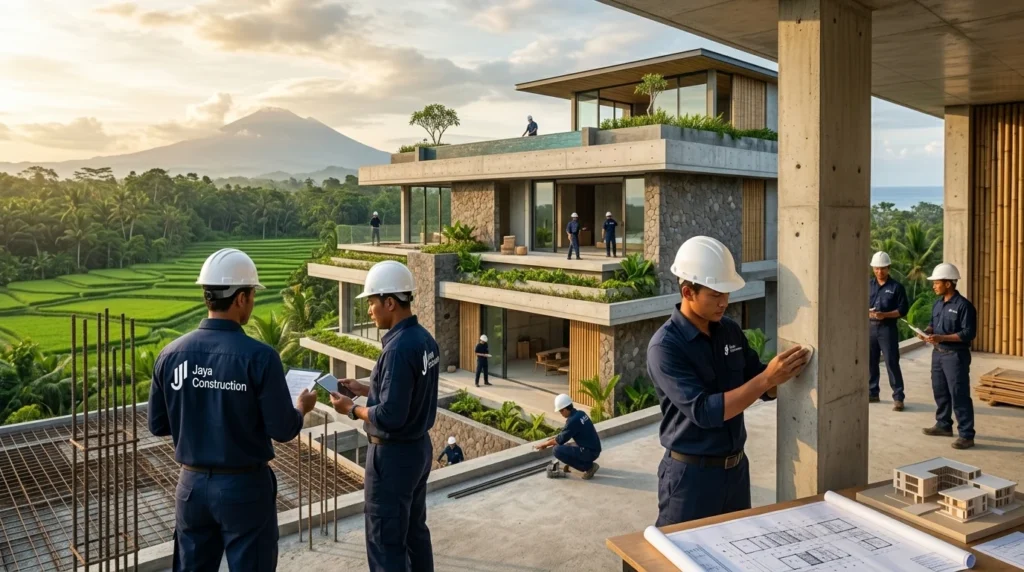
Building a dream villa, boutique hotel, or commercial property in Bali is a vision shared by thousands of foreigners each year. The island’s breathtaking landscapes, affordable cost of living, and thriving tourism industry make it an irresistible destination for real estate investment. However, beneath the glossy Instagram posts and real estate brochures lies a complex web of expenses that rarely appear in initial budgets. These hidden costs can transform what seemed like a straightforward building project into a financial nightmare, catching even the most prepared investors off guard.
Whether you are a first-time builder or a seasoned property developer expanding into Southeast Asia, understanding the full spectrum of costs involved in Balinese construction is absolutely essential. This guide explores the most commonly overlooked expenses that derail budgets, offering practical insights so you can plan with greater accuracy and confidence.
—
One of the most persistent myths surrounding construction in Bali is that it is remarkably cheap. While labor costs and certain materials may be less expensive compared to Western countries, this narrow comparison creates a dangerously misleading picture. Many foreigners arrive on the island with a budget based solely on per-square-meter build cost estimates, only to discover that dozens of ancillary expenses dramatically inflate the final price tag.
The reality is that building in Bali involves navigating a bureaucratic, cultural, and logistical landscape that is fundamentally different from what most foreigners are accustomed to. Each of these layers introduces its own set of costs — many of which are invisible until you are already deeply committed to a project. Let’s break them down systematically.
—
Indonesia’s building permit system has undergone several changes in recent years. What was previously known as the IMB (Izin Mendirikan Bangunan) has transitioned to the PBG (Persetujuan Bangunan Gedung) and SLF (Sertifikat Laik Fungsi) system. Navigating this process is rarely straightforward for foreigners. Most hire a local consultant or notary to handle the paperwork, and these fees can range from a few hundred to several thousand dollars depending on the complexity and size of the project.
What many foreigners do not anticipate is that the process often requires multiple submissions, revisions, and supplementary documents — each with its own fee. Delays in permit approval can also extend your project timeline, which means you continue paying for land lease, project management, and other overhead costs during the waiting period.
Foreigners cannot directly own freehold land in Indonesia. Instead, they typically use leasehold arrangements, a Hak Pakai (Right to Use) structure, or set up a PT PMA (foreign-owned company) to hold property. Each of these legal structures comes with notary fees, government registration charges, and ongoing legal compliance costs. A qualified notary (notaris) will charge for drafting and reviewing contracts, conducting due diligence on land certificates, and registering agreements with the relevant authorities.
Many foreigners also underestimate the need for independent legal review. Relying solely on a notary recommended by a seller or developer can be risky. Hiring your own independent lawyer to review contracts and land titles adds another layer of expense — but it is one of the wisest investments you can make.
Verifying that a land certificate is legitimate, free from disputes, and accurately represents the boundaries of the property requires professional land surveys and title searches. This is especially critical in Bali, where overlapping claims, informal land sales, and forged certificates are not unheard of. The cost of a thorough due diligence process — including hiring a licensed surveyor and cross-referencing records at the National Land Agency (BPN) — is frequently left out of initial budgets.
—
The lush, tropical beauty of Bali often means that the land you purchase is densely vegetated. Clearing jungle growth, removing tree stumps, leveling uneven terrain, and dealing with rocky or volcanic soil can be surprisingly expensive. If your plot is on a hillside — common in areas like Ubud, Uluwatu, or Canggu’s periphery — the cost of terracing, retaining walls, and soil stabilization can add a substantial sum to your budget.
In Bali, informal land boundaries based on traditional community markers sometimes conflict with official survey data. Neighbors may dispute where their property ends and yours begins, leading to mediation costs, additional surveys, or even compensation payments to resolve conflicts. These disputes can halt construction entirely, creating costly delays.
Not all plots of land in Bali come with proper road access. If your land is located in a more remote or undeveloped area, you may need to invest in constructing or upgrading an access road — particularly if heavy construction vehicles need to reach the site. The cost of gravel, drainage, and paving can add up quickly, and in some cases, you may need permission or cooperation from neighboring landowners to build the road across shared pathways.
—
Contractors in Bali frequently mark up material costs as part of their profit margin. While this practice is standard in construction worldwide, the markup percentages in Bali can be opaque and inconsistent. Without a transparent procurement process, you may end up paying significantly more for materials than their market price.
Additionally, Bali’s construction supply chain can be unpredictable. Certain materials — especially imported fixtures, specialty tiles, high-grade steel, or custom woodwork — may need to be sourced from Java or overseas. Shipping, customs duties, and handling fees for these materials are costs that many foreigners do not factor into their initial estimates.
While daily labor rates in Bali are lower than in many Western countries, the total labor cost can be higher than expected. Skilled workers — electricians, plumbers, structural engineers, and experienced foremen — command premium rates that are rising every year as demand increases. Moreover, if your project experiences delays (which are extremely common), you will continue paying for labor during extended timelines.
One of the most significant hidden costs in any construction project is scope creep — the gradual expansion of the project beyond its original plans. In Bali, this is exacerbated by the relaxed approach to project management that many local contractors adopt. Small changes that seem insignificant at the time — moving a wall, changing a window size, upgrading a finish — can cascade into much larger expenses when they require rework, additional materials, or structural adjustments.
Establishing a detailed, binding contract with your builder that clearly outlines the scope of work, payment schedule, and change order procedures is critical. Without it, costs can spiral far beyond your original budget.
—
Many foreigners are surprised to learn that professional architectural and structural engineering services in Bali are not always included in the contractor’s quote. While some builders offer “design and build” packages, the design component is often rudimentary. Hiring a qualified architect who understands both international design standards and local building codes adds an additional cost — but it can save you enormously in the long run by avoiding structural mistakes, compliance issues, and design flaws.
The villa you see in your imagination does not end at the walls. Interior design, furniture procurement, lighting design, and landscaping are frequently excluded from the initial construction budget. In Bali, where the aesthetic of a property is often its primary selling point — particularly for investment properties — skimping on these elements can undermine the entire project. Professional interior designers and landscape architects charge separate fees, and the cost of high-quality furnishings, plants, and decorative elements can be substantial.
—
Connecting your property to Bali’s electrical grid through PLN (Perusahaan Listrik Negara) involves application fees, meter installation charges, and potentially the cost of extending power lines to your property if it is in a remote location. The capacity of your connection also matters — a larger villa with multiple air conditioning units, a pool pump, and commercial kitchen equipment will require a higher-capacity connection, which costs more.
Bali faces increasing water scarcity, and securing a reliable water supply is not always as simple as connecting to the municipal system. Many properties, especially those outside urban centers, rely on deep wells. Drilling a well can be expensive, and there is no guarantee of hitting a reliable water source at any given depth. Water quality testing, filtration systems, and storage tanks add further costs.
Proper waste management is a critical consideration in Bali. Many areas lack centralized sewage systems, meaning you will need to install your own septic tank or bio-digester system. The cost of excavation, installation, and compliance with environmental regulations can be significant. Additionally, you will need a plan for regular septic tank pumping and maintenance, which is an ongoing operational cost.
—
This is perhaps the most uniquely Balinese hidden cost that foreigners overlook. Construction projects in Bali are deeply intertwined with Hindu-Balinese cultural practices. Before breaking ground, it is customary — and often expected by your workers and neighbors — to hold a melaspas ceremony (a purification ritual for the land) and other religious ceremonies to bless the project.
These ceremonies involve offerings (banten), the hiring of a pemangku (priest), and sometimes the construction of temporary shrines on the building site. While the cost of each individual ceremony may not be enormous, the cumulative cost over the life of a project — including ceremonies at various construction milestones — can add up.
Refusing to participate in these ceremonies is not only culturally insensitive but can also damage your relationship with your workers and the local community, potentially leading to social friction that disrupts the project.
—
Bali’s tropical climate means heavy rainfall, and many areas — particularly in low-lying regions of Canggu, Seminyak, and Denpasar — are prone to flooding. Proper drainage design, elevated foundations, and flood mitigation infrastructure are essential but often overlooked in initial budgets. Retrofitting drainage solutions after construction is far more expensive than incorporating them from the start.
Properties built on slopes — a common choice for their stunning views — face significant erosion risks. Retention walls, proper grading, vegetation-based erosion control, and drainage channels are necessary to protect your investment. These features require specialized engineering and materials, adding to the overall cost.
—
Even well-built properties in Bali can develop defects within the first year — cracking walls, leaking roofs, plumbing issues, or electrical problems. While reputable contractors offer warranty periods, enforcing these warranties can be challenging. If your contractor has moved on to other projects or is unresponsive, you may need to hire a different professional to fix the issues, effectively paying twice for the same work.
If you are not living in Bali full-time, you will need a property management company to oversee your villa. Management fees, maintenance costs, pool and garden care, and staff salaries are ongoing expenses that must be factored into your long-term financial planning. These costs are particularly relevant for foreign investors who intend to rent out their property.
Many foreigners do not realize that obtaining comprehensive property insurance in Bali can be difficult and expensive. Standard policies may not cover natural disasters such as earthquakes, volcanic eruptions, or flooding — all of which are genuine risks on the island. Specialty insurance policies that provide adequate coverage come at a premium.
—
If your income or savings are in a foreign currency, the Indonesian Rupiah’s volatility can significantly impact your construction costs. A weakening of your home currency against the Rupiah mid-project means that every material purchase, labor payment, and service fee effectively becomes more expensive. Hedging against this risk — or at least building a financial buffer into your budget — is a prudent measure that many foreigners neglect.
International wire transfers to Indonesia incur bank fees on both the sending and receiving ends. For large, frequent transfers — which are typical during a construction project — these fees can accumulate to a meaningful amount. Additionally, some banks in Indonesia charge fees for receiving international transfers, and unfavorable exchange rates applied by intermediary banks can further erode your budget.
—
Understanding the hidden costs is only half the battle. Taking proactive steps to mitigate them is equally important. Here are several strategies that experienced builders in Bali recommend:
First, always build a contingency buffer of at least 20 to 30 percent into your construction budget. This buffer will absorb unexpected costs without derailing the project.
Second, invest in thorough due diligence before purchasing land or signing any contracts. Hire independent professionals — not just those recommended by the seller or developer.
Third, establish a detailed, legally binding contract with your builder that includes a clear scope of work, fixed pricing where possible, a structured payment schedule tied to milestones, and explicit procedures for handling change orders.
Fourth, hire an independent project manager or quantity surveyor to oversee the construction on your behalf. This person acts as your eyes and ears on the ground, ensuring that work is completed to standard, materials are procured at fair prices, and the project stays on schedule.
Finally, immerse yourself in the local culture and build genuine relationships with your workers, neighbors, and the broader community. The goodwill generated by cultural respect and fair treatment often translates into smoother project execution and fewer costly complications.
—
Building in Bali can be one of the most rewarding investments you ever make — both financially and personally. The island offers an unparalleled combination of natural beauty, cultural richness, and economic opportunity. However, the path from vacant land to finished property is fraught with hidden costs that can catch even the most diligent investor off guard.
From legal fees and permit complications to cultural ceremonies, environmental challenges, and post-construction maintenance, the true cost of building in Bali extends far beyond the price of bricks and mortar. By educating yourself about these hidden expenses, building a robust contingency into your budget, and surrounding yourself with trustworthy local professionals, you can navigate the complexities of Balinese construction with confidence.
The foreigners who succeed in Bali are not necessarily the ones with the largest budgets — they are the ones who plan the most thoroughly, respect the local context, and prepare for the unexpected. With the right knowledge and approach, your Balinese building project can become the dream investment you envisioned, rather than a cautionary tale of runaway costs and unmet expectations.
Share your site, plans, priorities, or questions. Our team can help turn early information into a practical construction path.