Back to the journal
Construction insights
The Risks and Realities of Building Without a Permit in Bali
 By Jaya Construction Bali July 17, 2026
7 min read
By Jaya Construction Bali July 17, 2026
7 min read
By Jaya Construction Bali July 17, 2026
7 min read
By Jaya Construction Bali July 17, 2026
7 min read
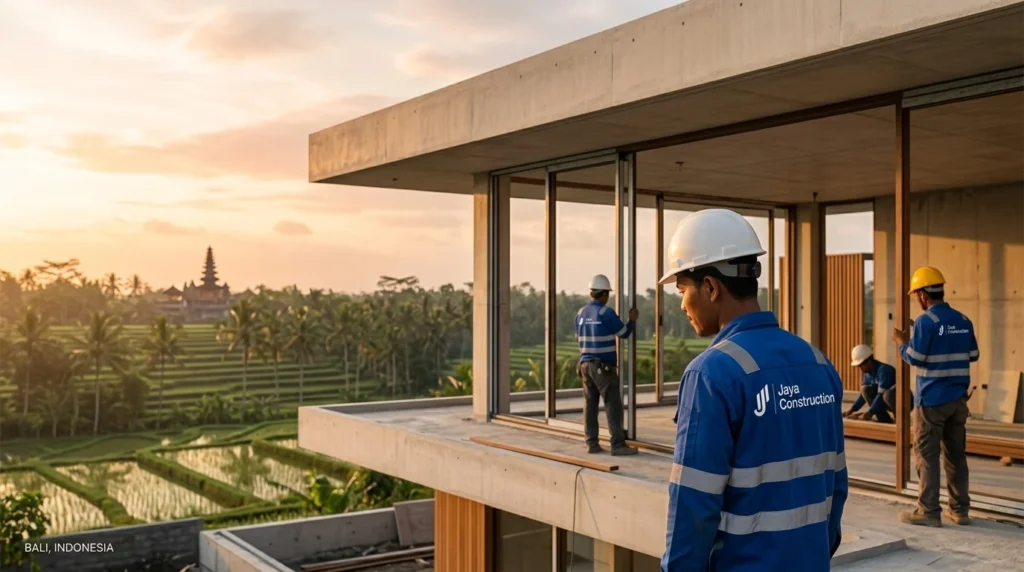
Bali’s enchanting landscapes, vibrant culture, and thriving tourism industry make it a magnet for investors, entrepreneurs, and dreamers looking to build villas, resorts, shops, or homes. However, the island’s development is governed by a complex web of regulations designed to protect its environment, culture, and community. A critical, yet often underestimated, component of this framework is the building permit. The temptation to bypass this bureaucratic step can be strong, driven by desires to save time, money, or navigate a perceived difficult system. This article provides a comprehensive exploration of what actually happens if you build without the necessary permits in Bali, detailing the immediate consequences, long-term risks, and the difficult path forward for those who find themselves in this precarious situation.
Before delving into the consequences, it’s essential to understand what permits are required. Historically, the primary document was the IMB (Izin Mendirikan Bangunan), the building permit issued by the local regency (Kabupaten) or city (Kota) government. In recent years, Indonesia has streamlined its permit system through the Online Single Submission (OSS) platform. The IMB has been largely integrated into a new type of approval called PBG (Persetujuan Bangunan Gedung), or Building Approval. This permit certifies that a proposed construction project complies with spatial planning, environmental, technical, and safety standards. For foreigners, this process is intrinsically linked to land use rights (like Hak Pakai or Hak Sewa) and must often involve a local Indonesian citizen or company as a legal partner (Nominee). Ignoring this process means operating entirely outside the law.
Building without a permit is not a passive risk; it is an active violation that authorities are increasingly vigilant in detecting. Here is what typically happens once unauthorized construction is discovered.
1. Stop Work Orders and Fines:
The most immediate action is the issuance of a Stop Work Order (Perintah Penghentian Kegiatan). Local officials from the Public Works and Spatial Planning Office (Dinas PUPR) or the Satpol PP (Civil Service Police Unit) will visit the site and demand all construction cease immediately. This is often accompanied by a substantial administrative fine. These fines can vary significantly depending on the regency, the size of the structure, and the discretion of local officials, but they are always a financial shock and a clear signal that the authorities are involved.
2. Seal and Demolition Orders:
If construction continues despite the stop order, or if the violation is deemed severe, authorities can seal the property. Workers and equipment are barred from entry. The ultimate threat is a demolition order (Perintah Pembongkaran). While not always carried out immediately due to logistical and political reasons, the legal authority to demolish the structure exists. The owner is typically given a deadline to demolish it themselves. Failure to comply can result in the government demolishing it, with the significant costs then billed to the landowner, creating a massive financial liability.
3. Disruption of Services:
Even before a demolition order, life in the illegal structure can become untenable. Authorities can coordinate with utility providers to disconnect or refuse connection of essential services like water, electricity, and sewerage. Without these, a villa cannot function as a rental property or a comfortable home, effectively halting any potential income generation and rendering the investment useless.
The immediate disruptions are just the beginning. The long-term consequences of building without a permit create a cloud of uncertainty that can persist for years, severely impacting your investment and peace of mind.
1. Inability to Legally Operate or Generate Income:
For most investors, the goal is to rent out a villa or run a business. You cannot obtain a hotel or rental license (like a TDUP or Pondok Wisata) without a valid PBG/IMB. This means you cannot legally list the property on platforms like Airbnb, Booking.com, or with local agents. Operating without a license exposes you to hefty fines from the Tourism Department and the constant risk of being shut down, making the business model fundamentally unstable.
2. Problems with Title and Sale:
The absence of a permit clouds the legal title of the property. When you eventually wish to sell, informed buyers and their notaries will conduct due diligence. The lack of a PBG is a major red flag, drastically reducing the property’s value, limiting your pool of potential buyers, and making it nearly impossible to secure a mortgage or loan for a prospective purchaser. Essentially, the asset becomes illiquid.
3. Challenges with Visa and Investment Status:
Many foreign investors in Bali are on a limited-stay permit (KITAS) sponsored by their own investment company (PT PMA). The company’s legitimacy and its ability to sponsor visas are tied to having all its operational permits in order, including building permits for its premises. An illegal structure can jeopardize the status of the sponsoring company, potentially affecting the investor’s own legal right to stay in Indonesia.
4. Insurance Void:
Property insurance policies are contracts based on accurate information. If the structure is illegal, any claim—whether for fire, natural disaster, or theft—will almost certainly be denied. The insurance company’s position will be that the property itself was not legally occupied, voiding the policy. You bear 100% of the risk for any catastrophic loss.
Beyond the legal and financial frameworks, building without permits often disregards Bali’s unique social fabric. The Banjar (local community organization) is a powerful force in village life. They are frequently consulted during the permit process to ensure a new development aligns with local customs (Adat) and does not disrupt community harmony. Building without permits bypasses this, leading to potential conflict with neighbors and local leaders. This can result in social isolation, protests, or even sabotage, making your time on the island deeply unpleasant. Respect for the process is also a sign of respect for the Balinese people and their land.
If you find yourself in the position of owning an unpermitted structure, the situation is difficult but not entirely hopeless. Proactive steps are necessary.
1. Cease All Construction and Usage:
First, stop any ongoing work. Do not attempt to rent or operate the property commercially. This reduces your legal exposure and shows good faith.
2. Engage Professional Help:
Immediately consult a reputable Indonesian notary (Notaris) and lawyer who specializes in property law and government relations in Bali. Self-help or relying on informal advisors is extremely risky. A qualified professional can assess the specific violations and navigate the bureaucratic landscape.
3. Explore “Legalization” (Pengurusan Izin Prinsip):
There may be a possibility to apply for a permit after the fact, a process sometimes colloquially called “legalization.” This is not guaranteed. It involves submitting plans, paying fines (often much larger than the original permit fees), and potentially making modifications to the structure to meet current codes. The outcome depends heavily on the scale of the violation, the location (e.g., Green Belt or sacred zones are near-impossible), and the discretion of local authorities. Success is not assured, and the cost can be prohibitive.
4. Prepare for the Worst-Case Scenario:
Your lawyer must also advise you on the real possibility of demolition. You need a financial plan for this outcome. Hoping authorities will “look the other way” indefinitely is an extremely risky and ultimately unwise strategy as enforcement becomes more consistent.
The allure of bypassing permits in Bali—to save a few thousand dollars or a few months of waiting—is a mirage that obscures a desert of profound risks. The consequences escalate from disruptive fines and work stoppages to the complete financial loss of your investment through demolition or the inability to profit from it legally. Furthermore, it creates a foundation of instability that can affect your visa status, insurance, and relationship with the local community.
Building in Bali is an investment not just in concrete and tiles, but in a place with deep cultural values and environmental pressures. The permitting system, while sometimes cumbersome, is the framework that ensures development is sustainable, safe, and respectful. Navigating the permit process correctly from the outset is not just a legal formality; it is the essential foundation for a secure, profitable, and harmonious investment in the Island of the Gods. The peace of mind that comes with full compliance is invaluable and allows you to truly enjoy the rewards of your Balinese venture.
Share your site, plans, priorities, or questions. Our team can help turn early information into a practical construction path.