Back to the journal
Construction insights
Working With Local Builders in Bali: What to Expect
 By Jaya Construction Bali July 15, 2026
8 min read
By Jaya Construction Bali July 15, 2026
8 min read
By Jaya Construction Bali July 15, 2026
8 min read
By Jaya Construction Bali July 15, 2026
8 min read
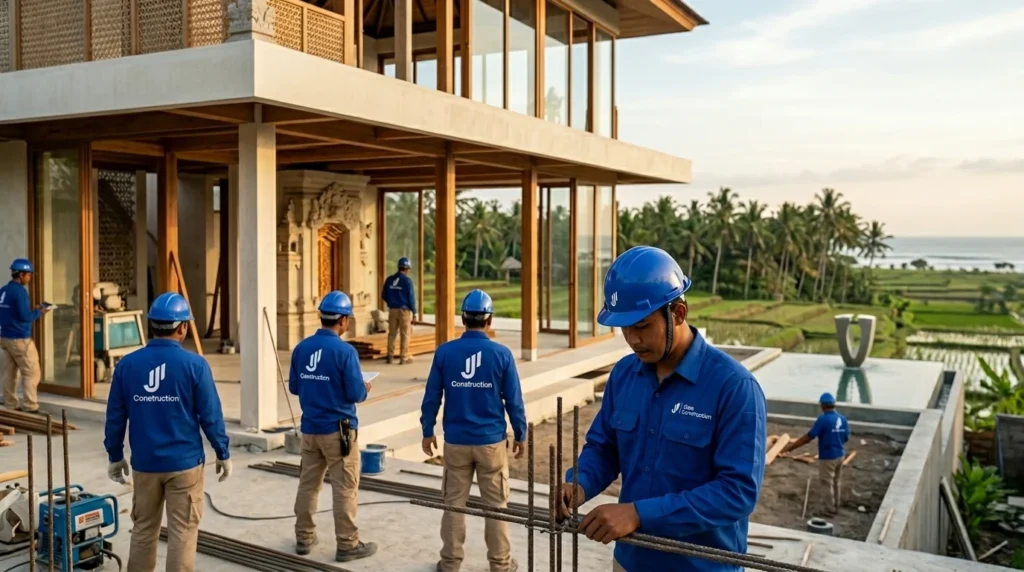
Building or renovating a villa, home, or commercial property in Bali is a dream for many. The island’s stunning natural beauty and vibrant culture create a unique backdrop for architectural projects. However, translating that dream into reality involves navigating a construction process that is deeply intertwined with local customs, community dynamics, and a different work philosophy than what many Western expatriates are accustomed to. Understanding what to expect when working with local Balinese builders is not just a matter of project management; it is the key to a successful, respectful, and ultimately rewarding building experience. This article will guide you through the critical phases, cultural nuances, and practical realities of collaborating with local construction teams in Bali.
The allure of building in Bali is undeniable. From the lush rice terraces of Ubud to the dramatic clifftops of Uluwatu and the bustling coastal towns of Canggu and Seminyak, the island offers a diverse canvas for architectural expression. Many newcomers arrive with detailed blueprints and a fixed timeline, envisioning a seamless process mirroring their home countries. The reality, however, requires a significant shift in perspective. Building in Bali is as much about managing relationships and understanding cultural frameworks as it is about overseeing construction.
The local construction industry is largely comprised of skilled artisans, family-based contractor teams (pemborong), and a workforce with generational knowledge passed down through village communities. Success hinges on your ability to merge your vision with their expertise, respecting the Balinese way of life that permeates every aspect of the process, including work. This guide aims to demystify that process, providing you with a realistic roadmap to set expectations, foster strong communication, and ensure your project is completed to a standard you’re happy with, all while maintaining a harmonious relationship with your builders and their community.
Before a single brick is laid, the groundwork for your project’s success or failure is established in the planning and hiring phase. This is where due diligence is paramount.
Your first major task is finding a reputable team. Referrals are gold in Bali. If you’re buying land or already have connections, ask your real estate agent, lawyer, or other expatriates who have successfully built for recommendations. Online expat forums can be a resource, but be discerning and look for detailed, balanced reviews.
You will generally encounter three types of builders:
It is essential to conduct interviews, ask for portfolios of previous work, and, most importantly, visit a current job site. Observe the organization, safety practices, and quality of materials in use. Talk to the client if possible. This firsthand assessment is invaluable.
Do not proceed without a clear, written contract. While Balinese business culture often relies on trust and handshakes, a contract protects both parties and aligns expectations. A good contract for a building project in Bali should be bilingual (Indonesian and English) and include:
Engaging a local lawyer to review the contract is a wise investment. It ensures the document is legally sound under Indonesian law and that you fully understand all clauses.
Once contracts are signed and the site is prepared, the physical work begins. This phase is where your management style and cultural awareness will be most tested.
Language can be a barrier. Even if your contractor speaks some English, technical nuances can be lost. Hiring an independent, English-speaking project manager or architect to oversee the work on your behalf is highly recommended, especially if you are not resident on the island. They act as your daily eyes, ears, and interpreter, ensuring your specifications are followed.
If managing the project yourself, establish a clear communication channel. Designate a single point of contact (usually the head contractor or site foreman) and schedule regular meetings (e.g., weekly). Use visual aids: drawings, samples, and photos are far more effective than verbal descriptions alone. Be patient, be clear, and document everything in writing via email or a messaging app.
This is perhaps the most significant adjustment. The Balinese calendar is dense with important ceremonies (odalan, Galungan, Kuningan) and community events. Your workers have profound obligations to their families and banjar. It is common and expected for work to slow or stop entirely during these times. Respecting these cultural and religious events is non-negotiable; it is the price of doing business in Bali and is fundamental to maintaining a good relationship with your team.
The concept of time is also more fluid. A “one-week” task may take two. Weather, particularly during the rainy season (November-March), can cause delays. Material deliveries can be held up by traffic or local events. The key is to maintain a flexible mindset and have contingency time built into your overall schedule.
Local building techniques may differ from what you know. For example, Balinese construction often uses a heavy timber roof frame (kayu ulin) and intricate hand-carved stone and wood elements. While modern materials like concrete and steel are standard, the finishing and craftsmanship can be uniquely Balinese.
Be present, or have your project manager present, to inspect work at critical stages (post-rebar tying for concrete pours, plumbing and electrical rough-ins, etc.). Don’t be afraid to point out issues respectfully but firmly. A regular, hands-on inspection of the work is your best tool for ensuring quality. Have your contract’s scope of work (RAB) on hand to verify that specified materials are being used.
Beyond the bricks, several practical and social nuances will shape your experience.
Your detailed RAB is your financial bible. Payments should be made directly to the contractor or company, not to individual workers. Always obtain a receipt (kwitansi) for every payment. It is common for contractors to request additional funds (tambahan) if they encounter unforeseen problems (e.g., difficult soil conditions). Refer back to your contract’s clause on variations; any extra cost must be justified, documented, and agreed upon in writing before proceeding.
Problems will arise—it’s the nature of construction. A wall might be built in the wrong place, a fixture might be incorrect, or progress may stall. How you handle these issues is critical. Avoid shouting or public confrontation, which causes loss of face (malu) and will shut down communication. Instead, request a calm meeting. Present the problem factually, refer to the contract or agreed plans, and discuss solutions collaboratively. Involving a neutral third party, like your lawyer or a respected community figure, can help mediate if disputes escalate.
Your builder’s relationship with the local banjar is vital. The banjar manages community life, from ceremonies to local security (pecalang). If you are building in a traditional village area, the banjar may need to be consulted, and a small donation or offering (sumbangan) might be expected to acknowledge the community and the impact of construction. Your contractor will guide you on this. Integrating respectfully with the banjar ensures smoother operations and is a sign of good faith.
Working with local builders in Bali is a journey of collaboration, adaptation, and mutual respect. It requires you to relinquish some control and embrace a process that values relationships, community, and cultural rhythms as much as it does schedules and blueprints. The rewards, however, are profound. You are not merely hiring a service; you are engaging with a centuries-old culture of craftsmanship and community.
By investing time in finding the right team, drafting a clear contract, communicating with patience and clarity, and showing genuine respect for Balinese customs, you transform a potentially stressful endeavor into a meaningful cultural exchange. The result is not just a beautifully built structure that blends with its stunning environment, but also the satisfaction of having participated in the island’s living tradition of creation. Approach the process with openness, fairness, and a readiness to learn, and you will find that building your dream in Bali can be as enriching as living in it.
Share your site, plans, priorities, or questions. Our team can help turn early information into a practical construction path.