The Comprehensive Cost Breakdown to Build a 3-Bedroom Villa in Bali
By Jaya Construction BaliJune 26, 20268 min read
In this article
Bali’s allure is undeniable—a tapestry of lush rice terraces, ancient temples, and a vibrant culture that has captivated travelers and investors for decades. For many, the dream extends beyond a vacation; it’s the vision of owning a private sanctuary, a personal villa nestled within this island paradise. Building a 3-bedroom villa in Bali represents a significant investment, but understanding the financial landscape is the first step toward making that dream a tangible reality. This guide provides a detailed, transparent exploration of the costs involved, breaking down the numerous factors that will determine your final expenditure, from the initial plot of land to the final coat of paint.
Understanding the Investment Scope: More Than Just Construction
Before diving into numbers, it’s crucial to reframe the question. The “cost to build” is not a single figure but a composite of several major financial streams. Prospective villa owners in Bali are typically responsible for:
Land Acquisition or Lease: Freehold land ownership (Hak Milik) is restricted to Indonesian citizens. Foreign investors most commonly use a long-term leasehold agreement (Hak Sewa), typically for 25 to 30 years, often with options to extend. This is a fundamental and often the largest upfront cost.
Construction Costs: This is the core expense of building the physical structure, encompassing materials, labor, and project management.
Professional Fees: Costs for architects, engineers, surveyors, and legal consultants to ensure the design is sound, compliant, and your interests are protected.
Permitting and Legal Fees: Navigating Indonesia’s regulatory framework requires specific licenses and approvals, each with associated fees and potential legal costs.
Furnishing and Equipment: The “turnkey” cost includes everything from bedroom furniture to kitchen appliances, air conditioning units, and lighting.
Contingency Fund: An essential buffer, usually 10-15% of the total project cost, for unforeseen challenges.
Therefore, when discussing the “cost to build,” we are primarily focusing on point number two, construction, while acknowledging its interdependence with the other factors.
Detailed Breakdown of Construction Costs
Construction costs in Bali are often quoted per square meter ($/m²). For a standard 3-bedroom villa of good quality, expect the following general ranges:
Standard Quality: $700 – $1,000 USD per square meter.
Mid-Range to High Quality: $1,000 – $1,800 USD per square meter.
Premium/Luxury Standard: $1,800 – $3,000+ USD per square meter.
A typical 3-bedroom villa might range from 200 to 350 square meters of built-up area (including terraces, pool deck, etc.). Using a mid-range estimate of $1,200/m² for a 250m² villa, the core construction cost alone would be approximately $300,000 USD.
This $/m² rate is a blanket figure that breaks down into three core components:
1. Materials (Approx. 50-60% of construction cost)
This is the most variable component, heavily influenced by quality and sourcing.
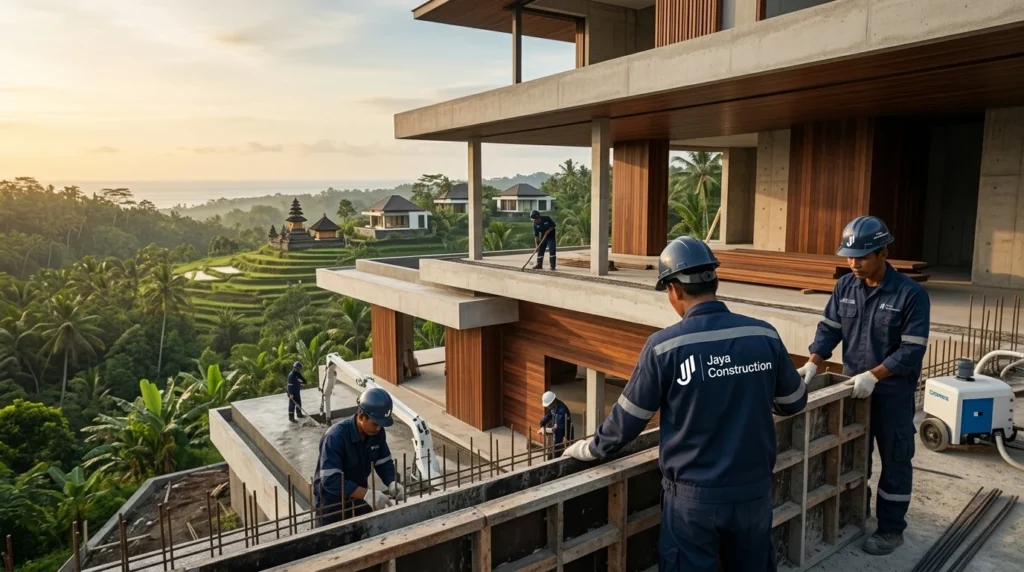
Structural Elements: Concrete, steel reinforcement, bricks or AAC blocks. Local materials are cost-effective, but imported high-strength concrete or specialized blocks increase costs.
Finishing Materials: This is where budgets can balloon. Prices for tiles, stone countertops, hardwood for doors/windows, roofing (traditional vs. modern), and fixtures (taps, sinks, toilets) vary enormously based on whether they are locally sourced, from Java, or imported from Italy or China.
Specialty Items: Swimming pool construction (concrete, tiles, filtration system), extensive decking, custom joinery, and high-quality insulation for sound and heat.
2. Labor (Approx. 30-40% of construction cost)
Bali benefits from a skilled and relatively affordable labor pool. Labor costs include:
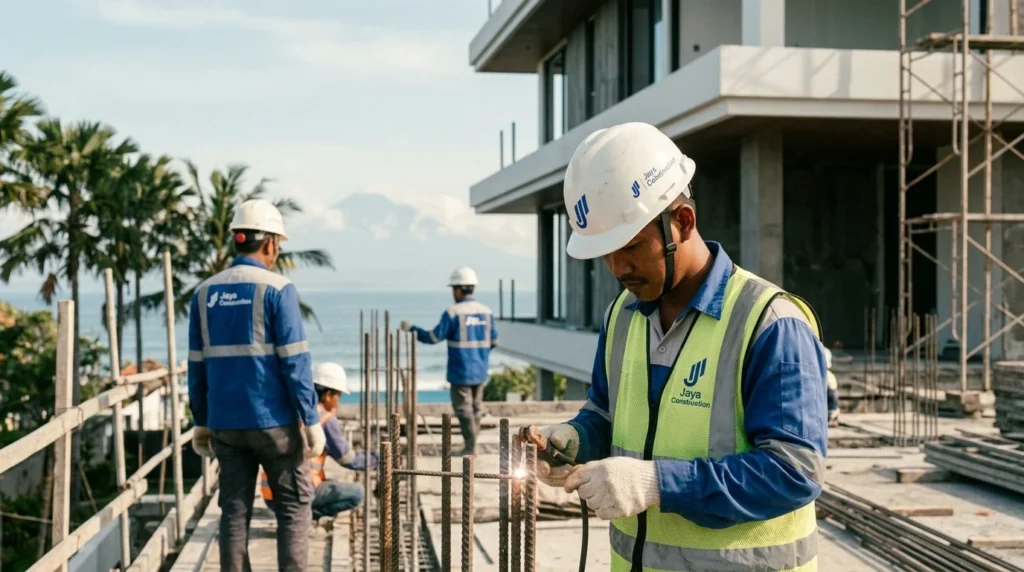
Daily Wage Workers: Bricklayers, carpenters, painters, and general workers. Rates are generally consistent but can rise with specialization.
Sub-Contractors: Specialists for plumbing, electrical wiring, tiling, and pool construction are hired on a project basis.
Project Manager/Foreman: A critical role overseeing daily operations, quality control, and timeline adherence. A good manager is worth their weight in gold and their fee is a worthwhile investment.
3. Overheads and Miscellaneous (Approx. 10-15%)
Tools and Equipment: Rental or purchase of cement mixers, scaffolding, generators, etc.
Site Office and Storage: Temporary facilities on-site.
Waste Management and Cleanup: Regular removal of construction debris.
Water and Electricity: Utility costs for the construction site.
The Critical Factors That Swing Your Final Price
Your final bill is not dictated by the per-square-meter rate alone. The following factors will push you toward the lower or upper end of the spectrum, or even beyond it.
Architectural Complexity and Design
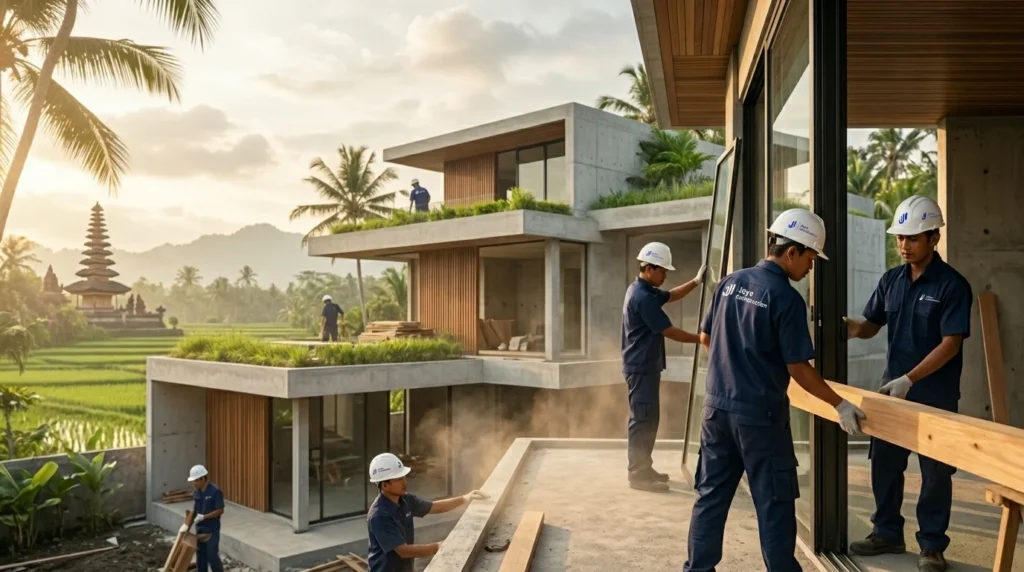
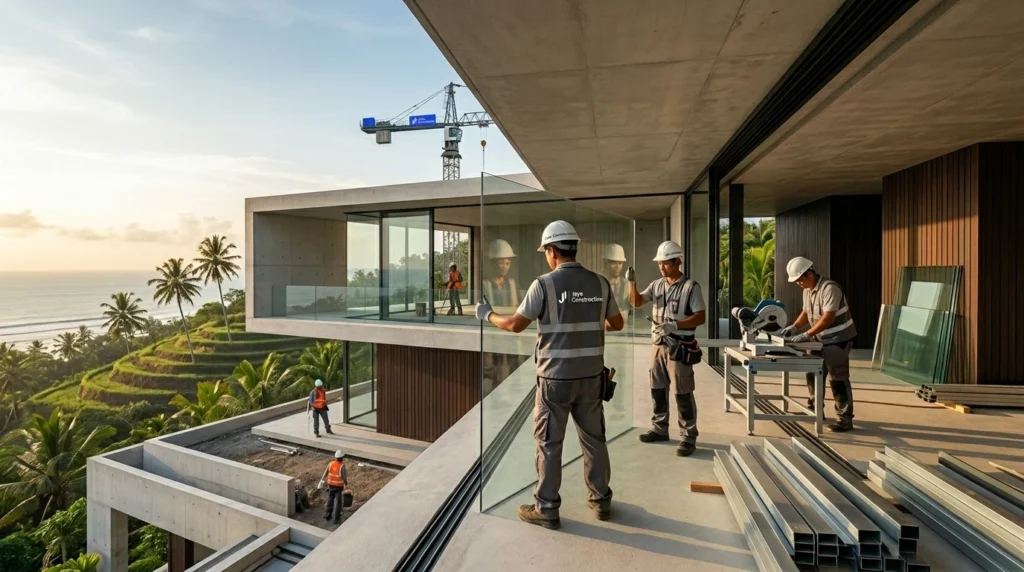
A simple, rectangular design with a pitched roof is more economical than a complex, multi-level structure with curved walls, extensive use of glass, cantilevered sections, and a green roof. Modern minimalist designs might require precision engineering, while traditional Balinese architecture (Gapura, Bale) involves intricate, labor-intensive woodwork. The complexity of the design is arguably the single greatest determinant of your final construction cost.
Location and Site Accessibility
Building on a cliffside in Uluwatu with stunning ocean views presents a vastly different challenge—and cost—than building on a flat rice field plot in Tabanan. Costs escalate for:
Difficult Terrain: Steep slopes requiring extensive foundation work, piling, and retaining walls.
Remote Access: Transporting materials to difficult-to-reach areas adds significant time and fuel costs.
Site Preparation: Clearing land, especially if it involves mature trees or uneven ground.
Material Choices and Sourcing
As mentioned, this is a major cost lever. Choosing locally made terracotta tiles over Italian porcelain, or Balinese ironwood (Ulin) over imported teak, will create a substantial difference. Using a mix of local and imported materials is a common strategy to control costs without sacrificing all desired aesthetics.
The Role of the Project Manager/Contractor
You have two primary paths:
Turnkey Contractor: You pay a fixed price for the completed villa. This offers budget predictability but less control over materials and processes. Ensure the contract is extremely detailed.
Hiring a Project Manager (with a transparent costing system): You pay for materials and labor at cost, plus a management fee (often 10-15% of the total build cost). This offers greater transparency, potential cost savings, and flexibility, but requires more trust and involvement. Vetting your contractor or project manager thoroughly is the most important step to avoid cost overruns and poor workmanship.
Beyond Construction: The Total Project Budget
To arrive at a realistic total investment, you must add these layers to your construction estimate.
1. Land Costs
Leasehold: Prices vary dramatically by location. A 25-year lease for a 300m² plot in a popular area like Canggu, Seminyak, or Ubud can range from $150,000 to over $500,000. Prices drop significantly in less developed regencies like Tabanan, Karangasem, or Bangli.
Notary and Legal Fees: For the lease agreement, typically 1-3% of the total lease value.
2. Professional and Permitting Fees
Architect & Engineer Fees: Usually 5-10% of the total construction cost. They produce the detailed drawings (Gambar Kerja) required for the permit.
Building Permit (PBG – Persetujuan Bangunan Gedung): This is the primary permit, replacing the old IMB. Fees are calculated based on building size, type, and location. For a residential villa, this can be a few thousand dollars.
Environmental and Other Permits: Depending on the location (e.g., near the coast or a sacred site), additional permits may be required, adding to cost and time.
3. Furnishing, Fixtures, and Equipment (FF&E)
This is often underestimated. A fully equipped 3-bedroom villa requires:
A comfortable FF&E budget for a mid-range villa can easily be $30,000 – $60,000, scaling up significantly for high-end or designer items.
4. Landscaping and Gardens
Creating the tropical oasis around the villa involves costs for soil, plants, irrigation systems, pathways, and potentially an outdoor shower or pavilion (Bale Bengong). Budget 5-10% of the construction cost.
5. The Essential Contingency Fund
Non-negotiable. Set aside 10-15% of the total projected cost. This covers unforeseen issues like material price increases, labor delays due to weather (rainy season can halt work), design changes mid-stream, or unexpected site challenges.
Putting It All Together: Sample Total Project Budget
Let’s create a hypothetical scenario for a 250m² mid-range to high-quality 3-bedroom villa in a desirable area like Ubud.
Land Lease (25 years): $200,000
Construction Cost (250m² @ $1,200/m²): $300,000
Professional Fees (Architect, Engineer, Consultant): $25,000 (approx. 8% of construction)
Permitting & Legal Fees: $8,000
FF&E & Equipment: $45,000
Landscaping: $20,000
Contingency Fund (10%): $59,800 (10% of the subtotal of $598,000)
Estimated Total Project Budget: ~ $657,800 USD
This example illustrates that the total investment often doubles or even triples the pure construction cost. A more basic villa with a simpler design on cheaper land could be achieved for around $350,000, while a luxury villa with imported materials in a prime location can easily exceed $1.5 million.
Critical Considerations and Practical Advice
The Rainy Season: Plan your construction timeline to avoid the peak rainy season (December – February) for major structural work, as it can cause significant delays.
Cultural and Community Awareness: Respect local customs. Investing in a good relationship with the Banjar (local community council) is invaluable for smooth operations.
Sustainability: Incorporating sustainable features like rainwater harvesting, solar panels, and effective cross-ventilation may increase upfront costs but lead to long-term savings and reduced environmental impact.
Get Everything in Writing: Whether with your contractor, landowner, or agent, ensure all agreements, costs, timelines, and specifications are documented in clear, bilingual contracts.
Conclusion: A Methodical Path to Paradise
Building a 3-bedroom villa in Bali is a complex but immensely rewarding endeavor. The final cost is not a mystery but a variable sum influenced by informed choices regarding location, design, materials, and team. The most successful projects are those where the owner invests not just money, but time in due diligence: researching land titles meticulously, selecting a reputable architect and project manager through references and site visits, and creating a detailed, transparent budget with a robust contingency.
By understanding that the journey involves far more than just construction, and by planning for every phase—from the legal groundwork to the final decorative pillow—you can navigate the process with confidence. This methodical approach transforms the dream of a Balinese villa from a financial guess into a well-planned investment, ensuring your island sanctuary is built on a foundation of both beauty and financial prudence.
 By Jaya Construction Bali June 26, 2026
8 min read
By Jaya Construction Bali June 26, 2026
8 min read